
The Evolution of the Safety Paradigm
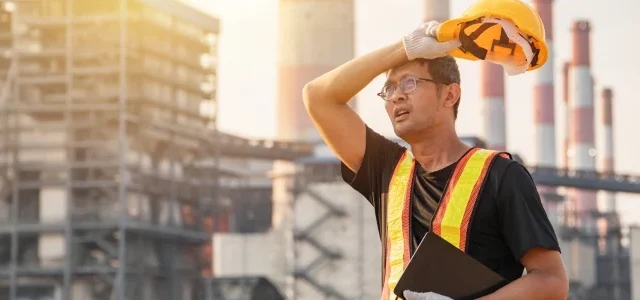
For decades, workplace safety was defined largely by mechanical integrity, personal protective equipment (PPE), and adherence to Occupational Safety and Health Administration (OSHA) standards. However, the modern safety professional is increasingly tasked with addressing "invisible" hazards—specifically, the cognitive and emotional degradation caused by chronic stress.

At the Safety+ Symposium, attendees were reminded that resilience is not merely a soft skill but a critical component of risk management. When a worker is suffering from burnout, their decision-making capabilities, situational awareness, and reaction times—all essential for preventing industrial accidents—are significantly compromised. Campbell’s address challenged the industry to reconsider the definition of "functioning," arguing that the biological and psychological capacity of a worker is as vital to an incident-free site as any engineered control.
A Life Defined by Adversity and Adaptation
Ryan Campbell’s perspective is forged from a timeline of extraordinary highs and traumatic lows. In 2013, at just 19 years old, he cemented his place in aviation history by becoming the youngest person to fly solo around the world. The achievement was a testament to meticulous planning, endurance, and technical skill. Yet, the trajectory of his life shifted violently in 2015 when a vintage aircraft he was piloting experienced a catastrophic power failure shortly after takeoff.
The resulting crash left Campbell with severe, life-altering injuries, including five spinal fractures. Initially diagnosed as a complete paraplegic, his journey toward recovery involved intensive medical intervention and psychological fortitude. Though he eventually regained significant mobility and returned to the cockpit, the path to healing was not linear.

Campbell provided a candid admission to the VPPPA audience: despite his external successes following his physical recovery, he found himself trapped in a cycle of relentless professional ambition. He described this period as one characterized by "hustle culture," where he prioritized output over personal restoration. It was during this period of professional burnout that he realized his high-performance lifestyle was unsustainable. This period of internal struggle serves as a case study for modern workers—even those who have successfully navigated major setbacks can succumb to the slow erosion of well-being caused by constant pressure.
The "Pink Cadillac" Philosophy: Restorative Auditing
Central to Campbell’s presentation was the concept of the "pink Cadillac"—a metaphorical anchor he uses to represent personal interests that exist entirely outside the sphere of professional output. He argued that just as safety professionals perform routine audits on machinery and compliance protocols, they must also conduct "energy audits" on their personal lives.
In a professional safety context, an audit is a structured, systematic process to identify non-conformities and implement corrective actions. Campbell suggested that this mindset should be applied to the human element. By identifying what truly restores energy—whether it be a hobby, physical exercise, or dedicated downtime—professionals can build the "bandwidth" required to navigate high-stress environments. He posits that these activities are not merely luxuries; they are essential maintenance for the human machine.

The Statistical Reality of Workplace Burnout
The urgency of Campbell’s message is underscored by current data regarding the global state of mental health. According to the World Health Organization (WHO), burnout is classified as an occupational phenomenon resulting from chronic workplace stress that has not been successfully managed. Research from Gallup indicates that employees who report feeling burned out are 63% more likely to take a sick day and 2.6 times as likely to be actively seeking a different job.
In the safety industry, the stakes are significantly higher. A burned-out safety director may miss subtle warning signs in a hazard assessment, while a fatigued operator on the floor may bypass a safety interlock. Data from the National Safety Council (NSC) suggests that fatigue alone costs U.S. employers billions of dollars annually in lost productivity and healthcare costs, further justifying the focus on mental resilience at major industry forums like the VPPPA.
Implications for Organizational Leadership
The symposium discussions emphasized that the responsibility for mental well-being does not rest solely on the individual. Leadership plays a pivotal role in creating a culture where resilience is prioritized. Campbell urged attendees to adopt a "human-first" approach to safety management. This involves:

- Normalization of Discourse: Reducing the stigma surrounding mental health by encouraging open dialogue within safety briefings.
- Resource Allocation: Ensuring that employee assistance programs (EAPs) are not just available but are actively promoted and accessible.
- Role Modeling: Leadership must demonstrate the same commitment to their own well-being that they expect from their workforce.
When leaders acknowledge that they, too, are susceptible to burnout, it creates psychological safety for the rest of the team. This environment allows workers to report fatigue or stress-related concerns before those issues manifest as physical accidents.
Integrating Resilience into the Safety Management System (SMS)
Integrating mental health into an existing Safety Management System (SMS) requires a shift in how organizations measure "success." Historically, leading indicators have focused on training hours, audit frequency, and inspection counts. Moving forward, industry experts suggest that organizations should incorporate metrics related to employee engagement, reported stress levels, and work-life balance feedback.
By framing mental health as a core component of operational safety, organizations can move toward a more holistic model of risk management. The VPPPA Safety+ Symposium’s emphasis on this topic suggests a growing awareness that the future of safety lies in the intersection of technical excellence and human resilience.

Conclusion: Sustaining the Capacity for Safety
As the conference concluded, the consensus among participants was clear: the pressures of the modern industrial landscape show no signs of abating. Whether through technological change, supply chain volatility, or the constant drive for increased productivity, the demands on safety professionals are significant.
Ryan Campbell’s closing remarks served as a reminder that resilience is not a static trait, but a dynamic, renewable resource. Moments of joy and intentional recovery do not erase the reality of workplace hazards or professional responsibilities, but they provide the "bandwidth" necessary to navigate them effectively. As the industry moves forward, the integration of these psychological strategies into the broader safety culture will likely become a distinguishing factor between organizations that merely meet regulatory requirements and those that excel in protecting their most valuable asset: their people.
The VPPPA, by facilitating this conversation, has set a new standard for what it means to be a safety professional in the 21st century—a role that now requires as much emotional intelligence and self-awareness as it does technical knowledge of safety regulations.