
Understanding Auditory Neuropathy Spectrum Disorder
Auditory Neuropathy Spectrum Disorder (ANSD) is a complex condition where the ear successfully detects sound, but the signal is not properly transmitted to the brain. Unlike traditional sensorineural hearing loss, which often stems from damage to the hair cells in the cochlea, ANSD involves a breakdown in the auditory nerve or the inner hair cells’ ability to communicate with the nerve. According to the National Institute on Deafness and Other Communication Disorders (NIDCD), this condition can occur at any age and presents significant challenges in speech perception, particularly in noisy environments.
For Raiden, this diagnosis meant navigating moderate to severe hearing loss at specific pitches, alongside resulting delays in speech and communication development. Medical professionals often emphasize that the "critical period" for language acquisition occurs during the first three to five years of life. When a child’s access to sound is compromised, the brain’s plasticity—its ability to reorganize itself by forming new neural connections—must be supported through consistent amplification and intensive therapy. Raiden’s use of a hearing aid is a standard clinical intervention designed to optimize residual hearing, but technology alone is rarely sufficient without an immersive, supportive educational framework.
The Evolution of the Blended Classroom Model
The "Blended Classroom" model represents a paradigm shift from traditional special education, which often segregates students based on ability. By integrating students with hearing loss into a classroom with typically hearing peers, the model creates an auditory-rich environment that necessitates constant engagement. Listen & Talk, located in the Pacific Northwest, utilizes this approach to foster natural language development.
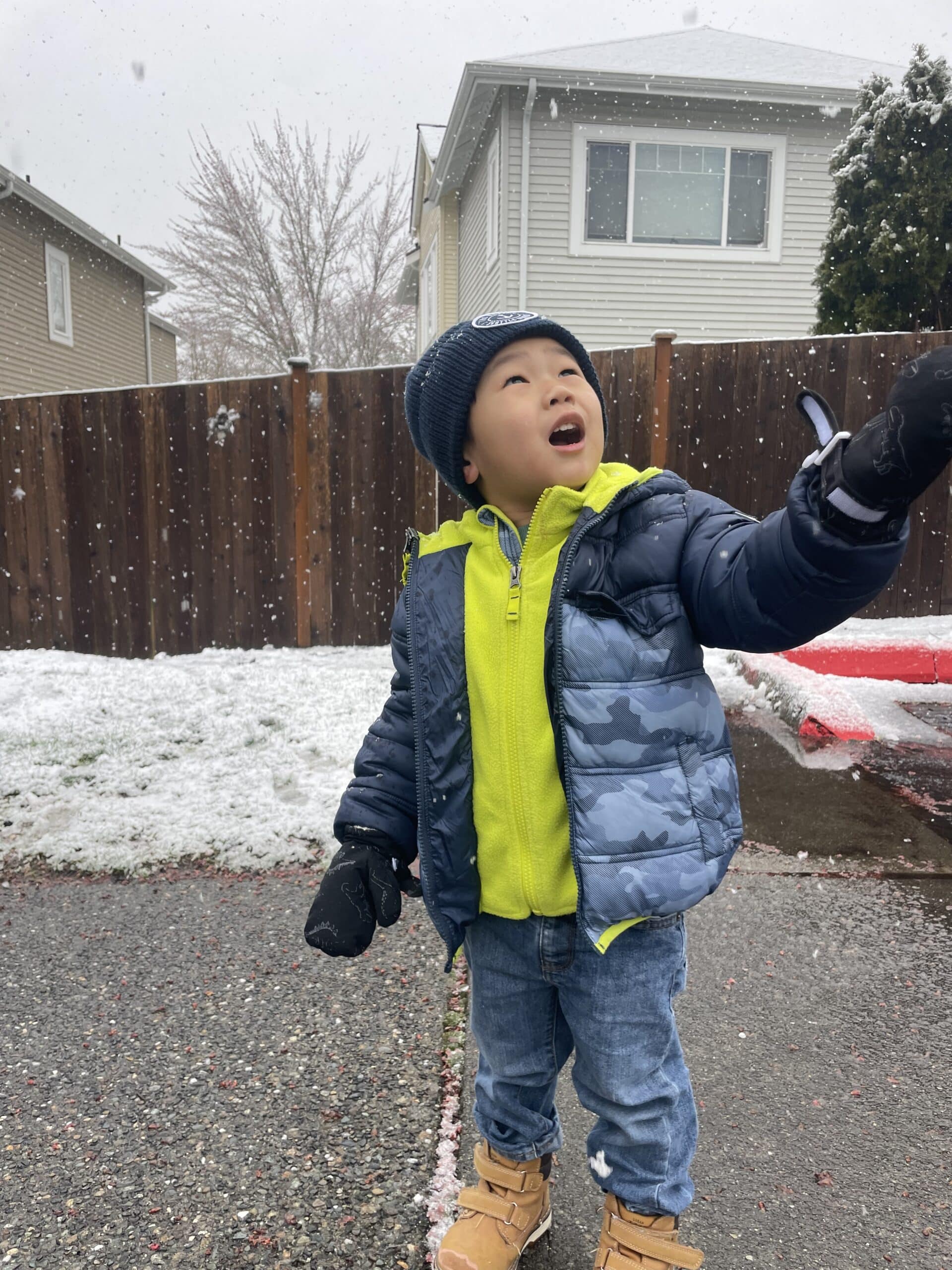
The choice to enroll in such a program is rarely simple, often requiring significant sacrifices. For Raiden’s family, the decision involved a daily hour-long commute, a logistical burden that reflects the scarcity of specialized, high-quality early intervention facilities. The motivation for this commitment was rooted in the facility’s unique infrastructure: on-site audiology booths, classroom-based hearing amplification technology, and a curriculum that explicitly teaches self-advocacy.
Chronology of Progress: A Case Study in Early Intervention
The timeline of Raiden’s development following his enrollment in the fall illustrates the rapid gains possible with the right resources. Within the first few months, two major shifts occurred:
- Increased Compliance and Comfort: Initially, the use of hearing aids can be physically and psychologically taxing for a young child, often resulting in "ear defensiveness." Through specialized training, Raiden’s family learned techniques to desensitize this reaction, leading to significantly longer daily wear-time.
- Linguistic Expansion: Before the intervention, Raiden’s communication was largely limited to one or two-word phrases. Within a semester, his capacity expanded to three and four-word sentences, and he began to initiate social interactions—a critical milestone for emotional and social-cognitive development.
This progression is consistent with broader data on early intervention. Studies published in the journal Pediatrics have repeatedly demonstrated that children with hearing loss who receive intervention before six months of age show significantly higher language scores compared to those identified later. By providing an environment that reinforces speech therapy within the context of play and social interaction, Listen & Talk ensures that therapy does not exist in a vacuum but is integrated into the child’s daily life.
The Role of Advocacy in Childhood Development
A core component of the Listen & Talk curriculum is the development of self-advocacy skills. As children with hearing loss approach Kindergarten, they must be equipped to communicate their needs to teachers, coaches, and peers. This is not merely an educational goal; it is a fundamental survival skill for integration into mainstream society.
When a child learns to articulate that they cannot hear a teacher over background noise or understands how to manage their own amplification devices, they transition from passive recipients of care to active participants in their education. This shift is essential for minimizing the "achievement gap" that often plagues students with hearing impairments as they transition into public school systems.

Broader Implications and Societal Impact
The broader implications of the blended classroom model extend beyond the individual student. Social impact enterprises like Listen & Talk function as specialized hubs that support families through the multifaceted challenges of hearing loss, including audiology testing, parent education, and long-term planning.
However, these programs often face financial strain. The costs associated with specialized audiology equipment, highly trained speech-language pathologists, and small student-to-teacher ratios are significant. As a result, many such organizations rely heavily on philanthropic support. The mission to ensure "no child is limited by hearing loss" requires a consistent influx of funding to support:
- Early Intervention Services: Providing the diagnostic and therapeutic backbone for infants and toddlers.
- Technological Integration: Keeping pace with advancements in cochlear implants, hearing aids, and classroom FM systems.
- Parent Education: Empowering families to navigate the healthcare and educational systems effectively.
Analysis: Closing the Access Gap
The success of students like Raiden serves as a microcosm for a larger public health and educational necessity. According to the World Health Organization (WHO), over 5% of the world’s population experiences disabling hearing loss. The societal cost of failing to provide early, effective intervention is measured in lost educational attainment and reduced economic participation in adulthood.
By prioritizing an auditory-rich, inclusive environment, the blended classroom model mitigates these risks. The data from programs like Listen & Talk suggests that when structural support is paired with consistent, long-term commitment from families, the trajectory for children with hearing loss can be effectively normalized.
The success seen in Raiden is not just a personal victory; it is a validation of the educational strategy that emphasizes early detection, consistent use of assistive technology, and the cultivation of self-advocacy. As the education landscape continues to evolve, the challenge remains to make such high-quality, specialized resources more accessible to families regardless of their proximity to major urban centers or their socioeconomic status. Through sustained investment and public awareness, the vision of a future where hearing loss is not a barrier to academic or social achievement remains an attainable goal for thousands of families across the country.