
The research, published in the Nature Portfolio journal Communications Engineering, introduces the Biologically Oriented Sound Segregation Algorithm, or BOSSA. Developed by Kamal Sen, an associate professor of biomedical engineering at the BU College of Engineering, and his colleagues, the algorithm represents a shift from traditional signal processing to a model that mimics the physiological mechanisms of the human auditory system. The findings arrive at a critical juncture for the hearing aid industry, which is currently facing unprecedented disruption from consumer electronics giants and shifting regulatory landscapes.
Understanding the Cocktail Party Problem
For individuals with healthy hearing, the brain performs an extraordinary feat of computational filtering every time they enter a busy restaurant or a social gathering. The auditory system uses spatial cues, such as the minute differences in the time it takes for a sound to reach each ear and the relative volume of those sounds, to "map" the environment. Once this map is established, the brain can selectively attend to one source while suppressing others.
For the nearly 50 million Americans and hundreds of millions more globally who suffer from hearing loss, this natural filtering system is often compromised. Sensorineural hearing loss, which results from damage to the hair cells in the cochlea or the nerve pathways from the inner ear to the brain, does not just make sounds quieter; it makes them less distinct. Traditional hearing aids typically address this by using "beamformers"—directional microphones designed to amplify sounds coming from directly in front of the wearer while dampening sounds from the periphery. However, these systems are often rigid and struggle when multiple voices are coming from similar directions or when the wearer is in a highly reverberant room.
"The primary complaint of people with hearing loss is that they have trouble communicating in noisy environments," explains Virginia Best, a BU Sargent College of Health & Rehabilitation Sciences research associate professor and a coauthor of the study. These environments, she notes, are not just background noise; they are the essential fabric of social life, from family dinners to professional meetings. When technology fails in these settings, it leads to social withdrawal and cognitive fatigue.
The Mechanics of the BOSSA Algorithm
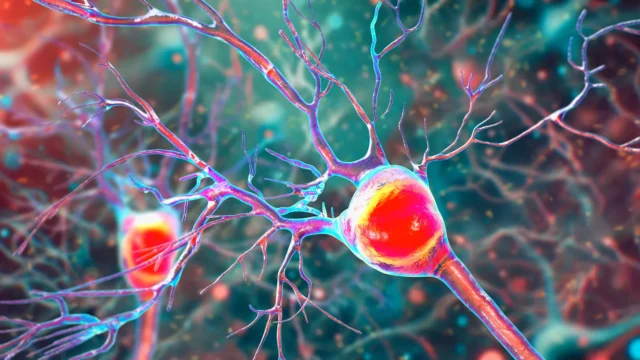
The innovation behind BOSSA lies in its imitation of inhibitory neurons within the brain. Kamal Sen has spent two decades at his Natural Sounds & Neural Coding Laboratory studying how the brain encodes and decodes complex auditory information. His research identified that certain brain cells act as internal noise cancellers. When a sound is detected at a specific location, these inhibitory neurons are activated to suppress competing frequencies and locations, effectively "sharpening" the focus on the target sound.
BOSSA translates this biological process into a mathematical model. Rather than simply boosting the volume of what is in front of the user, the algorithm uses spatial cues to segregate various sound sources into distinct "streams." It then applies a form of computational inhibition to the unwanted streams. This allows the listener to tune into a specific speaker with a level of clarity that traditional algorithms have been unable to provide.
In clinical testing led by Best and PhD candidate Alexander D. Boyd, the team benchmarked BOSSA against the current industry-standard noise reduction algorithms used in high-end hearing aids. The results were stark. While the industry-standard algorithm often failed to improve performance—and in some cases, slightly degraded word recognition due to processing artifacts—BOSSA provided a 40 percentage point increase in accuracy. Sen noted that such a leap in performance is exceptionally rare in the field of biomedical engineering, where improvements are typically measured in single digits.
A Chronology of Auditory Research and Innovation
The development of BOSSA is the culmination of a long-term research trajectory at Boston University’s Hearing Research Center. Sen, originally trained as a physicist before moving into neuroscience, joined BU specifically to bridge the gap between theoretical neural models and clinical applications.
- Early 2000s: Sen begins mapping the auditory pathways in animal models, identifying how inhibitory neurons contribute to sound localization.
- 2010–2018: The Natural Sounds & Neural Coding Laboratory develops the first computational models that simulate the "cocktail party effect" in the brain.
- 2019–2022: The team refines these models into an algorithm capable of real-time processing. Virginia Best begins designing behavioral studies to test the algorithm on human subjects with sensorineural hearing loss.
- 2023: Alexander D. Boyd leads the data collection process, testing young adults with hearing loss using specialized headphone simulations that recreate complex social environments.
- 2024: The findings are published in Communications Engineering, and Sen secures a patent for BOSSA.
This timeline reflects a broader shift in the field toward "neuromorphic" computing—technology that seeks to solve complex problems by mimicking the architecture of the human nervous system.
Global Health Context and Market Disruption
The urgency of this research is underscored by global health statistics. According to the World Health Organization (WHO), approximately 2.5 billion people are expected to have some degree of hearing loss by 2050. The economic impact is equally significant, with unaddressed hearing loss costing the global economy nearly $1 trillion annually due to lost productivity and increased healthcare costs associated with related conditions like depression and dementia.
Furthermore, the hearing aid market is currently undergoing a massive structural shift. In 2022, the U.S. Food and Drug Administration (FDA) established a new category of over-the-counter (OTC) hearing aids, allowing consumers to purchase devices without a prescription or a visit to an audiologist. This regulatory change opened the door for tech giants like Apple, Sony, and Bose.
The recent announcement that Apple’s AirPods Pro 2 would feature a clinical-grade hearing aid function has sent shockwaves through the traditional hearing aid industry. Kamal Sen views this competition as a catalyst for innovation. "If hearing aid companies don’t start innovating fast, they’re going to get wiped out, because Apple and other start-ups are entering the market," he warns. The BOSSA algorithm represents the kind of high-level intellectual property that traditional manufacturers may need to integrate to remain competitive against consumer electronics firms that have massive R&D budgets and superior brand loyalty.
Broader Implications: ADHD, Autism, and Beyond
While the immediate application for BOSSA is in hearing aids and cochlear implants, the underlying science has potential implications for neurodiversity. The neural circuits that BOSSA mimics are fundamental to the concept of selective attention—the ability to focus on one stimulus while ignoring others.
Many individuals with Attention-Deficit/Hyperactivity Disorder (ADHD) or Autism Spectrum Disorder (ASD) struggle with sensory processing, particularly in environments with high levels of "sensory pollution." For a child with autism, a noisy classroom might not just be a distraction; it can be an overwhelming sensory assault that prevents learning. Sen believes that the same "internal noise cancellation" logic used in BOSSA could be adapted into assistive devices or software for these populations, helping them manage environmental stimuli more effectively.
Currently, the BU team is working on an upgraded version of the algorithm that incorporates eye-tracking technology. By tracking where a user is looking, the algorithm can more accurately determine which "sound stream" the user intends to focus on, further automating the segregation process.
Conclusion and Future Outlook
The development of the Biologically Oriented Sound Segregation Algorithm marks a significant milestone in the intersection of neuroscience and engineering. By moving away from the "brute force" amplification methods of the past and toward a nuanced, brain-inspired model of sound segregation, the Boston University team has provided a viable solution to one of the most persistent challenges in audiology.
As Kamal Sen and his team look to license the BOSSA technology to commercial partners, the focus shifts toward miniaturization and integration. The challenge will be to implement this complex computational model into the small, low-power processors found in wearable devices. However, with the 40 percentage point improvement in word recognition as a benchmark, the incentive for industry adoption is high. For the millions of people who currently struggle to follow a conversation at a dinner table or a party, this "brain-inspired" approach offers more than just better hearing—it offers a path back to meaningful social connection.