A New Era of Transparency: Assessing the First 30 Days
The first month of a nonprofit executive’s tenure is typically defined by data gathering and stakeholder engagement. For Kiego, the initial 30 days were characterized by a pragmatic, "deep-dive" approach to understanding the mechanics of the NAD. Unlike the monolithic image of the organization that often exists in the public imagination, Kiego’s assessment revealed an organization operating with a leaner profile than many might expect.
Kiego’s first priority was a forensic evaluation of the association’s financial health. Upon assuming the role, he immediately engaged with the Chief Financial Officer (CFO) and the accounting team to analyze budget structures, investment portfolios, and operational overhead. In his view, financial stability is the foundational requirement upon which all advocacy, legal support, and youth programming must be built. Without a secure fiscal base, the association’s ability to execute its long-term strategic vision remains limited.
Beyond the financials, Kiego identified the need to re-evaluate the organization’s human capital. The NAD currently operates with a core staff of six employees. Kiego expressed profound appreciation for this team, noting that they have served as "workhorses" throughout recent years, often performing high-stakes advocacy work with limited resources and minimal public recognition. A primary goal for the coming months is to formalize support systems for these staff members and to enhance their capacity to deliver on the organization’s core mandates: the Legal Advocacy Center, the Youth Program, and national policy initiatives.
Strategic Priorities and Immediate Wins
In the organizational landscape of the nonprofit sector, "fast wins" are essential for building momentum. Kiego highlighted three key achievements from his first month that illustrate his focus on operational efficiency:
- Technological Infrastructure: Recognizing that the NAD’s digital presence required urgent maintenance, Kiego oversaw the hiring of a new webmaster and IT systems administrator. This move aims to resolve persistent issues, such as broken links and outdated navigation, which are vital for member engagement and information dissemination.
- Grant Writing Expansion: Through a collaborative effort with the Director of Youth Programs, Claudia, the organization successfully recruited a volunteer grant writer dedicated exclusively to the Youth Program. Given that sustainable growth often hinges on the ability to secure targeted funding, this addition is expected to bolster the financial trajectory of youth-focused initiatives.
- Financial Clarity: Kiego reported a significantly heightened level of confidence regarding the organization’s financial position. By spending the majority of his first month in deep consultation with the CFO and the accounting department, he has secured a granular understanding of the association’s fiscal realities, which he intends to leverage for future strategic planning.
The Role of Community Engagement and Volunteerism
A recurring theme in Kiego’s assessment is the disparity between the public’s perception of the NAD as a large, well-endowed entity and the reality of its current resource constraints. Kiego emphasized that his decision to discuss these limitations openly is a deliberate public relations strategy. He intends to avoid "fabricating" a narrative of effortless prosperity, preferring to present the organization as it currently exists to foster a more authentic partnership with its members.
"I don’t want to fabricate that NAD is in perfect shape," Kiego stated. "It is not. So right now is my opportunity to show that to everyone, but if I try to say that two years later, it’d be harder for me to frame it that way."
This philosophy of radical honesty invites the community to participate in the organization’s recovery and growth. Kiego is calling for a surge in volunteerism from subject-matter experts. He identified specific gaps that could be filled by the community, including:
- Legal Expertise: Retired attorneys or those with capacity to assist in the intake of new prospective clients.
- Policy Advocacy: Experts in telecommunications, education, and civil rights policy who can support the NAD’s legislative efforts.
- Communications Support: Volunteers with digital media skills to bridge the gap in the absence of a dedicated communications department.
Bridging the Generational Divide: The Youth Pipeline
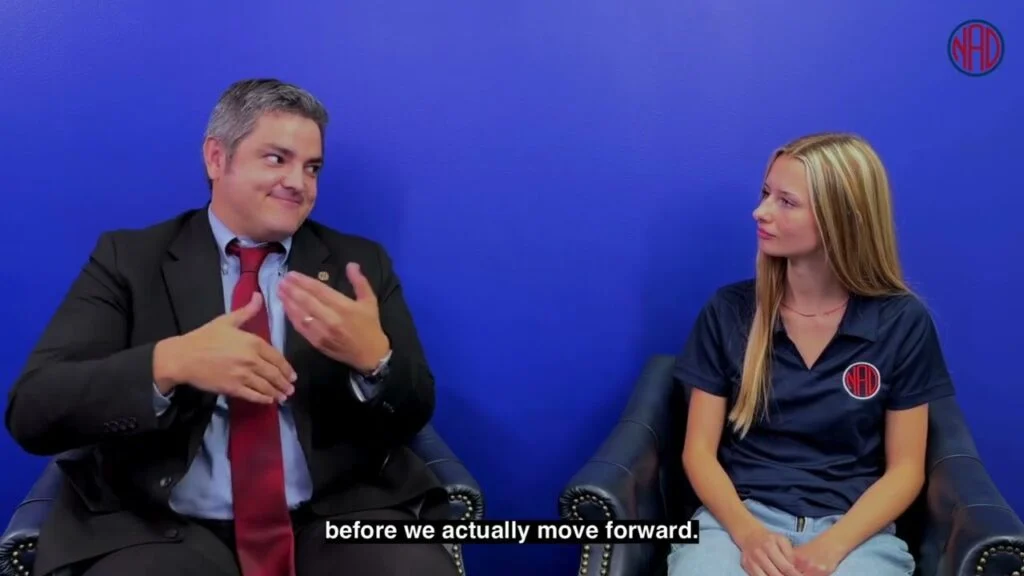
The conversation between Kiego and Marisa Goff also highlighted the vital importance of the Jr. NAD program. Goff, representing the 2025–2027 term, provided a candid perspective on the disconnect between the national organization and the youth it represents. She noted that many young people feel "left out" of major NAD events and expressed a desire for more collaborative opportunities at the state and local levels.
Kiego validated these concerns, noting that the Youth Program is a critical pipeline for the future of the organization. He observed that many of the most loyal and passionate advocates within the current NAD membership trace their involvement back to their formative years in the youth program.
To address the engagement gap, Kiego proposed a modernized approach to outreach. He and Goff discussed the potential of social media—not as a substitute for in-person community—but as a "preview" of the value the NAD provides. By utilizing platforms like Instagram and vlogs, the NAD can offer a glimpse into the organization’s work, encouraging young people to eventually seek the "full meal" of the experience: in-person conferences and community gatherings.
Analytical Outlook: Implications for the Future
The current trajectory of the NAD, as outlined by CEO Nick Kiego, suggests a transition toward a more transparent, volunteer-driven, and fiscally conservative model. The implications of this approach are threefold:
- Operational Resilience: By prioritizing financial stability and internal staff support, Kiego is effectively "shoring up" the organization’s base. This should reduce the risk of mission drift and ensure that the Legal Advocacy Center and other core departments can function more effectively.
- Democratic Accountability: By opening the door to volunteer involvement and speaking honestly about the organization’s limitations, the NAD is attempting to build a culture of shared responsibility. This move could increase member loyalty, as constituents move from being passive recipients of services to active participants in the organization’s success.
- Long-term Sustainability: The focus on the Jr. NAD pipeline acknowledges the demographic necessity of succession planning. Engaging the youth not only provides the current organization with fresh energy and digital expertise but also ensures that the mission of the NAD remains relevant to the next generation of Deaf leaders.
Conclusion
As the NAD looks toward the final quarter of 2026 and into 2027, the focus remains firmly on the dual pillars of fiscal discipline and community collaboration. The dialogue between Kiego and Goff serves as a baseline for this new phase. While the road ahead requires "grace and patience," as Kiego noted, the willingness to address the organization’s challenges head-on provides a roadmap for growth. By fostering a closer relationship between the national leadership and its youth ambassadors, the NAD is taking tangible steps to ensure that it remains a robust, responsive, and enduring voice for the Deaf community. The coming months will likely see a push for increased volunteer recruitment and a refined focus on the core programs that define the NAD’s historic mission.