The emergence of Aynak’s technology arrives amid a burgeoning interest in hearing assistance integrated into eyewear. This trend is underscored by recent advancements from other industry players, including the introduction of Nuance Audio Plus OTC hearing glasses and Legato’s AI-powered hearing glasses, signaling a distinct and promising new platform for auditory technology. This convergence of vision correction, smart eyewear, and advanced hearing solutions represents a significant shift in addressing a pervasive global health challenge.
The Genesis of Innovation: A Personal Mission from Qualcomm Institute
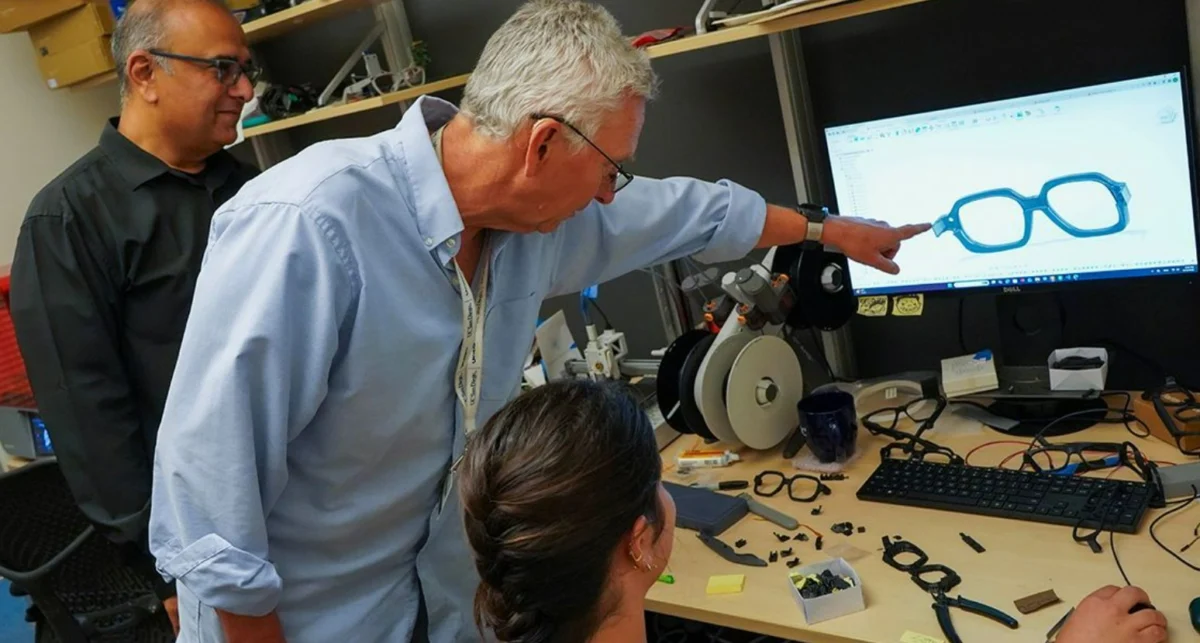
The foundational concept for Aynak Inc. is deeply rooted in the personal experiences of its founder and CEO, Ramesh Chandrasekhar. His journey into this innovative field was sparked by his mother-in-law’s escalating hearing difficulties around 2015. Chandrasekhar, a veteran of Qualcomm with 26 years of experience, had a distinguished career focusing on augmented reality and the intricate challenge of fitting sophisticated electronics into compact devices, such as glasses. This background provided him with a unique vantage point to tackle the complex engineering demands of his new venture.
His mother-in-law’s initial reluctance to adopt traditional hearing aids stemmed from a common societal perception: the association of such devices with aging and disability. When she eventually did try amplification, the experience was far from ideal. Background noise proved bothersome, and crucial conversations in bustling environments like restaurants remained a struggle. Despite trying several different hearing aid models, a satisfactory solution eluded the family. This firsthand encounter with the limitations and social barriers of conventional hearing technology propelled Chandrasekhar to contemplate an alternative: could hearing assistance be delivered through a device that people already routinely and willingly wear?
"People have no problem wearing glasses," Chandrasekhar remarked to UC San Diego, articulating the core insight behind Aynak. "There’s no stigma associated with it. I thought, ‘Maybe we use that vehicle to deliver hearing.’" This profound realization became the catalyst for Aynak, a name derived from the word for "glasses" in Hindi and Persian, reflecting a blend of cultural heritage and technological aspiration. Following this epiphany, Chandrasekhar dedicated himself to developing hearing technology specifically tailored to the familiar and widely accepted eyewear form factor. The company’s incubation within the UC San Diego Qualcomm Institute provided a fertile ground for this ambitious project, offering access to cutting-edge research facilities, interdisciplinary collaboration, and a vibrant ecosystem of technological innovation. The QI, known for fostering advancements at the intersection of information technology and critical societal needs, provided the ideal environment for Aynak to mature its prototypes and prepare for real-world testing.
Addressing a Global Healthcare Challenge: The Hearing Care Gap
Aynak Inc. is squarely targeting a persistent and widespread challenge within global hearing healthcare: the substantial gap between the number of individuals experiencing hearing difficulties and those who actually adopt hearing technology. According to the National Institute on Deafness and Other Communication Disorders (NIDCD), approximately 15% of U.S. adults (37.5 million people aged 18 and over) report some degree of hearing difficulty. Globally, the World Health Organization (WHO) estimates that over 5% of the world’s population – more than 430 million people – require rehabilitation for disabling hearing loss. Projections indicate this number could surge to over 700 million by 2050. Despite these staggering figures, a significant majority of individuals who could benefit from hearing aids either never use them or wait an average of seven to ten years before seeking intervention.

Several intertwined factors contribute to this pervasive adoption gap. While cost and access to professional audiological services are undeniable barriers, especially in underserved regions, perceived need, comfort, aesthetic concerns, and deeply ingrained societal attitudes toward conventional hearing devices play equally significant roles. Traditional hearing aids, often small and discreet, can still carry a social stigma, being mistakenly associated with frailty or advanced age. Furthermore, the physical sensation of wearing an in-ear or behind-the-ear device can be uncomfortable for some, leading to resistance. By integrating hearing assistance into eyewear, Aynak aims to offer a new, less stigmatized, and potentially more comfortable point of entry for millions of individuals who have been hesitant to embrace traditional solutions. This approach leverages the ubiquity and social acceptance of eyeglasses, transforming them from mere vision correction tools into discreet, powerful hearing enhancement devices.
The Mechanics of Multimodal Hearing: Sight Meets Sound
Aynak’s innovative approach transcends the simple integration of microphones and speakers into eyeglass frames. The company describes its system as "multimodal," a sophisticated design that harnesses both visual and auditory information to precisely determine what the wearer intends to hear. This advanced methodology is a departure from conventional hearing aids, which rely solely on acoustic input.
At the heart of Aynak’s technology is a small, unobtrusive vision sensor embedded within the glasses. This sensor plays a crucial role in identifying the person or direction the wearer is looking toward, effectively providing a "visual anchor" for auditory focus. Simultaneously, an array of microphones strategically placed within the frames collects sounds from various directions, capturing the ambient acoustic landscape. The true ingenuity lies in the artificial intelligence engine running directly on the glasses. This on-device AI processes and combines the visual and auditory inputs in real-time, intelligently isolating and amplifying the intended speaker’s voice while meticulously maintaining the wearer’s awareness of important surrounding sounds.
This concept ingeniously mirrors a natural human auditory process. The human brain instinctively combines visual cues with acoustic information – for instance, observing a speaker’s lips or head orientation – to selectively focus on specific sounds or voices in complex auditory environments. Aynak’s multimodal system attempts to computationally replicate and enhance this natural ability, providing a more intuitive and effective hearing experience, particularly in challenging, noisy social settings.
Privacy has been a paramount consideration in the design of Aynak’s system. The company explicitly states that the visual sensor is not designed to function as a conventional camera for capturing photographs or video. Crucially, all visual information utilized by the system remains securely on the glasses and is not transmitted to the cloud. This commitment to on-device processing and data locality aims to reassure users about the security and confidentiality of their personal data, addressing a key concern often raised with smart wearable technologies.
Milliseconds Matter: Overcoming Engineering Challenges
One of the most formidable engineering challenges faced by Aynak’s development team is achieving ultra-low latency in sound processing. Unlike traditional occluding hearing devices that block the ear canal, Aynak’s "open-ear" design allows users to hear natural sound directly through the air concurrently with the processed, amplified sound delivered by the glasses. This simultaneous reception creates a critical time constraint: if the amplified signal arrives even a fraction of a second later than the natural sound, the brain perceives this delay as an undesirable and disorienting echo.
Consequently, the system has mere milliseconds to execute a complex sequence of operations: analyze the acoustic and visual scene, accurately determine which voice requires emphasis, and process the sound for amplification. To circumvent the inherent delays associated with cloud-based computing, Aynak has opted for performing all AI processing directly on the glasses. This on-device processing architecture is critical in minimizing latency, ensuring that the enhanced audio is delivered almost instantaneously, thereby preventing echoes and maintaining a natural listening experience. The meticulous optimization of algorithms and hardware for this real-time, low-power processing on a compact device is a testament to the engineering prowess within Aynak.

Complementing the on-device intelligence, a companion smartphone application offers users a degree of personalization. This app allows individuals to tailor amplification frequencies to their specific audiometric profiles, ensuring that the hearing assistance is precisely calibrated to their unique hearing loss patterns. This blend of autonomous AI processing and user-customizable settings aims to provide both robust performance and personalized comfort.
A Resurgence of Hearing Glasses: A Look at the Competitive Landscape
The concept of integrating hearing assistance with eyeglasses is not entirely novel; eyeglass hearing aids were commercially available decades ago, with notable products emerging in the 1950s. However, the fundamental difference today lies in the exponential advancements in miniaturized technology that can now be seamlessly integrated into conventional-looking frames without compromising aesthetics or comfort. The convergence of ultra-compact microphones, sophisticated open-ear speakers, long-lasting rechargeable batteries, ubiquitous wireless connectivity, powerful digital signal processing, and increasingly capable on-device AI has fundamentally transformed the landscape, enabling companies to revisit this historical concept with unprecedented capabilities.
One significant player in this renewed arena is EssilorLuxottica, which has already introduced its eyewear-based solution into the U.S. Over-the-Counter (OTC) hearing aid market. Their second-generation Nuance Audio Plus hearing glasses exemplify this trend, combining six microphones and open-ear speakers with advanced directional processing. This system is specifically engineered to emphasize speech clarity while effectively reducing interference from surrounding noise. The Nuance Audio Plus can be configured with prescription lenses, offering a seamless integration for individuals who already wear glasses, and boasts up to 10 hours of continuous use on a single charge.
The Nuance Audio platform is also generating clinical evidence to support its claims. Research conducted on adults with mild-to-moderate hearing loss demonstrated that the first-generation glasses significantly improved speech recognition in noisy environments and reduced listening effort. In a particularly challenging test condition, average speech recognition increased dramatically from 34.2% without amplification to 63.2% with the glasses activated. While these initial findings are promising, researchers have emphasized the need for additional field studies to fully understand the longer-term performance and real-world utility of the device.
Another innovative approach comes from Boston-based startup Legato. Emerging from stealth mode with a substantial $12 million in funding, Legato unveiled its AI-powered hearing glasses this summer. Unlike Aynak, Legato has focused primarily on integrating hearing assistance and AI processing into stylish, conventional-looking eyewear without relying on visual information. Their design prioritizes a discreet form factor, eliminating the need for any in-ear or behind-the-ear components.
These diverse approaches – from directional OTC hearing glasses to AI-driven systems and now multimodal technology combining sight and sound – illustrate the broad interpretations and innovative methodologies being applied to the concept of "hearing glasses." While the common element remains the eyeglass frame itself, the underlying technologies and strategies employed to identify, process, and deliver useful speech vary considerably, highlighting a dynamic and rapidly evolving sector.
The Broader Ecosystem of Smart Eyewear and Future Implications
Aynak’s technological development is occurring within a rapidly expanding ecosystem of smart glasses, a category becoming increasingly familiar to mainstream consumers. The integration of microphones, speakers, cameras, wireless connectivity, and AI capabilities into eyewear for applications beyond vision correction – such as augmented reality, hands-free communication, and fitness tracking – is accelerating. This broader industry shift could naturally position glasses as a more intuitive and accepted platform for hearing assistance than might have been conceivable even a few years ago. As smart eyewear transitions from niche gadgets to more widely adopted consumer electronics, the path for hearing glasses to gain market acceptance becomes clearer.

However, the eyewear format also presents its own unique set of challenges and considerations. For individuals who do not already wear corrective lenses, adopting glasses solely for hearing assistance might be a significant hurdle. Factors such as frame comfort, overall weight, battery life, the complexity of prescription changes, and personal style preferences all become integral components of the hearing device experience. Furthermore, the open-ear sound delivery inherent in many hearing glasses designs introduces different acoustic challenges compared to devices positioned directly in or near the ear canal, requiring sophisticated sound processing to mitigate issues like feedback and ambient noise interference. For systems incorporating visual sensors, like Aynak’s, consumer acceptance and privacy concerns will require careful navigation and transparent communication.
Testing the Concept in Everyday Life: The Pilot Program and Future Outlook
Aynak’s upcoming pilot program is designed to gather crucial real-world data on how its multimodal approach performs outside of controlled laboratory environments. The latest prototypes have been meticulously crafted to resemble everyday eyewear, available in two distinct frame styles to appeal to a broader range of participants. This focus on aesthetic integration is a deliberate strategy to reduce the visual distinction between regular glasses and hearing-enabled ones.
Looking beyond the pilot phase, Aynak envisions a long-term strategy focused on licensing its underlying technology and partnering with established eyewear manufacturers. These collaborations would leverage the expertise of fashion-forward brands in consumer aesthetics, frame design, and global distribution, allowing Aynak to concentrate on its core technological innovations.
Chandrasekhar also sees significant potential for developing lower-cost versions of this technology, particularly for deployment in countries where access to comprehensive audiology services and affordable hearing aids is severely limited. This vision underscores a commitment to global accessibility and addressing health disparities. Additionally, the company is actively exploring other forms of sound delivery with research partners, indicating a broader commitment to continuous innovation in auditory science.
However, the immediate objective of the pilot program is refreshingly straightforward: to empirically determine whether hearing assistance can become an act as natural and commonplace as putting on a pair of glasses each morning. "My goal is to enable people to live independently for as long as possible," Chandrasekhar stated, encapsulating the profound human impact he hopes to achieve.
Whether hearing glasses, in their various innovative forms, can meaningfully narrow the persistent gap between the number of people experiencing hearing difficulty and those who adopt hearing technology remains an open, yet increasingly hopeful, question. The burgeoning range of approaches – from directional OTC hearing glasses and sophisticated AI-driven systems to the groundbreaking multimodal technology combining sight and sound championed by Aynak – unequivocally suggests that eyewear is emerging as an increasingly vital testing ground for next-generation hearing assistance solutions. This dynamic evolution promises a future where hearing clarity is not just a medical intervention, but an integral, stylish, and seamless part of everyday life.
Source: Ono M. Can Eyewear Close the Hearing Gap? UC San Diego Today. September 30, 2026.