The Evolution of Neuroimaging: From Static Maps to Dynamic Networks
For decades, the standard model of neuroimaging has relied on identifying specific regions of the brain—such as the auditory cortex or the prefrontal cortex—and assigning them localized functions. While this "modular" view of the brain provided a foundational understanding of anatomy, it often failed to capture the fluid, interconnected nature of neural activity. Traditional methods typically categorized brainwaves into fixed frequency bands, such as alpha (8–12 Hz), beta (13–30 Hz), and gamma (30–100 Hz), treating them as isolated "stations" that remained relatively consistent in their spatial locations.
However, the research led by Dr. Mattia Rosso and Associate Professor Leonardo Bonetti at the Center for Music in the Brain (MIB) suggests that these boundaries are far more porous than previously believed. By utilizing a new computational method called FREQ-NESS (Frequency-resolved Network Estimation via Source Separation), the research team has moved beyond these predefined constraints. FREQ-NESS employs advanced algorithms to disentangle overlapping neural networks based on their dominant frequencies. Once a network is isolated by its unique rhythmic signature, the system can trace its propagation across the physical space of the brain, providing a high-definition "movie" of neural reconfiguration rather than a series of static "snapshots."
The FREQ-NESS Framework: Technical Innovation in Source Separation
The core of the study’s success lies in the FREQ-NESS methodology. In the complex electrical environment of the human cranium, multiple neural signals often fire simultaneously, creating a "noise" that traditional electroencephalography (EEG) or magnetoencephalography (MEG) struggles to resolve with absolute spatial precision. FREQ-NESS addresses this by implementing source separation—a mathematical process that identifies individual signal sources within a mixture.
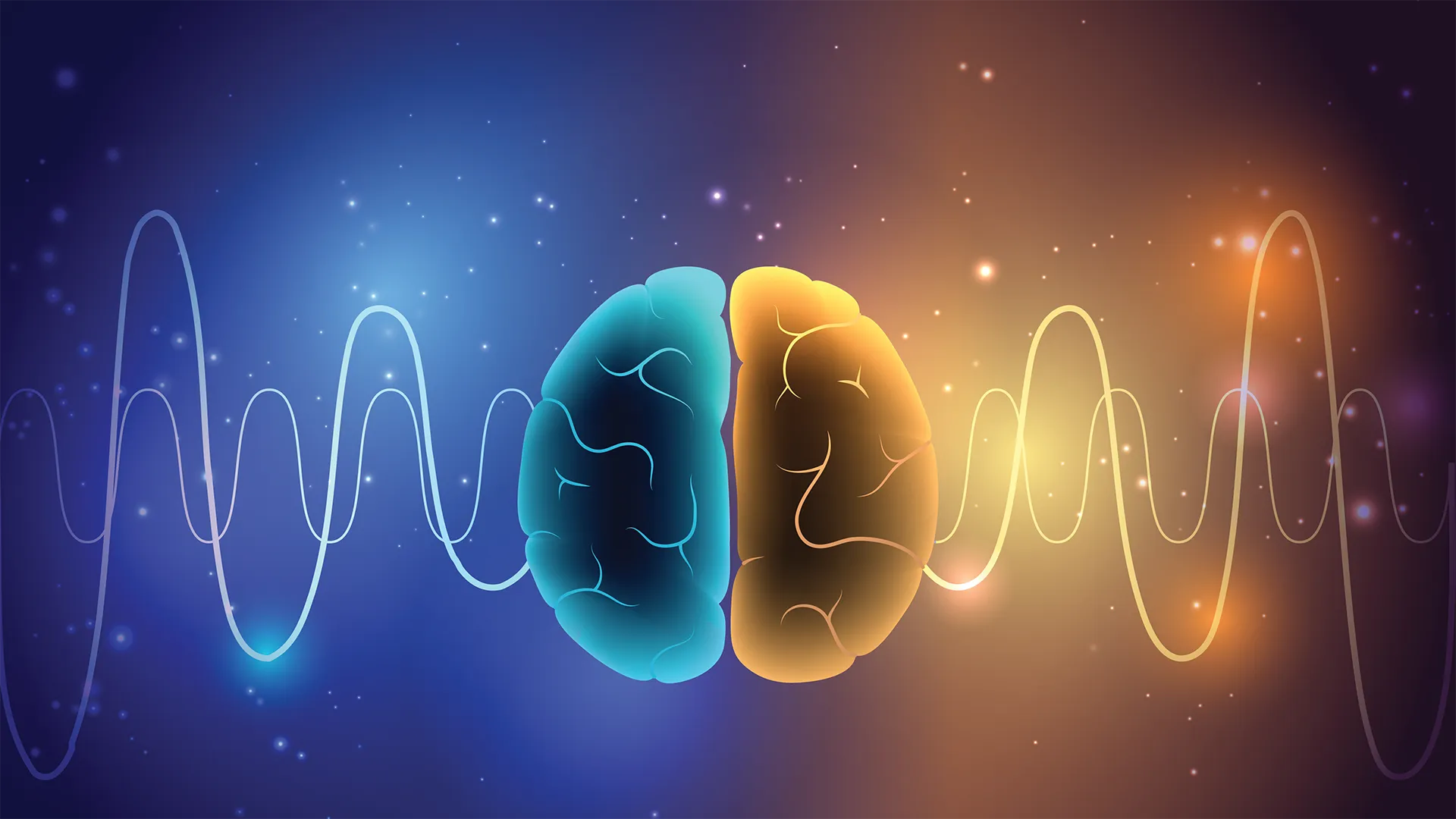
By focusing on the frequency-resolved aspects of these signals, the researchers can pinpoint how specific rhythmic inputs (such as a 4Hz beat or a sustained musical pitch) trigger the formation of temporary, specialized networks. These networks are not permanent structures; they are transient alliances of neurons that assemble to process information and then dissipate or reconfigure as the stimulus changes. Dr. Rosso notes that this richness of data allows scientists to see how the brain tunes itself both internally and to the external environment, effectively "harmonizing" its internal state with external rhythms.
Chronology of the Research and Developmental Timeline
The journey toward the development of FREQ-NESS and the subsequent findings on neural reorganization follows a timeline of increasing complexity in auditory neuroscience:
- Phase 1: Foundation (2018–2020): Researchers at Aarhus University’s Center for Music in the Brain began exploring the limitations of standard Fourier transforms in mapping brain activity during complex musical tasks. They recognized a need for a tool that could handle the non-stationary nature of brainwaves.
- Phase 2: Algorithmic Development (2021–2022): In collaboration with the University of Oxford’s Centre for Eudaimonia and Human Flourishing, the team developed the initial algorithms for FREQ-NESS. The goal was to create a data-driven approach that did not rely on "Regions of Interest" (ROIs) predefined by the researcher, which can often introduce bias.
- Phase 3: Experimental Validation (2023): The team conducted rigorous testing, exposing subjects to controlled rhythmic sequences while monitoring brain activity. The data confirmed that the brain’s response to rhythm was not localized but involved a "large-scale orchestration" across multiple cortical networks.
- Phase 4: Publication and Peer Review (2024): The findings were published in Advanced Science, detailing the high spectral and spatial precision of the FREQ-NESS method and its ability to replicate results across different datasets.
Supporting Data: Precision and Reliability
One of the most compelling aspects of the Aarhus-Oxford study is the reliability of the FREQ-NESS method across varying experimental conditions. In traditional neuroimaging, "inter-subject variability"—the differences between how one person’s brain reacts compared to another’s—often clouds the data. However, the FREQ-NESS approach demonstrated a remarkably high level of consistency.
The study analyzed large-scale dynamics involving thousands of neural data points. By applying the frequency-resolved estimation, the researchers were able to map the "propagation velocity" of neural signals as they moved from the primary auditory areas to the higher-order cognitive centers. The data indicated that the brain’s reorganization occurs within milliseconds of a rhythmic change, suggesting that the "reconfiguration" is an essential part of the perception process itself, rather than a delayed reaction. This high-speed adaptability ensures that the human brain can maintain focus and anticipate future beats in a musical sequence, a phenomenon known as "predictive coding."
Expert Reactions and Scientific Commentary
The implications of this research have resonated throughout the global scientific community. Professor Leonardo Bonetti, a co-author of the study, emphasizes that the ability to see the brain reconfigure in real time opens doors that were previously locked. "The brain doesn’t just react: it reconfigures. And now we can see it," Bonetti stated. He further noted that this methodology is not limited to music; it extends to the very core of human consciousness and how we interact with the world.
While not directly involved in the study, other experts in the field of computational neuroscience have praised the move toward data-driven, frequency-based mapping. The consensus among peers is that FREQ-NESS offers a more "organic" view of the brain. By allowing the data to dictate the networks rather than forcing the data into predefined anatomical boxes, researchers can discover previously unknown pathways involved in attention, mind-wandering, and even altered states of consciousness.
Broader Implications: Medicine, Technology, and Beyond
The development of precise, real-time brain mapping has far-reaching consequences that extend well beyond the walls of the laboratory.
1. Clinical Diagnostics and Neurodegenerative Disease
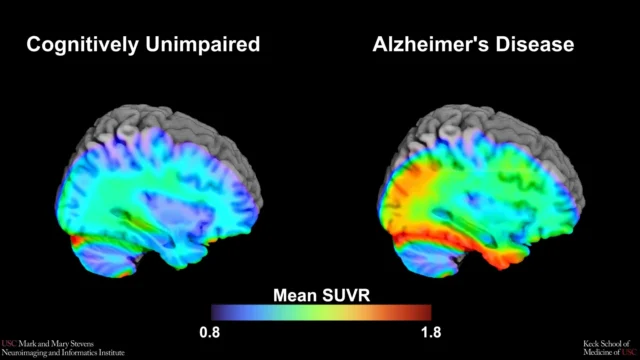
The ability to map how networks propagate could become a vital tool in early diagnosis for conditions like Alzheimer’s disease or Parkinson’s. In these diseases, the brain’s ability to coordinate large-scale networks is often compromised long before physical symptoms appear. If a clinician can observe a breakdown in the "rhythmic reorganization" of a patient’s brain, they may be able to intervene much earlier.
2. Brain-Computer Interfaces (BCI)
As we move toward a future where technology can be controlled by thought, the precision of FREQ-NESS is invaluable. Current BCIs often suffer from "lag" or "noise" issues. A system that understands the specific frequency-based networks of an individual’s brain could lead to more responsive and intuitive interfaces for prosthetic limbs or communication devices for those with locked-in syndrome.
3. Music Therapy and Cognitive Rehabilitation
Since the study specifically highlights how the brain reorganizes in response to rhythm and tone, it provides a scientific validation for music therapy. Understanding the exact "frequency-resolved" pathways that music activates can help therapists design specific auditory stimuli to help patients recover speech or motor functions after a stroke or traumatic brain injury.
4. Individualized Brain Mapping
Perhaps the most ambitious application is the move toward personalized medicine. Because FREQ-NESS is highly reliable across datasets, it could eventually be used to create a "neural fingerprint" for individuals. This would allow for treatments—whether pharmaceutical or behavioral—that are tailored to the specific way an individual’s brain networks are organized.
Conclusion: A New Paradigm for Understanding the Mind
The collaborative research from Aarhus University and the University of Oxford represents a paradigm shift in cognitive science. By proving that the brain is a dynamic, self-reorganizing entity that orchestrates complex wave interactions in real time, the study moves us closer to solving the mysteries of human perception. The introduction of the FREQ-NESS method provides the scientific community with a powerful new lens through which to view the "symphony" of the human mind.
As a large-scale research program continues to build on this methodology, supported by an international network of neuroscientists, the focus will shift toward mapping even more complex cognitive states. Whether exploring how we lose ourselves in a piece of music or how we maintain a sense of self through the constant stream of sensory data, the ability to see the brain’s internal architecture in motion is a transformative achievement in the quest to understand what it means to be human.