A Star Trek Icon’s Personal Mission for Hearing Health
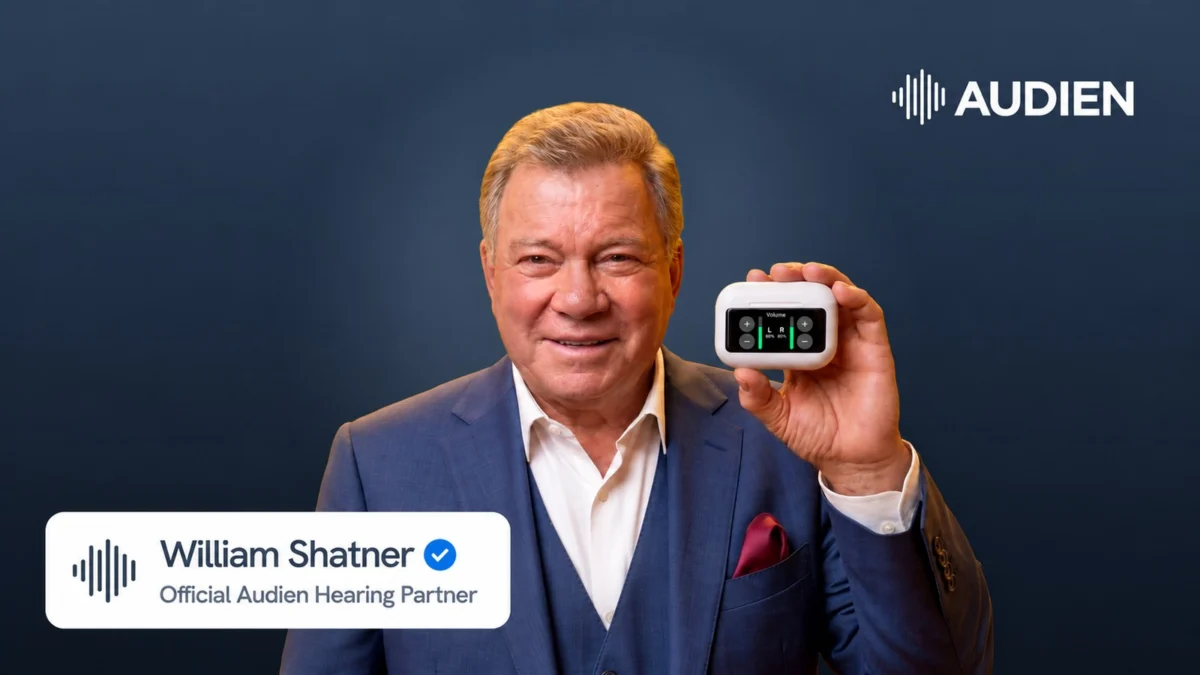
At 95 years old, William Shatner, globally recognized for his iconic portrayal of Captain James T. Kirk in the Star Trek franchise, brings an authentic and relatable voice to the campaign. Shatner, who made headlines worldwide as the oldest person to travel to space aboard a Blue Origin mission at age 90, embodies a spirit of adventure and a relentless pursuit of new experiences, making him an ideal ambassador for a campaign centered on healthy aging. His willingness to openly discuss his own struggles with hearing challenges adds a powerful layer of credibility and encourages others to address similar issues without hesitation.
"I’ve spent a lifetime thinking about the future, and at 95, I still want to know what’s next: the next conversation, the next idea, the next adventure. I know firsthand how hearing challenges can affect those moments. That’s why I partnered with Audien. There’s a lot of life left to live, and a lot worth hearing," Shatner stated, encapsulating the campaign’s core message. His involvement as a brand ambassador will see him featured prominently in Audien’s marketing and social media content, sharing his insights and encouraging proactive hearing care.
The Broader Context: Hearing Loss and Its Societal Impact
The "Boldly Hear What’s Next" campaign arrives at a crucial time when global health organizations and public health initiatives are increasingly emphasizing the pervasive nature and significant implications of unaddressed hearing loss. According to the World Health Organization (WHO), over 1.5 billion people worldwide live with some degree of hearing loss, a number projected to rise to nearly 2.5 billion by 2050. In the United States alone, millions of adults report difficulty hearing, with prevalence increasing significantly with age. The Centers for Disease Control and Prevention (CDC) estimates that about 25% of U.S. adults aged 65 to 74 years and 50% of those aged 75 years and older have disabling hearing loss.
Beyond the immediate difficulty in understanding speech, unaddressed hearing loss has far-reaching consequences for an individual’s overall health and well-being. Research has consistently linked hearing impairment to social isolation, depression, anxiety, and an increased risk of cognitive decline, including dementia. It can also lead to reduced physical activity, a higher risk of falls, and diminished quality of life. By addressing hearing challenges, individuals can mitigate these risks, maintain their cognitive sharpness, and continue to participate actively in social and family life. This campaign strategically positions hearing health not merely as a sensory correction but as a vital component of holistic healthy aging and sustained social connectivity.
The Evolving Landscape of Over-the-Counter Hearing Aids
Audien Hearing’s partnership with William Shatner also highlights a transformative shift within the hearing care industry: the rise of over-the-counter (OTC) hearing aids. Historically, hearing aids were classified as prescription medical devices, requiring an audiologist’s evaluation and fitting, often leading to high costs and limited accessibility. This regulatory framework created significant barriers for many individuals, contributing to a substantial gap between those who could benefit from hearing aids and those who actually used them.
The landscape began to change with the passage of the Over-the-Counter Hearing Aid Act in 2017, which mandated the U.S. Food and Drug Administration (FDA) to establish a category for OTC hearing aids. The FDA finalized its rule in October 2022, creating a new class of hearing aids available directly to consumers without a medical exam or a prescription. This landmark decision was designed to foster innovation, increase competition, and significantly lower the cost of hearing aids, thereby expanding access to millions of Americans with perceived mild-to-moderate hearing loss.
Audien, founded in 2019, positioned itself early in anticipation of this market shift, focusing on developing and marketing accessible and affordable OTC hearing aids directly to consumers and through retail partners. The company’s mission aligns perfectly with the spirit of the OTC legislation, aiming to democratize hearing technology and ensure that more people can access the solutions they need to stay connected. The market for OTC hearing aids is projected to grow substantially in the coming years, driven by increased awareness, technological advancements, and the aging global population.
Audien’s Atom X: Technology for Accessibility
The "Boldly Hear What’s Next" campaign specifically champions Audien’s Atom X over-the-counter hearing aid. This device exemplifies the company’s commitment to user-friendly and accessible technology. The Atom X is a rechargeable, in-ear hearing aid designed for adults 18 and older with perceived mild-to-moderate hearing loss. A key differentiator of the Atom X is its innovative touchscreen charging case, which allows users to directly adjust volume and switch between hearing modes without the need for a smartphone application. This feature is particularly appealing to an older demographic who may prefer simpler, standalone controls over app-dependent devices, removing a potential technological barrier to adoption.
Understanding that self-fitting hearing aids can present a learning curve, Audien also offers a complimentary one-on-one "Sound Check" appointment with a Hearing Specialist. This service provides customers with personalized setup assistance and guidance, ensuring they can optimize their device for their specific hearing needs. This emphasis on customer support underscores Audien’s dedication to facilitating a smooth and effective transition for new users, addressing common concerns associated with direct-to-consumer medical devices.
Ishan Patel, Co-founder and CEO of Audien Hearing, articulated the company’s driving philosophy: "We started Audien because too many people were being left out of conversations they deserved to be part of. Making hearing more accessible means giving people a way back into those moments. William embodies why that matters: there is still so much life ahead worth showing up for." This sentiment perfectly encapsulates the emotional and practical value proposition of accessible hearing technology.
Implications for Public Health and the Hearing Care Industry
The partnership between William Shatner and Audien Hearing carries significant implications for both public health advocacy and the commercial hearing care sector. From a public health perspective, a celebrity endorsement of this magnitude has the potential to dramatically increase awareness about the prevalence and impact of hearing loss. Shatner’s willingness to share his personal experience can help destigmatize hearing aid use, transforming it from a symbol of decline into a proactive choice for maintaining an active, engaged lifestyle. This can encourage more individuals, especially those in their 50s and 60s who might be experiencing early signs of hearing loss, to seek solutions earlier, preventing further social and cognitive decline.
For the hearing care industry, particularly the burgeoning OTC segment, Shatner’s involvement provides a powerful validation. His endorsement lends credibility to OTC devices, which are still relatively new to the mainstream consumer market. It could accelerate consumer adoption rates and instill confidence in the effectiveness and safety of these accessible solutions. Traditional hearing aid providers and audiologists may also find that increased public awareness spurred by such campaigns leads to a broader understanding of hearing health, potentially benefiting the entire ecosystem by encouraging more people to seek professional advice when needed, regardless of whether they ultimately choose OTC or prescription devices.
Furthermore, this campaign aligns with broader societal trends focusing on healthy aging and longevity. As populations age globally, there is an increasing emphasis on maintaining physical, mental, and social well-being throughout life. By positioning hearing as a cornerstone of healthy aging, Audien and Shatner are contributing to a wider discourse that encourages individuals to take proactive steps to preserve their senses and cognitive function, ensuring a higher quality of life in their later years. The "Boldly Hear What’s Next" message resonates deeply with anyone looking to maximize their potential and remain vibrant, irrespective of age.
A New Chapter for Hearing Accessibility
The collaboration between William Shatner and Audien Hearing represents a compelling confluence of celebrity influence, innovative technology, and a crucial public health message. By harnessing Shatner’s enduring legacy of exploration and his personal authenticity, the campaign aims to inspire millions to "Boldly Hear What’s Next" – to confront hearing challenges, embrace accessible solutions, and continue to live life to its fullest. As the OTC hearing aid market matures, high-profile initiatives like this will be instrumental in shaping consumer perceptions, driving adoption, and ultimately, improving the quality of life for countless individuals grappling with hearing loss, allowing them to remain connected to the conversations, relationships, and adventures that enrich human experience. This partnership marks not just a marketing effort, but a significant step forward in making comprehensive hearing care a more attainable reality for all.