The Current State of NAD Operations
Upon entering the role, Kiego was confronted with the stark reality of the organization’s operational capacity. Contrary to the common perception of the NAD as a sprawling, heavily funded institution, the reality is a lean operation consisting of only six full-time employees. This team has spent the past several years managing the organization’s complex portfolio—including legal advocacy, youth programming, and national policy initiatives—with minimal resources and recognition.
Kiego’s initial findings suggest that the organization has been operating in a state of high-pressure austerity. The physical office space itself reflects this, being significantly smaller than what the public often envisions. By choosing to speak openly about these limitations, Kiego is signaling a departure from traditional corporate posturing. He argues that by presenting an honest assessment of the organization’s current standing, he can better mobilize the community to help build a more sustainable future.
Chronology of the First Thirty Days
Kiego’s first month was characterized by a systematic diagnostic of the organization’s health. His approach to leadership in these early weeks followed a specific hierarchy of needs:
- Days 1–3: Fiscal Audit: Kiego’s immediate focus was the organization’s financial stability. He held extensive, deep-dive sessions with the Chief Financial Officer and external accountants to analyze budget allocation, investment strategies, and long-term fiscal viability.
- Weeks 2–3: Internal Engagement: Following the financial assessment, Kiego pivoted to human capital. He conducted one-on-one meetings with the directors of the Youth and Legal Advocacy programs, as well as the entire support staff. These sessions were designed to identify operational bottlenecks and understand the organizational culture that has sustained the team through recent years.
- Week 4: External Networking: With an internal foundation established, Kiego began reaching out to external partners, including the Deaf and Hard of Hearing Consumer Advocacy Network (DHHCAN) and Telecommunications for the Deaf and Hard of Hearing (TDI), to synchronize policy goals and strengthen coalition ties.
Strategic Wins and Immediate Priorities
Despite the challenges, Kiego has already moved to address critical gaps in the organization’s infrastructure. One of the most immediate administrative wins was the onboarding of a new webmaster and IT systems administrator. This appointment is intended to resolve long-standing issues with the NAD website, which has suffered from broken links and navigation difficulties, hindering the organization’s ability to disseminate information effectively.
Furthermore, Kiego, in collaboration with the Youth Programs Director, has successfully recruited a volunteer grant writer dedicated exclusively to the youth sector. This move is a tactical response to the urgent need for additional funding to expand youth-centric programming. Kiego’s strategy involves leveraging volunteer expertise to fill roles that the current budget cannot sustain as salaried positions.
Addressing the Generational Divide
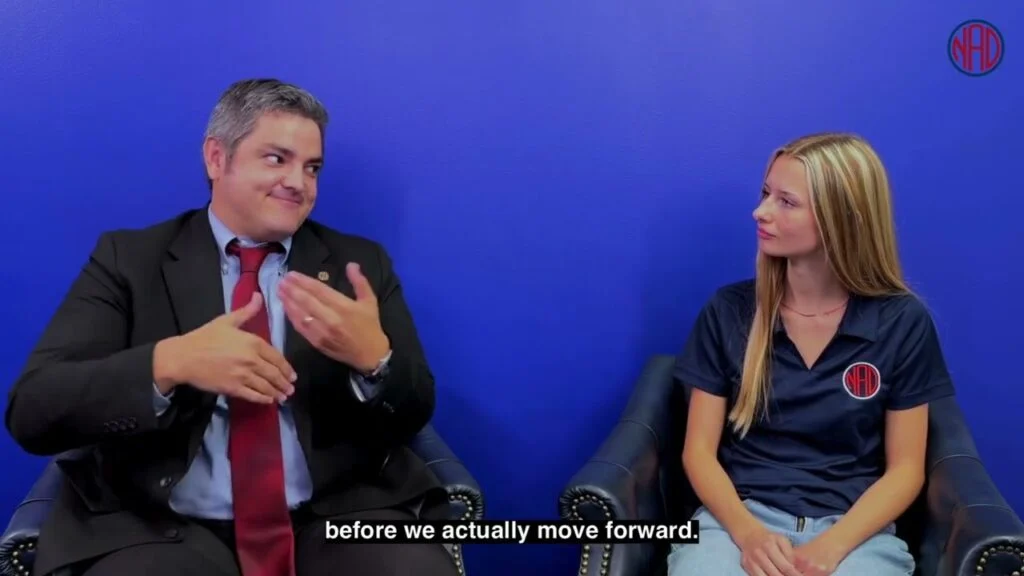
The dialogue between Kiego and Jr. NAD Ambassador Marisa Goff highlighted a critical tension within the Deaf community: the disconnect between the youth demographic and the organization’s established leadership. Goff noted that while youth are eager to participate, they often feel isolated from the core activities of the NAD.
Kiego acknowledged that the youth demographic is the pipeline for the future of the organization. He noted that the most passionate and loyal long-term members of the NAD often trace their engagement back to their involvement in youth programs. To address this, the CEO and the Ambassador discussed a shift in communication strategy. Rather than relying solely on traditional in-person networking, the organization plans to utilize social media—Instagram, vlogs, and digital networking—as a "preview" to draw the younger generation into the broader mission of the organization. The goal is to create a digital bridge that leads to meaningful in-person advocacy.
The Call for Community Support
Kiego’s vision for the future of the NAD is one of collective responsibility. He emphasized that the organization is not in a position to function as a closed, elite entity; rather, it requires a "people-powered" approach to succeed. He issued a specific call to action for the community, requesting support in three primary areas:
- Professional Volunteerism: The NAD is actively seeking experts, including retired legal professionals to assist with client intake, grant writers, and policy experts in telecommunications and education, to volunteer their time.
- Communications Support: With no dedicated communications staff, the organization currently relies on volunteer support to manage its public-facing content. Kiego views this as a high-priority area for professionalization via community involvement.
- Patience and Institutional Grace: Kiego cautioned that the path to stabilization will not be instantaneous. He noted that the organization may need to take steps backward in order to restructure before it can effectively move forward.
Analytical Outlook: The Implications of Transparency
The decision by the NAD leadership to expose the "behind-the-scenes" realities of the organization serves as a strategic pivot. By acknowledging the limits of current staffing and the necessity of volunteer labor, Kiego is attempting to reset expectations while simultaneously increasing the community’s "buy-in."
The implication of this transparency is twofold. First, it manages public frustration by validating that many criticisms of the NAD are, in fact, based on genuine service gaps that the organization is currently under-equipped to fix. Second, it shifts the narrative from one of organizational failure to one of collective challenge. If the NAD can successfully harness the volunteer energy requested by Kiego, it may find the leverage required to stabilize its finances and, eventually, transition back to a more robust, permanent staff model.
However, the success of this strategy rests entirely on the community’s willingness to provide the requested support. As Kiego noted, he is currently spending a significant portion of his time answering membership inquiries—a task that demonstrates his commitment to the members but highlights the inefficiency of the current operational model. As the organization enters the next phase of this transition, the focus will remain on stabilizing core pillars: legal advocacy, policy work, and the youth pipeline.
The conversation between the CEO and the Jr. NAD Ambassador serves as a blueprint for the months ahead. It confirms that while the NAD is currently in a state of lean operation, the roadmap for growth is built on the premise of radical transparency and active community participation. Whether this approach results in the systemic elevation of the organization remains a central question for the 2025–2027 term, but for now, the path forward appears centered on a commitment to honesty and the strategic mobilization of the community it serves.