The Silent Epidemic: Why Routine Screening Matters
Hearing loss is a pervasive yet frequently underestimated public health concern, often referred to as a "silent epidemic." Unlike acute health issues, its onset is typically gradual, making it difficult for individuals to recognize changes until they reach a noticeable, often disruptive, level. By this point, individuals may have been experiencing auditory decline for years, missing crucial opportunities for early intervention. Data from the National Institute on Deafness and Other Communication Disorders (NIDCD) indicates that approximately 15% of American adults (37.5 million) aged 18 and over report some trouble hearing. This prevalence significantly increases with age, affecting nearly one in three people between the ages of 65 and 74, and nearly half of those 75 and older. Alarmingly, an estimated 48 million Americans have some degree of hearing loss, yet only about 20% of those who could benefit from intervention actually seek help.
Untreated hearing loss has profound implications beyond communication difficulties. Research has linked it to a higher risk of cognitive decline, including dementia, social isolation, depression, increased risk of falls, and overall diminished quality of life. A 2011 study by Johns Hopkins Medicine found that older adults with hearing loss had significantly higher rates of dementia. Moreover, the economic burden of untreated hearing loss is substantial, encompassing healthcare costs, lost productivity, and the societal impact of reduced engagement. Despite these significant ramifications, hearing screening has historically lagged behind other routine health checks such as mammograms, colonoscopies, blood pressure, and cholesterol tests. The "Listen Up" campaign endeavors to bridge this gap, integrating hearing health into the broader dialogue of comprehensive wellness.
"Listen Up": A Proactive Approach to Hearing Health
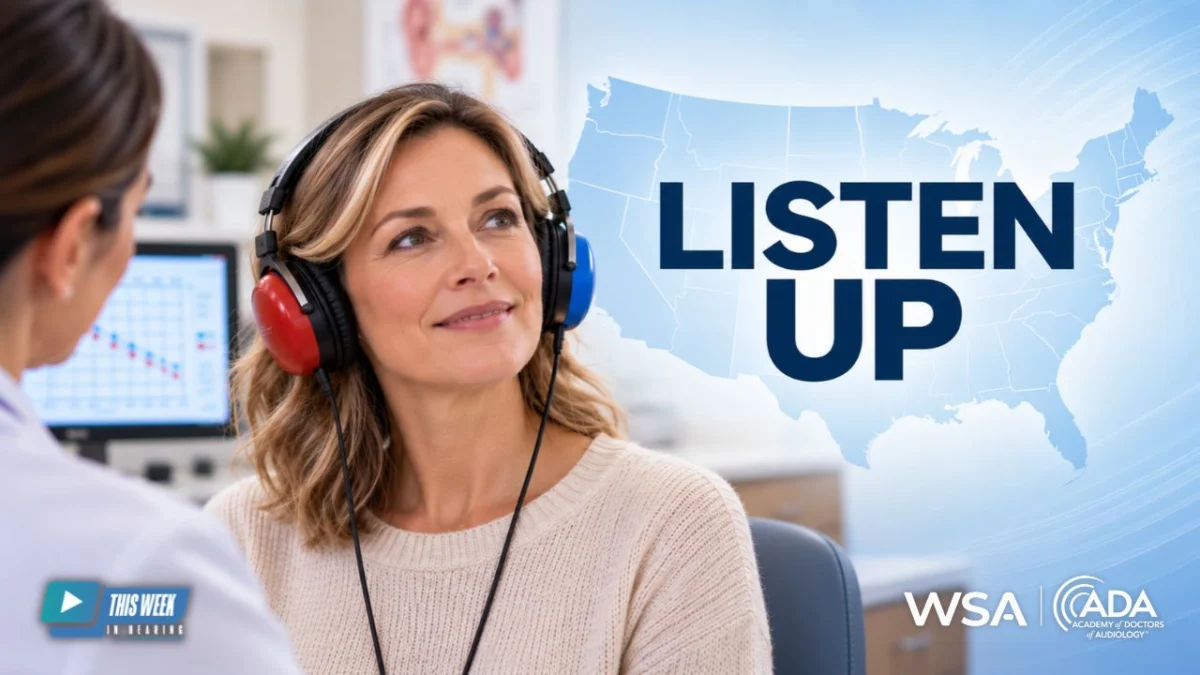
The core tenet of the "Listen Up" campaign is to establish age 50 as a benchmark for initiating routine hearing screening. Dr. Jill Davis, President of the Academy of Doctors of Audiology, explains that while there is "nothing magical that happens at the age of 50," this age aligns with the period when many individuals begin engaging in other important health screenings. The initiative seeks to create a cultural expectation where "the ears become what we think about at 50," akin to the established timelines for other preventative care.
The campaign emphasizes that a hearing screening is not a diagnosis but rather a tool to gain valuable information and establish a baseline. This baseline allows individuals and healthcare providers to monitor auditory changes over time, facilitating earlier detection of potential issues. "Getting a hearing screen doesn’t mean that you have hearing loss, that you need a hearing aid," Dr. Davis clarified during a discussion with Shari Eberts of "This Week in Hearing." "It just gives you more information so that you’re ready when it is time to get more answers." This data-driven approach empowers individuals to act proactively, enabling timely intervention that can significantly improve long-term outcomes and maintain connectivity.
Beyond mere screening, "Listen Up" also champions prevention. A significant component of the campaign is educating the public about noise-induced hearing loss (NIHL), a preventable condition. The initiative promotes awareness regarding exposure to loud sounds in everyday life – from concerts and sporting events to personal audio devices – and encourages protective measures such as turning down volume and wearing earplugs. The goal is to empower individuals to "not avoid the things that they love" but rather to engage in them safely, preserving their hearing for a lifetime.
The Partnership: ADA and WSA
The "Listen Up" campaign represents a strategic partnership between two key stakeholders in the hearing health sector: the Academy of Doctors of Audiology (ADA) and WS Audiology (WSA). This collaboration combines the clinical expertise and professional advocacy of audiologists with the manufacturing and market reach of a global hearing aid company.
The ADA, a professional organization representing audiologists, brings its commitment to advancing audiology practice and ensuring optimal patient care. For the ADA, "Listen Up" aligns perfectly with its mission to promote hearing healthcare and facilitate early intervention. Dr. Davis articulated the ADA’s vision, stating that success for the campaign would be "someone turning 50 knowing that now’s the time I gotta think about my ears." The organization’s involvement underscores the professional medical community’s endorsement of routine screening and its potential to improve public health.
WS Audiology, a major player in the hearing aid industry, co-sponsors the initiative, a move that might, at first glance, appear driven by commercial interests. However, Mike O’Neil, U.S. Wholesale President at WSA, strongly refutes this perception, emphasizing the campaign’s focus on prevention and early identification rather than immediate sales. "This is actually a program about prevention and early screening to identify hearing loss," O’Neil stated, noting that approximately 5% of the population experiences hearing loss as early as 45-54 years old. WSA’s commitment is rooted in its broader corporate objective, articulated in its 2023 five-year strategic plan: "helping 10 million people by 2028 hear better and live better through better hearing." O’Neil explained that WSA believes "people that have better hearing are more engaged, they’re more participative, they’re more inclusive." This philosophical alignment positions the campaign as a public health initiative, with any commercial benefits being a secondary outcome of a healthier, more engaged population. The partnership demonstrates a shared vision for making hearing health a mainstream priority, leveraging the strengths of both clinical advocacy and industry innovation.
Implementation and Expansion: A Grassroots Strategy
The "Listen Up" initiative has adopted a strategic, grassroots approach to its rollout, beginning with a pilot program in Kentucky. The decision to launch in Kentucky was largely pragmatic, leveraging the state’s status as the location of ADA’s headquarters. This initial phase allowed the campaign organizers to test messaging, outreach strategies, and logistical frameworks in a localized environment.
Following the Kentucky pilot, the campaign is now expanding into additional states: Texas, Florida, Colorado, and Illinois. This expansion is not arbitrary; it is driven by a deliberate strategy to test the initiative in diverse markets with varying demographics and healthcare infrastructures. O’Neil explained that market selection is influenced by "an environment where there’s lots of support for it," particularly where ADA members and audiologists are actively requesting such a campaign. The inclusion of large states like Texas and Florida, known for their significant hearing aid markets, also plays a strategic role in assessing broader public engagement and healthcare system integration.
The grassroots nature of "Listen Up" means that it builds momentum from the ground up, rather than being a top-down national mandate. This involves fostering local partnerships, engaging community organizations, and working directly with healthcare providers. The campaign aims to integrate hearing screening into settings where adults already receive routine health screenings, such as primary care practices. This approach seeks to remove barriers to access and make hearing checks as convenient and commonplace as blood pressure or vision tests. By collaborating with "lifestyle medicine and other organizations," the initiative endeavors to embed hearing health within the existing framework of general wellness.
Beyond Screening: Prevention and Comprehensive Care
The "Listen Up" campaign’s vision extends beyond initial screening, encompassing a pathway to comprehensive audiologic care and ongoing hearing protection. For individuals whose screening results are normal and who experience no symptoms, the recommendation is to make annual hearing checks a routine, similar to other preventative health screenings. This continuous monitoring is crucial for detecting subtle changes over time, especially given the gradual progression of age-related hearing loss.
For those who exhibit symptoms despite normal screening results, or whose screenings indicate potential concerns, the campaign provides clear guidance: seek a comprehensive audiologic evaluation from a local audiologist. This evaluation goes beyond a basic screening, involving a thorough assessment of hearing capabilities, diagnosis of any hearing loss, and personalized recommendations for management, which may include hearing aids, assistive listening devices, or other interventions. Dr. Davis emphasized the importance of knowing "how to find an audiologist or someone that can do more comprehensive testing" when a concern arises.
Furthermore, the campaign actively promotes hearing protection. It educates the public about the cumulative effects of noise exposure and provides practical advice on how to mitigate risks. This includes encouraging the use of hearing protection in noisy environments, controlling volume levels of personal devices, and generally fostering an awareness of sound safety. This preventative aspect is vital, as noise-induced hearing loss is entirely avoidable. The campaign’s educational materials, including videos, discuss these protective measures, while audiologists can provide more detailed guidance during comprehensive evaluations.
The initiative also acknowledges the evolving landscape of healthcare access by embracing online and remote screening options. Recognizing that geographical barriers or limited access to traditional clinics can hinder participation, "Listen Up" supports the use of advanced online tools and even integrated features in consumer electronics, such as AirPods, for initial screenings. This flexibility is crucial for maximizing reach and ensuring that as many people as possible can take the vital first step of getting screened, reinforcing the idea that "any way that we can remove barriers from that first step, we are all for that."
Aligning with Broader Health Initiatives
The "Listen Up" campaign does not operate in a vacuum; it aligns with and reinforces other important initiatives aimed at improving hearing health awareness. Dr. Jill Davis confirmed that the ADA "fully endorses the Hearing Number Campaign," an initiative spearheaded by Dr. Frank Lin and others that also encourages individuals to know their hearing baseline and track it over time. This synergy highlights a growing consensus within the medical and public health communities about the importance of proactive hearing health management. The more organizations that champion similar messages, the greater the collective impact on public awareness and behavior change.
By framing hearing screening as a routine part of "overall healthcare" and "healthy aging," "Listen Up" integrates seamlessly into broader public health narratives. It helps to destigmatize hearing loss and its management, moving it from a condition often associated with frailty or old age to a manageable aspect of health that benefits from early attention, much like cardiovascular health or bone density. This integration is critical for shifting cultural perceptions and encouraging a proactive, rather than reactive, approach to auditory health.
Measuring Success and Future Outlook
Defining success for a public awareness campaign like "Listen Up" involves a multi-faceted approach. Mike O’Neil acknowledged the inherent challenges in precisely quantifying the impact but outlined key metrics that WSA and ADA will monitor. These include traditional campaign metrics such as "click-throughs" and overall "public awareness of the screening." More importantly, the campaign aspires to significantly move the needle on the statistic that "only 20% of those with hearing loss actually seek help." A substantial increase in this percentage would be a powerful indicator of the campaign’s effectiveness in prompting action.
The ultimate vision for "Listen Up" is to normalize hearing screening to the point where, as O’Neil put it, "Hearing is part of your overall healthcare, and getting screened is simply part of getting older, the aging process, and should be part of it on an annual basis." Dr. Davis echoed this sentiment, envisioning a future where turning 50 automatically prompts thoughts of ear health, leading to earlier intervention, sustained connections with loved ones, and an overall improvement in quality of life. The long-term nature of this campaign suggests a sustained effort to embed hearing health into the national consciousness, transforming it from an afterthought into a fundamental component of preventative care.
Conclusion
The "Listen Up" national initiative represents a pivotal moment in hearing healthcare. By advocating for routine hearing screening at age 50, establishing a baseline for tracking changes, and promoting hearing protection, the campaign offers a proactive solution to a widespread public health challenge. The collaborative efforts of the Academy of Doctors of Audiology and WS Audiology, coupled with a strategic grassroots expansion, aim to integrate hearing health into the fabric of healthy aging. As the campaign continues to expand and gain traction, its potential to empower individuals with crucial information and facilitate earlier intervention could profoundly impact the quality of life for millions, ensuring that the ability to listen and connect remains a vibrant part of the human experience for longer. The message is clear: knowing your hearing baseline at 50 is not a diagnosis or a purchase; it is information and a powerful form of self-advocacy, enabling proactive health management on one’s own terms. Individuals are encouraged to learn more about the initiative at audiologist.org/listenup.