The Clinical Shift: Questioning Traditional Paradigms
For years, the field of speech-language pathology has been heavily influenced by a clinical framework that prioritizes vocalized speech as the primary metric of successful communication. For individuals who are non-speaking or minimally speaking, this often results in therapeutic interventions that fail to address the nuance, speed, and autonomy required for authentic social participation.
Ángela Marcela Ordóñez’s project was born from a series of critical inquiries that reflect a growing global consensus in the AAC community. Specifically, she sought to address whether traditional language therapy is truly respectful to those who rely on multimodal communication systems, such as eye-tracking software or dedicated speech-generating devices. The central premise of VOZ SOS CAAPAZ is that the standard model of one-on-one therapy—often occurring in isolated, clinical settings—is insufficient. By moving the site of intervention from the clinic to the community, the project attempts to answer how these individuals can foster genuine connections when surrounded by peers who share their communication modalities.
Chronology and Development of the Initiative
The foundation of VOZ SOS CAAPAZ was built upon three distinct pillars of professional and philosophical growth. The first was the integration of the "CAAmigos Angelman" program, a virtual, neuro-affirmative initiative led by Claudia Marimón. This collaboration, which began in 2024, exposed practitioners to a naturalistic, evidence-based model of comprehensive literacy that prioritizes the autonomy of the AAC user.
The second pillar was academic: the publication of the article "Nothing About AAC Users Without AAC Users" in the 2025 volume of the journal AAC (ISAAC). Authored by Gran Blasko, a non-speaking AAC user, the piece served as a catalyst for Ordóñez to re-evaluate her role as a practitioner. It emphasized that without the active participation of users in the design and implementation of communication services, the services themselves risk perpetuating an ableist status quo.
Finally, the shift toward "Relationship-Based Learning" provided the pedagogical framework for the project. In this model, the communication partner—often a clinician or family member—is treated as an active learner alongside the AAC user, rather than a top-down authority figure.
Operational Milestones: From Theory to Public Participation
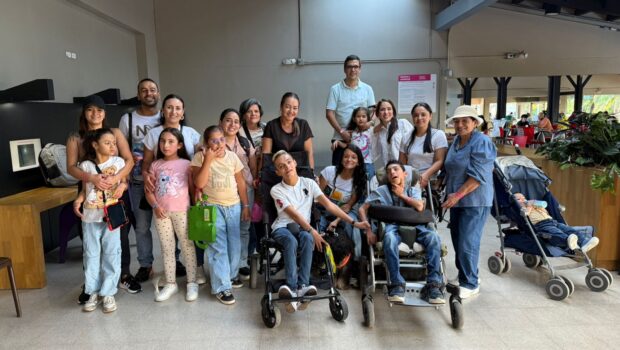
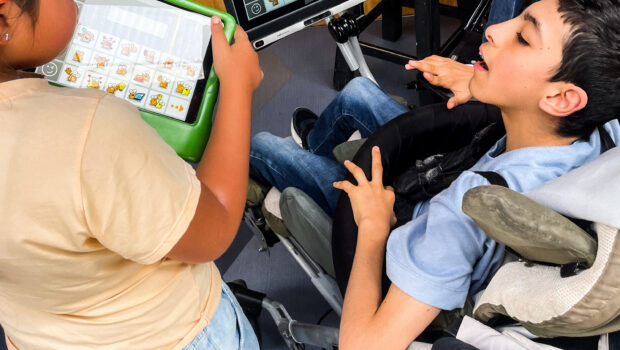
The first official gathering took place in October 2025, coinciding with AAC Awareness Month. Held at the Comfama Rionegro park, the event served as an integration space for six AAC users, their families, and the general public. The technical diversity of the users was notable, representing a broad spectrum of current assistive technologies:
- Tobii Dynavox Td Snap users
- Communicator 5 users utilizing eye-tracking technology
- Proloquo2go users
- Grid for iPad and Grid 3 users with specialized access methods
The event was not merely a social outing; it served as a public demonstration of the necessity of AAC in everyday life. By positioning these users in a public space, the organizers were able to educate onlookers, thereby normalizing the use of speech-generating devices in public domains.
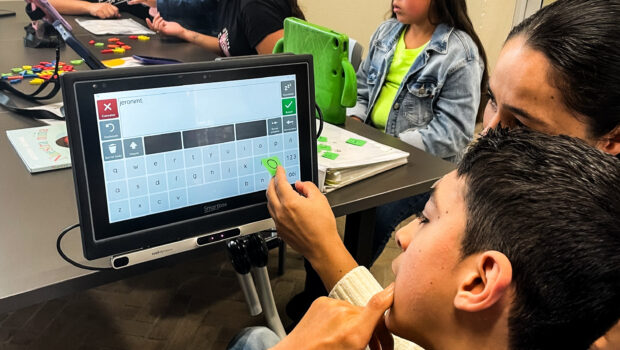
In February 2026, the project expanded its scope by hosting a shared reading session at a public library in Rionegro. This session followed the principles of comprehensive literacy, as defined by expert Erin Sheldon, which focuses on providing print-knowledge experiences through meaningful interactions with text and literate peers. The library setting was chosen specifically to promote the right to literacy for all individuals, regardless of their primary method of communication.
Impact and Participant Feedback
The impact of these sessions is best reflected in the feedback from participants. Pablo Andrés Calderón Gómez, an AAC user, noted after the inaugural meeting that the experience provided him with a sense of community he previously lacked. His testimony underscores a recurring theme in the disability community: the isolation that comes with being a "minority" communicator in a predominantly vocal world.
The project has highlighted the urgent need for a shift in how families approach therapeutic goals. Many families of AAC users are often told to expect "ceilings" on the potential of their children. VOZ SOS CAAPAZ actively dismantles these perceived ceilings by "presuming competence"—a neuro-affirmative principle that asserts all individuals have the cognitive capacity to learn and communicate, provided they have access to the appropriate tools and environments.
Implications for the Future of AAC
The success of VOZ SOS CAAPAZ carries significant implications for the future of speech-language pathology and special education, particularly in Latin America.
- Normalization of Multimodal Communication: By conducting sessions in public spaces like libraries and parks, the project challenges the societal stigma surrounding non-vocal communication. It forces the public to engage with the reality that communication is a human right that transcends the vocal cords.
- Redefining the Role of the Clinician: The project mandates that clinicians move away from the role of "director" and toward the role of "facilitator" or "communication partner." This horizontal structure is essential for building the trust required for long-term literacy development.
- Scalability and Sustainability: While currently a monthly occurrence in the Antioquia region, the model is highly scalable. It requires minimal infrastructure—relying instead on community spaces and the commitment of informed communication partners.
- Policy and Advocacy: The initiative serves as a localized form of advocacy, pressuring institutions to provide more accessible environments. It proves that when communication partners and users are provided with a platform, they can effectively advocate for the resources necessary to sustain their growth.
Conclusion: A Call to Action
The philosophy underpinning VOZ SOS CAAPAZ is clear: communication is not a gift bestowed by professionals; it is an inherent right that requires access to tools and a community of peers. As the project looks toward future expansion, the focus remains on deepening the quality of interactions rather than simply increasing the number of participants.
For the broader AAC community, this Colombian project serves as a reminder that the most significant innovations in the field are not always technological—they are often social. By creating spaces that prioritize neuro-affirmative practices, literacy, and peer-to-peer connection, initiatives like VOZ SOS CAAPAZ are successfully building a more inclusive future for individuals with complex communication needs. The "voice" of the non-speaking individual is already present; the responsibility of the community is to provide the environment where that voice can be heard, understood, and respected.
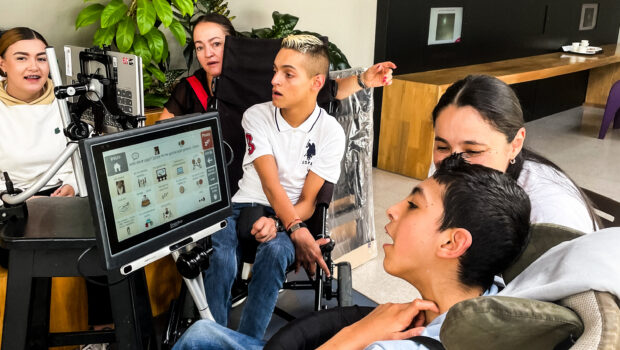
As the project continues its monthly cycle of meetings, it invites other professionals and families to rethink their own approaches, urging them to step outside of the "therapeutic box" and embrace the messy, beautiful, and essential work of community-based communication.