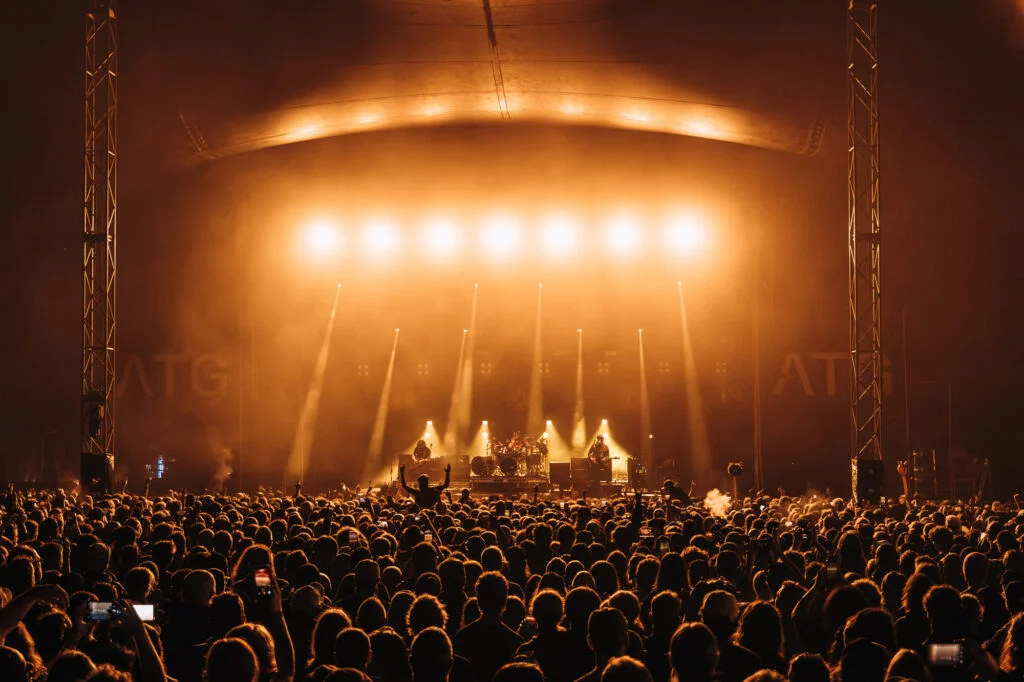
The initiative, supported by researchers from the Manchester Centre for Audiology and Deafness (ManCAD) and in collaboration with Tinnitus UK, aimed to determine whether the rigors of high-decibel performance environments could be reconciled with long-term auditory health. The project serves as a practical application of clinical research, testing the feasibility of standardized sound management in a real-world, high-intensity musical setting.
The Chronology of the Safe Listening Initiative
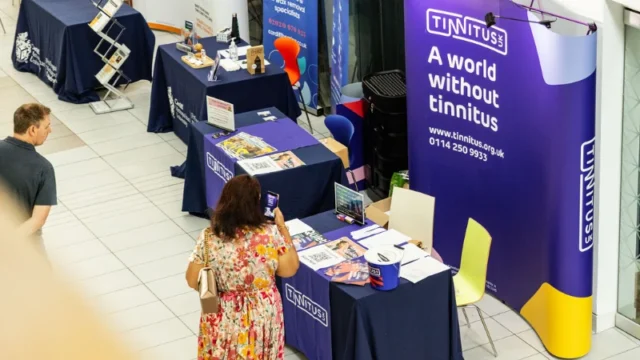
The journey toward this landmark event began in early 2026, gaining momentum through a series of strategic engagements. During Tinnitus Week 2026, advocacy groups and clinical audiologists initiated a national dialogue regarding the rising incidence of noise-induced hearing loss (NIHL) and tinnitus among music fans. This was followed by a successful partnership at the Download Festival, where Tinnitus UK brought hearing health awareness to the heart of the heavy metal circuit.
By the time ArcTanGent commenced in the Mendips, the infrastructure for a safe listening pilot program was already in place. The festival served as a laboratory for the WHO standards, which advocate for a multi-faceted approach to sound management: rigorous monitoring of sound levels, the provision of accessible hearing protection, the designation of quiet zones, and the implementation of staff training protocols. The integration of these elements into the festival’s operational framework was not merely a symbolic gesture but a structured effort to embed hearing health into the core of the live music experience.
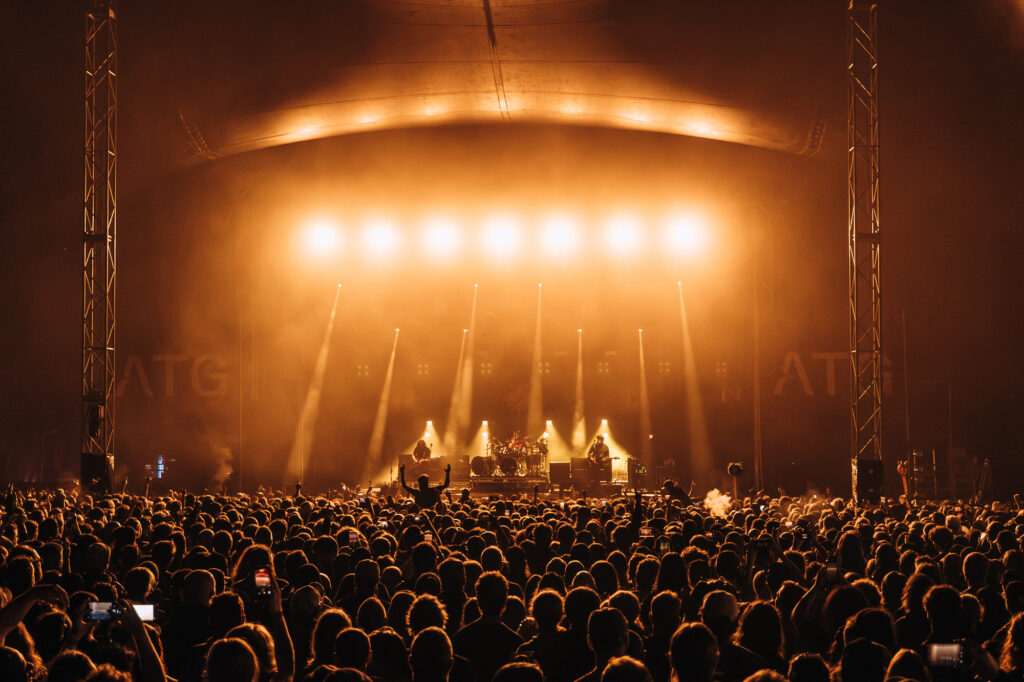
Implementing the WHO Global Standard
The WHO Global Standard for Safe Listening provides a framework that balances the intensity of live music with the physiological limitations of the human ear. At ArcTanGent, this manifested through three primary pillars: technical sound engineering, accessibility of personal protective equipment (PPE), and professional training.
Technical measures included the implementation of sound level monitoring and the adoption of recommended decibel caps, ensuring that the integrity of the performance was maintained while mitigating the risk of threshold shifts—the temporary or permanent loss of hearing sensitivity caused by excessive noise exposure. Sound technicians worked in tandem with audiologists to ensure that sound system design prioritized clarity over sheer volume, an approach that ultimately enhanced the listening experience for the audience.
Accessibility was equally critical. The festival management ensured that foam earplugs were provided free of charge at all stage barriers, removing the logistical barriers that often prevent attendees from taking protective action. Furthermore, high-fidelity earplugs—designed to reduce volume without distorting frequency response—were made available for purchase at merchandising points and the Metal For Good tent. Through the HELA initiative, festival staff were trained to recognize the signs of sound-related distress and to provide guidance on the correct use of hearing protection, effectively creating a safety-conscious environment that empowered the audience.
Data and Observations: A Culture of Awareness
Preliminary data gathered by ManCAD researchers throughout the festival suggested a surprisingly high baseline of awareness among the ArcTanGent demographic. Observational studies conducted on-site indicated that more than 50% of the audience members were utilizing some form of hearing protection during performances. Notably, this percentage increased significantly as fans moved closer to the stage, suggesting that the most exposed listeners are also the most informed regarding the risks of loud sound.
This finding challenges the perception that heavy music fans are indifferent to hearing health. Instead, it highlights a sophisticated segment of the population that understands the trade-off between immersion and longevity. The researchers noted that, contrary to the fear that earplugs might "muffle" or detract from the musical performance, the attendees reported that the high-fidelity options provided a balanced, clear, and more comfortable listening experience. This feedback is essential for changing the narrative around PPE, framing it as an essential tool for the modern music lover rather than a compromise on sound quality.
Official Perspectives and Academic Insight
The involvement of the Manchester Centre for Audiology and Deafness provided an empirical lens through which to view the festival’s success. Dr. Samuel Couth, a lecturer at ManCAD, emphasized the necessity of bridging the gap between clinical advice and real-world application.
"Live music is a fundamental component of contemporary culture," Dr. Couth stated. "Our objective was to demonstrate that we do not have to choose between the visceral experience of live sound and the preservation of hearing. The positive response from artists, staff, and attendees alike suggests that we have found a sustainable pathway forward. Our research will continue to analyze the feedback from this event to refine how we support safer listening across the broader industry."
The festival’s organizers underscored that the primary goal was not to lower the volume of the music to a point of inadequacy, but to optimize the acoustic environment. By controlling the peaks of sound and ensuring consistent monitoring, the event managed to sustain the intensity expected of genres like post-rock, extreme metal, and electronic music while maintaining a safer acoustic footprint.
Broader Implications for the Music Industry
The success of the ArcTanGent pilot program has significant implications for the future of large-scale events. As awareness regarding the prevalence of noise-induced hearing loss grows, the burden of responsibility is shifting toward event organizers and venue owners to provide safer environments. The integration of WHO standards is no longer viewed as an optional luxury but as a necessary component of venue safety and long-term sustainability.
Furthermore, the research conducted at the festival provides a template for other event promoters. The ability to collect qualitative data from sound technicians, artists, and fans allows for a more nuanced understanding of the challenges involved in implementing these standards. It confirms that when protection is accessible, normalized, and high-quality, the audience is eager to participate.
The financial and operational implications are also worth noting. While implementing sound monitoring and staff training requires an initial investment, the long-term benefit is a more professionalized, responsible, and inclusive event environment. As the live music industry faces increasing scrutiny regarding health and safety standards, the proactive adoption of hearing protection protocols may soon become an industry-wide expectation, similar to the established safety measures for crowd control and medical support.
Conclusion: A Sustainable Future for Live Sound
The ArcTanGent experience has effectively debunked the myth that the preservation of hearing and the enjoyment of loud, experimental music are mutually exclusive. By treating the audience as intelligent, health-conscious consumers and by utilizing the expertise of clinical researchers, the festival has established a new benchmark.
The findings from this year’s event provide a roadmap for the future: one where the visceral impact of a live performance is preserved, but the potential for permanent, avoidable hearing damage is significantly curtailed. As Tinnitus UK and its partners continue to build relationships across the music sector, the lessons learned at ArcTanGent will serve as the foundation for a broader movement.
For the millions of individuals who frequent concerts and festivals each year, the message is clear: the industry is listening, and it is beginning to adapt. While the work is far from complete, the shift toward smarter, safer listening represents a vital evolution for the live music sector. Moving forward, the simple act of packing earplugs alongside one’s festival ticket may soon be as common as checking the weather forecast—a standard, sensible practice for ensuring that the music can continue for generations to come.