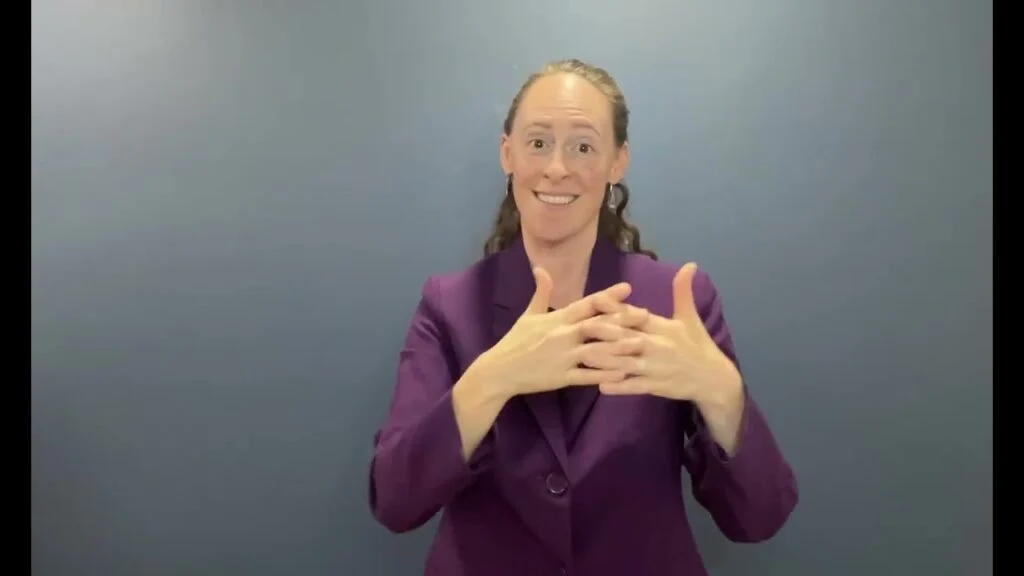
This high-stakes litigation centers on the accessibility of information for the estimated 11 million Americans who identify as deaf or hard of hearing. The upcoming hearing stems from the White House’s decision to appeal a November 2025 ruling by Judge Amir Ali, which mandated the immediate reinstatement of ASL interpreters for all publicly announced press briefings conducted by the President or the White House Press Secretary.
A Chronology of the Legal Conflict
The roots of the current impasse trace back to a shifting policy landscape regarding federal transparency and accessibility. Following a landmark 2020 ruling in National Association of the Deaf v. Trump, which established that the White House must provide ASL interpretation during emergency health briefings, the precedent for inclusion appeared to be set. However, the landscape shifted in early 2025.
In January 2025, the incoming administration discontinued the practice of providing ASL interpretation for daily press briefings. This policy reversal prompted an immediate outcry from advocacy groups, leading to the filing of a formal lawsuit by the NAD and Derrick Ford on May 28, 2025. The plaintiffs argued that the removal of these services effectively barred a significant portion of the electorate from real-time access to executive information, violating principles of equal protection and government transparency.
By November 2025, Judge Amir Ali issued a decisive order siding with the plaintiffs, ruling that the absence of ASL interpretation placed an undue burden on deaf citizens and prevented them from participating in the democratic process on equal footing with hearing individuals. The White House subsequently filed an appeal, suspending the full implementation of the mandate and moving the dispute to the appellate level.
The Significance of ASL in Federal Communications
For the deaf community, ASL is not merely a tool for communication; it is a primary language with its own distinct grammatical structure and cultural nuance. When federal officials provide information, the reliance on closed captioning alone—often prone to latency and technological errors—is frequently cited by advocates as insufficient.
"This case is about whether Deaf and hard of hearing Americans can receive information from the White House at the same time as everyone else," stated Nicholas Kiego, Chief Executive Officer of the NAD. The argument highlights a fundamental discrepancy in the information age: while the White House utilizes high-speed internet and live broadcasting to reach millions, the exclusion of visual interpretation creates a "second-class" status for those whose primary language is not English text.
Supporting data from the National Institute on Deafness and Other Communication Disorders (NIDCD) indicates that roughly 15% of American adults report some trouble hearing. As the demographics of the United States shift toward an aging population, the prevalence of hearing loss is expected to increase, making the issue of accessibility in government communications a matter of long-term public policy rather than a niche interest.
Legal and Constitutional Implications
The upcoming D.C. Circuit hearing will focus on the extent to which the Executive Branch must accommodate linguistic diversity under the Rehabilitation Act of 1973 and the Fifth Amendment’s guarantee of equal protection. Legal scholars note that this case challenges the government’s discretion in how it communicates with the public.
If the appellate court upholds Judge Ali’s ruling, it would solidify a robust legal precedent requiring federal agencies to provide qualified ASL interpreters as a standard operating procedure for all public-facing briefings. Conversely, a reversal could empower federal administrations to prioritize alternative, potentially less effective, communication methods, such as live-transcription software or post-event transcriptions, which do not offer the same immediacy or cultural fidelity as live ASL interpretation.
The implications extend beyond the White House. A ruling in favor of the NAD could serve as a catalyst for litigation against other federal agencies that have similarly reduced accessibility services in the name of budgetary constraints or administrative streamlining.
Organizational Perspectives and Advocacy
The National Association of the Deaf (NAD), founded in 1880, has spent over 140 years advocating for the linguistic and civil rights of deaf Americans. Through its Law and Advocacy Center (LAC), the organization has become the primary litigator for cases involving systemic discrimination. The LAC operates on the principle that deaf and hard of hearing individuals have a fundamental right to "congregate on issues important to them" and to have those interests represented at the highest levels of government.
The current legal team, led by figures such as Brittany Shrader, Director of Legal Services, has emphasized that the cost of providing an ASL interpreter is negligible compared to the democratic cost of exclusion. As the NAD prepares for the October 6 hearing, they have issued an open invitation for members of the deaf community, allies, and members of the press to observe the proceedings.
"As this case moves to the U.S. Court of Appeals for the D.C. Circuit, the NAD will continue to vigorously defend the right of Deaf and hard of hearing Americans to equal access to White House communications," Kiego added.
Preparing for the October 6 Hearing
The hearing, held at the U.S. Court of Appeals for the D.C. Circuit, is expected to draw significant attention from civil rights groups and legal observers. Given the public nature of the proceedings, the court has advised attendees to account for heightened security screenings.
For those unable to attend in person, the NAD has indicated they will provide updates through their official communication channels. The outcome of this appeal will likely set the tone for executive communication standards for the remainder of the decade.
Broader Impact on Public Policy
The intersection of technology, civil rights, and governance has never been more relevant. As the federal government increasingly relies on digital platforms to disseminate information, the gap between those who can access that information instantly and those who must wait for delayed, translated, or transcribed versions highlights a systemic failure in inclusive design.
The NAD’s pursuit of this case suggests a broader movement toward mandating accessibility as a default setting for federal institutions. By forcing the government to reconcile its administrative practices with the needs of its diverse citizenry, the NAD is effectively redefining the standard of "public" in "public briefing."
As the October 6 date approaches, the focus remains on the judiciary’s interpretation of government accountability. Whether the White House will be required to maintain a permanent visual presence for ASL interpreters rests on the appellate judges’ determination of how broadly the constitutional mandate for equal access applies to the daily machinery of the presidency.
For the deaf and hard of hearing community, this is not just a legal battle; it is an assertion of their place in the national conversation. As the NAD continues to leverage its legal resources to fight for these protections, the case stands as a testament to the persistent nature of advocacy in the face of institutional resistance.
Supporting the Advocacy Effort
The Law and Advocacy Center’s ability to sustain this litigation relies heavily on its membership base and charitable contributions. The organization emphasizes that every donation directly impacts their capacity to file impact litigation—cases designed to change the law for the benefit of the entire community. Interested parties can contribute to these efforts at the NAD’s official website, a reminder that the cost of defending civil rights is a shared responsibility across the nation.
As the legal proceedings unfold in October, the case will undoubtedly serve as a bellwether for the future of government accessibility, reminding the public that transparency is only as effective as it is inclusive.