The Context of the NAD Leadership Search
The search process for this position has been characterized by a commitment to transparency and stakeholder engagement. In an era where organizations are increasingly held accountable by their membership bases, the NAD board of directors prioritized a public-facing selection process. By hosting a virtual town hall, the board sought to bridge the gap between the internal selection committee and the broader constituency, ensuring that the final candidate possesses not only the requisite professional credentials but also the trust and endorsement of the community they will ultimately represent.
Chronology of the Selection Process
The path to the April 16 forum began in late 2025, following the board’s determination that a change in executive leadership was necessary to meet the strategic goals of the next decade. The search committee, comprised of board members, organizational stakeholders, and executive recruitment specialists, established a multifaceted vetting process.
- Q4 2025: The NAD board of directors initiated the CEO search, releasing a comprehensive job description that emphasized the need for a leader with a deep understanding of the Americans with Disabilities Act (ADA), legislative lobbying experience, and fluency in American Sign Language (ASL).
- January–February 2026: The search committee reviewed a large pool of applicants from across the country, conducting initial screening interviews and preliminary background checks.
- March 2026: A shortlist of candidates underwent intensive interviews, including panel discussions with current staff, board members, and external consultants.
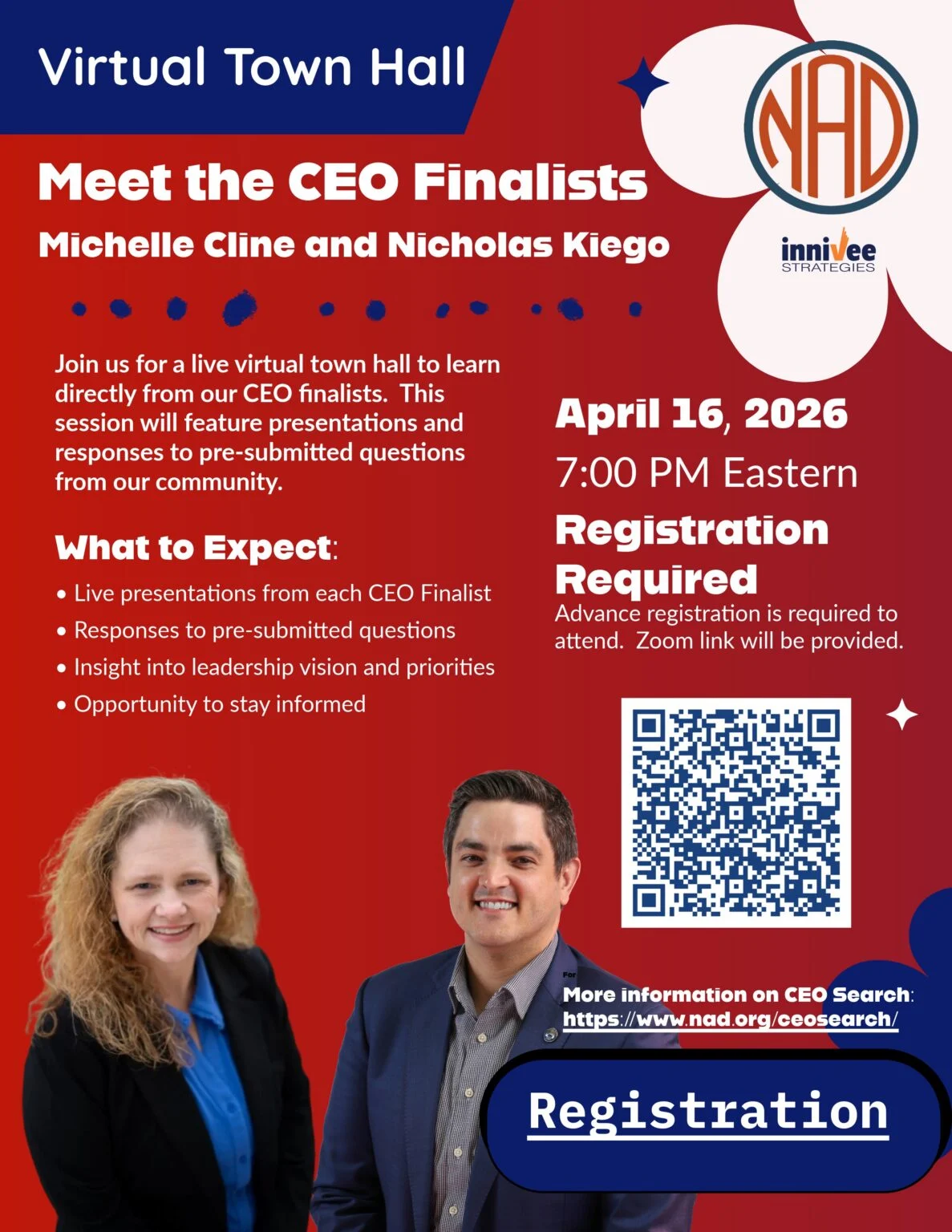
- April 10, 2026: The organization publicly announced the two finalists: Michelle Cline and Nicholas Kiego. This date also marked the opening of the community portal for pre-submitted questions, allowing members to engage with the candidates’ platforms before the live event.
- April 16, 2026: The virtual town hall occurred, providing a live platform for the candidates to present their visions for the organization.
Profile of the Finalists: Professional Backgrounds
The two finalists, Michelle Cline and Nicholas Kiego, were selected for their distinct yet complementary professional backgrounds, which reflect the multifaceted nature of the CEO role.
Michelle Cline brings a career defined by extensive experience in non-profit management and strategic advocacy. Her professional history often focuses on the intersection of organizational development and community outreach. Observers note that candidates with backgrounds similar to Cline’s are often prioritized for their ability to manage complex budgetary environments while maintaining strong relationships with donor bases and federal partners.
Nicholas Kiego offers a background rooted in policy implementation and technological equity. His previous professional engagements have frequently addressed the digital divide, a persistent issue for the deaf community. His candidacy is viewed by many as a signal that the NAD is looking to modernize its approach to digital accessibility and infrastructure, particularly as emerging technologies like artificial intelligence and automated captioning systems continue to reshape the lives of deaf individuals.
The Significance of the Virtual Town Hall
The virtual town hall held on April 16 served as the primary mechanism for democratic engagement in the selection process. By requiring the candidates to address pre-submitted questions, the organizers ensured that the discourse remained focused on the issues most pressing to the membership.
Key topics addressed during the forum included:
- Legislative Advocacy: The role of the NAD in influencing upcoming congressional sessions and protecting existing civil rights protections.
- Organizational Sustainability: Strategies for increasing membership engagement and ensuring long-term financial stability.
- Communication and Inclusion: How the next CEO plans to address the diverse needs of the deaf community, including those from intersectional backgrounds, such as BIPOC, LGBTQ+, and immigrant populations.
- Technological Innovation: The organization’s stance on the adoption of new technologies and the potential risks they pose to traditional deaf cultural spaces.
The format—which included live presentations and direct responses—allowed the community to assess not only the candidates’ stated policies but also their communication styles and their ability to address critical inquiries under pressure.
Strategic Implications for the Future
The appointment of a new CEO comes at a critical juncture for the NAD. The organization currently faces several external pressures, including the evolving nature of the ADA and the rapid shift toward virtual communication environments.
Legislative Challenges
With the rise of various judicial challenges to civil rights statutes, the next CEO must possess a keen legal mind and a robust understanding of federal lobbying. The ability to navigate the nuances of bipartisan support in Washington, D.C., will be a primary indicator of the organization’s future success in maintaining its legislative agenda.
Membership and Engagement
As with many legacy advocacy organizations, the NAD faces the challenge of engaging younger generations. The transition to a new CEO is an opportunity to revitalize the organization’s branding and outreach strategies. The finalists’ performance in the town hall indicated a clear recognition of this necessity, with both candidates emphasizing the need for a more inclusive, digitally native approach to communication.
Economic and Operational Stability
The financial health of the NAD relies on a mix of individual memberships, grants, and strategic partnerships. The new CEO will need to demonstrate fiscal prudence while aggressively pursuing new revenue streams. The board’s selection of two finalists with high-level administrative experience suggests that the organization is prioritizing operational efficiency as much as visionary advocacy.
Analysis of Community Feedback and Stakeholder Reaction
While the formal selection remains the prerogative of the board of directors, the public response to the town hall has been significant. Social media platforms and community forums have been active with discussions regarding the candidates’ strengths.
Proponents of Michelle Cline have cited her history of steady, consistent leadership as a stabilizing force that the organization may require during a period of transition. Supporters of Nicholas Kiego have highlighted his forward-thinking approach to technology, suggesting that his leadership could usher in a more technologically integrated era for the NAD.
Analysts within the non-profit sector suggest that the transparency of this process serves to mitigate potential internal friction. By bringing the candidates to the public early, the NAD has effectively invited the community into the decision-making process, thereby increasing the likelihood that the eventual hire will be met with widespread institutional support.
Looking Ahead: The Final Appointment
The April 16 virtual town hall was the final major step in the public phase of the search. Following the event, the board of directors entered a final evaluation period, utilizing feedback from the membership and the results of the live forum to make their ultimate decision.
As the NAD moves forward, the new CEO will inherit a complex legacy. The association is more than a mere representative body; it is a repository of cultural identity for the deaf community. The successful candidate will be tasked with balancing the preservation of this identity with the practical demands of a changing national landscape.
The NAD has committed to providing further updates regarding the final appointment via their official website at https://www.nad.org/ceosearch/. As of April 2026, the organization remains focused on a smooth transition, ensuring that the momentum generated by the current advocacy efforts remains uninterrupted during this leadership change. Whether the board chooses the management-focused approach of Michelle Cline or the technology-forward strategy of Nicholas Kiego, the incoming leader will immediately face the challenge of uniting the diverse voices of the deaf community behind a single, cohesive vision for the future. The success of this transition will undoubtedly set the tone for the NAD’s advocacy efforts for the remainder of the decade.