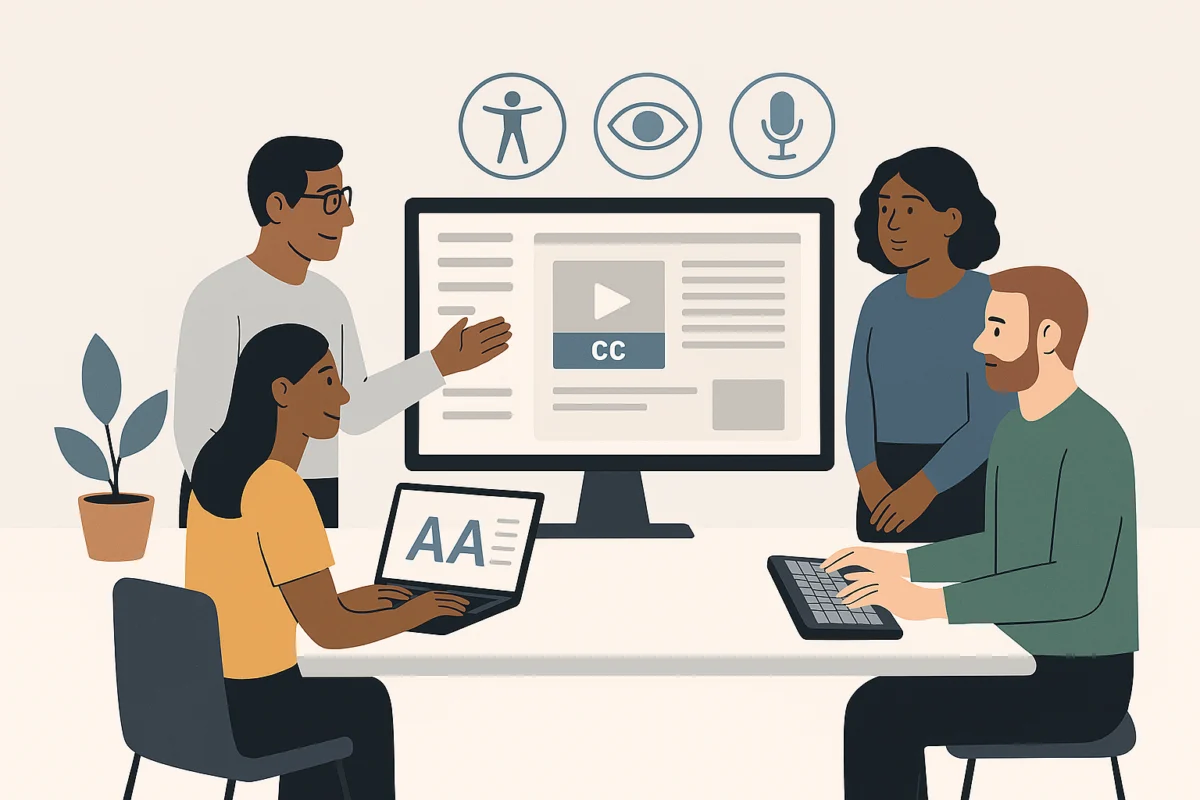
Digital accessibility is no longer a peripheral concern for the UK government; it is a statutory requirement under the Public Sector Bodies (Websites and Mobile Applications) (No. 2) Accessibility Regulations 2018. As the government continues its "digital-by-default" strategy, ensuring that services are usable by everyone—regardless of physical or cognitive ability—is paramount. Digital Accessibility Week 2026 aims to bridge the gap between policy and practice, offering a platform for knowledge exchange and skill-building for both novices and seasoned specialists.
The Strategic Context of Digital Accessibility in 2026
The focus for 2026 is deeply rooted in the evolving landscape of international standards and user expectations. According to data from the Office for National Statistics (ONS), approximately one in five people in the UK live with a disability. This demographic includes individuals with visual, auditory, motor, and cognitive impairments. Furthermore, the UK’s aging population means that a growing number of citizens experience age-related functional declines, making accessible design a universal necessity rather than a niche requirement.
The theme of the 2026 event—designing, developing, and delivering—reflects the lifecycle of digital product creation. By integrating accessibility at the "design" phase, government departments can significantly reduce the costs associated with retrofitting non-compliant systems. The "development" phase focuses on the technical rigor required to meet the Web Content Accessibility Guidelines (WCAG), while "delivery" ensures that the final user experience is seamless and inclusive. This holistic approach is designed to foster a culture of "accessibility first" across the Civil Service.
Chronology of Events: A Four-Day Technical and Cultural Deep Dive
The week is structured to provide a logical progression from foundational concepts to specialized technical applications. Each day features sessions led by different departments, showcasing the breadth of expertise within the public sector.
Monday: Foundations and Future Standards
The week opens on Monday, 18 May, with a focus on core principles. The Home Office will lead an "Introduction to Accessibility" from 10:00 am to 1:00 pm. This session is designed as a non-technical primer, emphasizing the "why" behind inclusive design. It addresses the moral, legal, and operational imperatives for accessibility, making it an essential starting point for staff at all levels of seniority.
In the afternoon, the Department for Work and Pensions (DWP) will provide an "Introduction to assistive software." This session is particularly relevant given that the DWP manages some of the government’s most complex digital interactions. Participants will receive an overview of screen readers, magnification software, and voice recognition tools, gaining insight into how disabled users navigate digital interfaces.
The final session of the day, hosted by the Government Digital Service (GDS), addresses "WCAG 3 and what it means for you." As the World Wide Web Consortium (W3C) moves toward the third iteration of its guidelines, GDS will provide a roadmap for how these changes will affect UK government standards. This forward-looking analysis is vital for developers and product managers who must prepare for the next generation of compliance.
Tuesday: Inclusive Research and Cognitive Accessibility
Tuesday’s agenda shifts toward the user experience and the nuances of neurodiversity. Two simultaneous sessions at 10:00 am offer different perspectives: DWP explores "HTML and accessibility" for non-coders, while His Majesty’s Revenue and Customs (HMRC) presents "Designing with autistic people." The latter is a significant addition to the program, acknowledging that cognitive accessibility is often overlooked in favor of physical or sensory considerations.
HMRC continues its leadership in the afternoon with a session on "Inclusive user research." This highlights the importance of involving users with lived experience in the testing phase of service design. This is followed by a joint session between HMRC and Ofcom titled "From access to confidence," which examines research into digital exclusion. This session will likely touch upon the social factors—such as poverty and lack of education—that intersect with disability to create barriers to online participation.
The day concludes with the Student Loans Company (SLC) hosting a beginner-friendly session on accessibility testing. By teaching staff how to use automated tools like WAVE and conduct keyboard-only testing, the SLC aims to democratize the quality assurance process.
Wednesday: Innovation and Practical Application
Wednesday, 20 May, explores how accessibility drives innovation. A joint session between HMRC and Lloyds Bank, "From access to empowerment," will examine how private sector practices in accessible banking can inform public sector service delivery. This cross-sector collaboration is a hallmark of the 2026 event, reflecting a more integrated approach to digital inclusion.
One of the more unique sessions is hosted by the Department for Environment, Food & Rural Affairs (Defra), titled "Accessibility in gaming." By demonstrating how the gaming industry solves complex navigation and interaction challenges for disabled users, Defra aims to inspire public sector developers to think creatively about user interface (UI) design.
The afternoon focuses on common pitfalls and practical skills. DWP will present a comparative study of "Common WCAG fails," using data from the WebAIM Million report and internal government audits. This data-driven session provides a reality check on current progress. Simultaneously, Companies House will host "Summer holiday: an introduction to keyboard navigation," an interactive workshop that simulates the experience of users who cannot use a mouse.
Thursday: Compliance, Templates, and Professional Growth
The final day, which coincides with Global Accessibility Awareness Day, focuses on institutionalizing accessibility. DWP will lead a practical session on "Creating an accessible PowerPoint template," addressing the need for internal documents and presentations to be as inclusive as external-facing websites.
HMRC will provide a deep dive into the "quiet magic" of accessibility regulations, focusing on WCAG 2.2 and the enforcement mechanisms used by the Cabinet Office. This is followed by a session from the Department for Education (DfE) and the Student Loans Company on "Accessibility in service assessments." This is a critical session for product owners, as it outlines exactly what assessors look for when a government service goes through its mandatory service standard review.
The week concludes with a session on professional development: "The One Where I Become an Accessibility Specialist." A DfE apprentice will share their journey, highlighting the growing importance of accessibility as a specialized career path within the Civil Service.
Supporting Data and the "Purple Pound"
The economic argument for digital accessibility is as compelling as the social one. In the UK, the "Purple Pound"—the collective spending power of disabled people and their families—is estimated at £274 billion per year. When government services are inaccessible, they not only exclude citizens from essential rights but also create inefficiencies that cost the taxpayer money.
Data from the Cabinet Office suggests that accessible services have higher completion rates and lower "failure demand"—the cost of users having to call a helpdesk because they cannot complete a task online. By investing in Digital Accessibility Week, the UK government is effectively investing in operational efficiency.
Official Responses and Organizational Impact
While official statements from the Cabinet Office emphasize the legal necessity of these events, the internal response from government departments highlights a shift toward cultural change. Lead accessibility specialists from DWP and HMRC have noted in previous years that such events lead to a measurable uptick in the use of accessibility testing tools across their departments.
The involvement of "arm’s length bodies" (ALBs) is also significant. Organizations like the Student Loans Company and Companies House handle millions of transactions annually. Their participation ensures that accessibility standards are maintained across the entire ecosystem of government-funded services, not just within central departments.
Broader Implications and Future Outlook
The implications of Digital Accessibility Week 2026 extend beyond the four-day timetable. This event serves as a catalyst for the "Accessibility Specialist" apprenticeship program and the continued refinement of the GOV.UK Design System. As AI and machine learning become more integrated into public services, the lessons learned during this week will be vital in ensuring that automated systems do not inherit or amplify existing biases against disabled users.
Furthermore, the focus on WCAG 3.0 indicates that the UK is positioning itself as a global leader in digital standards. By preparing the workforce for the transition from version 2.2 to 3.0, the government is future-proofing its digital infrastructure.
As the week concludes on Global Accessibility Awareness Day, the message is clear: accessibility is not a "one-off" project or a checklist to be completed. It is a continuous process of learning, testing, and empathizing with the diverse needs of the UK public. For those working in the public sector, Digital Accessibility Week 2026 is an invitation to be part of a more inclusive digital future, ensuring that no citizen is left behind in the transition to an increasingly online world.