The Historical Context and Policy Evolution
The term "zero tolerance" emerged in the United States legal and educational lexicon during the late 1980s and early 1990s, most notably within the context of the Gun-Free Schools Act of 1994. While initially intended to curb violence in educational settings, the implementation of such policies has been heavily criticized by civil rights organizations, including the American Civil Liberties Union (ACLU), for contributing to the "school-to-prison pipeline." Research conducted by the Department of Education’s Office for Civil Rights has historically indicated that zero-tolerance mandates disproportionately affect students of color and those with disabilities, often leading to punitive outcomes that fail to address the root causes of conflict.
Within the NAD, the policy has served as the primary framework for governing behavior at biennial national conferences and other sanctioned events. Its stated purpose has consistently been to provide a mechanism for reporting and mitigating incidents of discrimination, harassment, bullying, and retaliation. Despite these protective goals, the recent discourse highlights a disconnect between the organization’s intent—fostering a safe environment—and the community’s perception of the punitive connotations associated with the phrase "zero tolerance."
Timeline of the Current Dialogue
The movement to re-evaluate the policy reached a critical juncture in the months leading up to July 2026. While the policy has been a fixture of NAD operations for several years, social media discourse and internal advocacy groups began to coalesce around the idea that the existing language was incongruent with the NAD’s core mission of promoting inclusion and belonging.
- Pre-2024: The Zero Tolerance Policy is established and utilized as the primary mechanism for behavioral enforcement at major NAD events.
- Early 2026: Increased feedback from community stakeholders regarding the rigidity of the policy’s implementation and its potential for fostering a culture of exclusion rather than restorative accountability.
- June 2026: NAD leadership begins internal assessments of the policy’s effectiveness and its reception among the membership base.
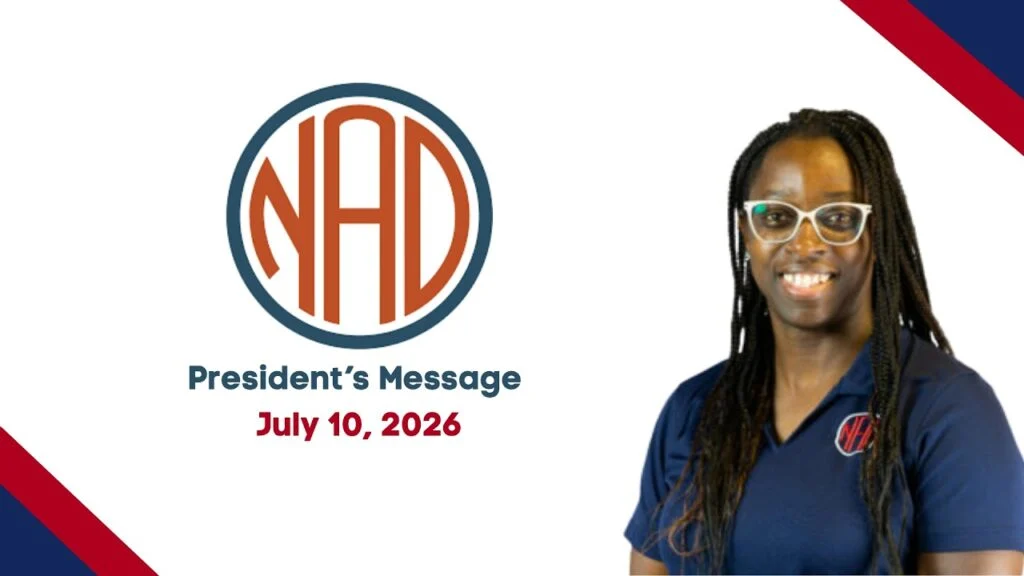
- July 10, 2026: President Stephanie Hakulin issues a formal public response, acknowledging the community’s concerns and committing to a full-scale review of the policy’s title, language, and procedural implementation.
Analyzing the Impact of Policy Language
The shift in focus from "zero tolerance" to potential "restorative justice" models is reflective of a broader trend in organizational governance. Experts in organizational behavior note that language is not merely descriptive but prescriptive. When an organization adopts a "zero tolerance" framework, it often creates a binary outcome—violation or compliance—which can limit the scope for mediation or educational interventions.
Data from the field of conflict resolution suggests that restorative practices, which focus on accountability and the repair of harm rather than purely punitive measures, are increasingly favored by organizations aiming to build stronger, more resilient communities. For a demographic as close-knit as the deaf community, the call for a shift away from punitive language is significant. Critics of the current policy argue that the "zero tolerance" label creates a chilling effect, potentially discouraging open dialogue and the reporting of minor grievances that could be better resolved through community-led restorative processes.
Official Response and Administrative Commitment
In her address, President Hakulin emphasized that the board is not acting under duress but rather in response to a sincere desire to align the organization’s internal mechanics with its public-facing values. "Good intentions do not replace the need to understand how the language is interpreted and experienced by our community," Hakulin stated. This acknowledgment serves as a recognition that the "intended meaning" of a policy—safety—does not necessarily dictate the "received meaning" by the constituents it serves.
The Board of Directors has outlined a multi-phase approach for the review:
- Community Consultation: Soliciting feedback from members regarding what values should take precedence in future policy iterations, such as accountability, safety, and inclusion.
- Structural Assessment: Reviewing the administrative procedures for handling reports of misconduct to ensure that they are both effective and fair.
- Language Revision: Evaluating alternative terminology that captures the organization’s commitment to safety without relying on the historical baggage of the "zero tolerance" paradigm.
During this interim period, the current policy remains in full force. The NAD asserts that this is necessary to ensure that participants in upcoming events remain protected from harassment and discrimination while the formal review is underway.
Broader Implications for Non-Profit Governance
The NAD’s decision to revisit its internal policy has broader implications for non-profit organizations that represent marginalized or specifically identified communities. As these organizations evolve, they are increasingly held to higher standards of transparency and cultural competence. The pressure to move away from rigid, legacy policies is symptomatic of a shift toward more democratic and participatory governance structures.
The challenge for the NAD will be to balance the necessity of protecting its members with the need to foster an environment that is perceived as equitable and supportive. If the board successfully transitions to a framework that emphasizes restorative justice, it could serve as a case study for other national organizations navigating similar challenges. The focus on "accountability and restorative approaches" suggests that the NAD is looking toward a model where harm is addressed through communal responsibility rather than strictly top-down disciplinary actions.
Future Outlook and Community Engagement
As the review progresses, the NAD has pledged to maintain an open line of communication with its members. The transparency of this process will be critical in maintaining the trust of the deaf and hard-of-hearing community. The willingness of the leadership to engage in a comprehensive review demonstrates an institutional agility that is often lacking in large, established non-profits.
Stakeholders and industry observers will be watching closely to see how the board translates the abstract concepts of "belonging" and "fairness" into concrete policy changes. The final outcome of this review will likely be presented at future board meetings, with the expectation that any amendments to the policy will be communicated clearly to the public.
By initiating this review, the NAD is signaling that it is prepared to evolve alongside the community it represents. The emphasis on "together, we NAD rise" serves as a thematic anchor for the board’s efforts to reconcile its past practices with its vision for the future. Whether the policy is rebranded or fundamentally restructured, the ongoing discourse underscores the reality that in the modern era, an organization’s internal policies are just as vital to its public reputation as its external advocacy work.
The success of this endeavor will ultimately be measured by the organization’s ability to create a policy that effectively mitigates harm while ensuring that every member feels empowered, respected, and heard within the NAD ecosystem. As the board prepares for its next steps, the community awaits a revised policy that reflects the shared values of an inclusive, accountable, and forward-thinking association.