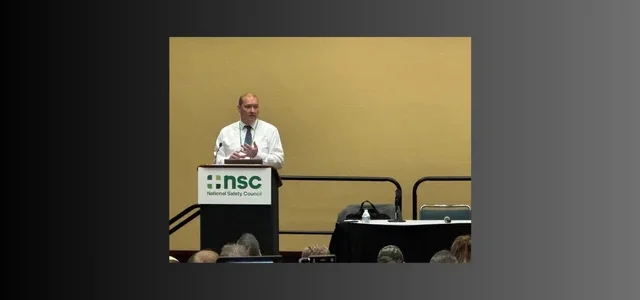

A Legacy of Safety Leadership
The Distinguished Service to Safety Award carries a significant historical weight within the occupational health and safety community. Established in 1942 during the height of the Second World War, the award was created to acknowledge the critical importance of protecting the industrial workforce during a time of unprecedented production demands. Over the past eight decades, the criteria for the award have shifted from basic accident prevention to a more holistic approach that encompasses mental health, sustainable safety culture, and data-driven risk management.

By recognizing these four individuals, the NSC continues its tradition of highlighting leaders who have moved beyond mere regulatory compliance. These recipients have distinguished themselves by developing proprietary frameworks, influencing national safety standards, and fostering cultures where safety is an integrated business value rather than a peripheral task.
Profiles in Professional Excellence
The 2026 honorees represent diverse operational backgrounds, yet they share a common commitment to lowering the threshold for workplace incidents through systematic innovation.
Adam L. Bates, serving as the global vice president of environment, health and safety (EHS) at Vibrantz Technologies, was recognized for his focus on structural safety governance. In complex manufacturing environments, the challenge often lies in maintaining consistent standards across global jurisdictions. Bates has been instrumental in developing robust safety leadership frameworks that empower mid-level managers to take ownership of injury prevention, effectively bridging the gap between corporate policy and floor-level execution.

Mike Court, senior vice president of health, safety, environment, quality and sustainability at Graham Construction, has been a pivotal figure in the Canadian construction sector. His work centers on the transition from reactive to evidence-based safety practices. By utilizing historical data to predict and mitigate risks before they manifest into incidents, Court has helped steer the Canadian construction industry toward a more proactive posture, emphasizing that safety and sustainability are inextricably linked.
Mohamed Elashheb of APTIM represents the scale of modern safety management. Overseeing more than 135 safety professionals across five distinct business units, Elashheb’s career—which spans more than two decades—is marked by the successful implementation of large-scale safety measures across diverse industrial sectors. His ability to harmonize safety protocols across different business units has been cited by the NSC as a model for organizations managing large, decentralized workforces.
David Netti, the head of risk services at Captive Resources, addresses a critical segment of the economy often underserved by traditional safety initiatives: small and midsize organizations. Many smaller businesses lack the capital or the dedicated personnel to build comprehensive safety programs. Netti’s contribution lies in the development of scalable safety initiatives that allow smaller entities to implement enterprise-level risk management strategies, effectively democratizing access to high-tier safety resources.

The Evolution of Workplace Risk Management
The selection of these four individuals underscores a broader trend in the safety profession: the shift toward integration and data analytics. According to current data from the Bureau of Labor Statistics and international safety bodies, the nature of workplace injuries is changing. While traditional mechanical hazards remain a concern, the rise of remote work, mental health stressors, and the complexity of automated manufacturing systems have introduced new risk vectors.
The 2026 awardees have demonstrated an acute awareness of these shifts. For instance, the emphasis on "safety leadership frameworks" noted in Bates’s citation suggests a movement toward psychological safety—the idea that employees must feel comfortable reporting "near misses" without fear of retribution. This is widely considered the "gold standard" in modern safety management, as it allows organizations to identify latent risks before they result in catastrophic events.
Furthermore, the focus on small-to-midsize enterprises, as seen in Netti’s work, addresses a significant gap in global safety statistics. Historically, large corporations have had the resources to invest in safety technology, while smaller firms have lagged behind, often resulting in disproportionately higher injury rates in the SME sector. By providing the tools for these smaller organizations to manage their own risk, the industry is witnessing a more equitable distribution of safety standards.

Chronology of the 2026 Award Cycle
The selection process for the DSSA is rigorous and multi-faceted. The cycle typically begins in the early months of the year, with nominations submitted by peers, employers, or industry associations. A selection committee, comprised of senior NSC members and past recipients, reviews the nominations based on the applicant’s impact on injury prevention, leadership, and long-term influence on the safety profession.
Following the initial review, the committee evaluates the nominees’ contributions to technical innovation, the advancement of safety culture within their respective organizations, and their broader advocacy for the safety industry. The 2026 cohort was officially vetted throughout the summer, with the final announcement timed to coincide with the planning for the NSC’s annual safety congress, ensuring that the recipients receive the broadest possible platform to share their methodologies with their peers.
Industry Implications and Future Outlook
The recognition of these four leaders signals a shift in what the industry values as "best practice." The focus is no longer exclusively on the reduction of Lost Time Injury Rates (LTIR) or Total Recordable Incident Rates (TRIR), which are often considered lagging indicators. Instead, the industry is moving toward "Leading Indicators"—such as employee participation in safety committees, the quality of hazard reporting, and the speed of corrective action.

The implications for companies across the manufacturing and construction sectors are clear: safety is becoming a key differentiator in operational efficiency. Firms that adopt the leadership and management strategies championed by the 2026 DSSA recipients are likely to see not only a decrease in insurance premiums and medical costs but also an increase in employee retention and productivity. In a competitive labor market, companies that prioritize a robust, transparent, and inclusive safety culture are finding themselves more attractive to prospective employees.
Official Statements and Industry Context
While official responses from the recipients are often modest, emphasizing the role of their teams, the industry response has been one of validation. Trade groups and safety advocates have noted that the 2026 award recipients are "practitioners of the possible." By focusing on the intersection of human behavior and organizational design, these leaders are proving that the goal of "zero harm" is not just a marketing slogan but an achievable operational target.
The National Safety Council, in its official documentation, noted that these awards are not merely a reflection of past achievements but a call to action for the future. By highlighting these specific methodologies—governance frameworks, evidence-based practices, large-scale management, and SME-focused risk services—the council is providing a roadmap for the next generation of safety professionals.

As the global workforce continues to navigate the complexities of the mid-2020s, the work performed by Bates, Court, Elashheb, and Netti will likely serve as the foundation for future policy and practice. Their recognition serves as a reminder that the most powerful tool in any safety program remains the informed, empowered, and dedicated professional who refuses to accept the inevitability of workplace accidents. The industry now looks toward how these frameworks will be adapted and scaled in the years to come, further cementing the role of the safety professional as a cornerstone of corporate and industrial success.