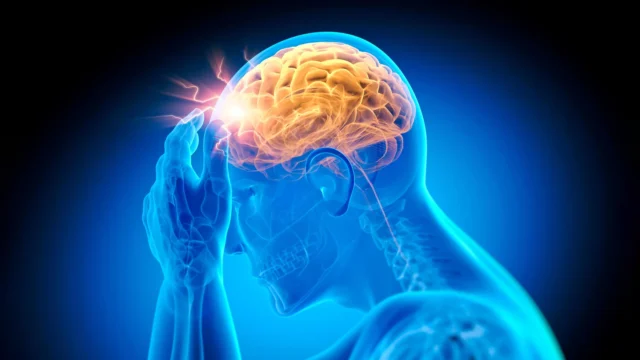
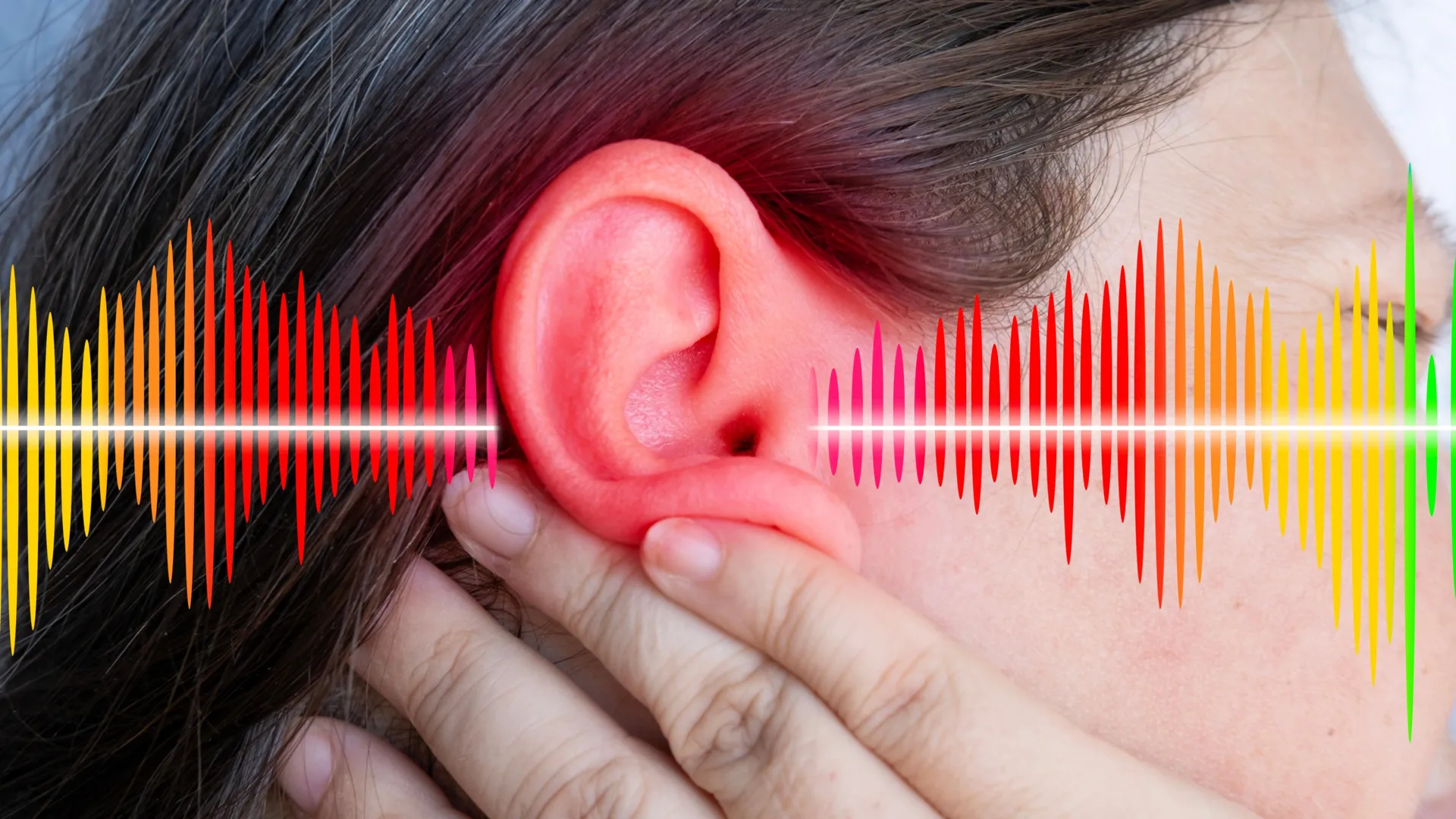
Tinnitus is not a disease in itself but rather a symptom of an underlying issue in the auditory system or the brain’s processing of sound. For the nearly 14% of the global population experiencing this phenomenon, the severity can range from a minor annoyance to a catastrophic life-altering condition. In severe cases, patients report high levels of psychological distress, which frequently leads to the prescription of selective serotonin reuptake inhibitors (SSRIs). However, the new findings suggest that these very medications, designed to alleviate the anxiety caused by tinnitus, may be fueling the physiological fire of the condition.
The Biological Mechanism: Serotonin and the Auditory System
The research team, led by co-senior author Laurence Trussell, Ph.D., a professor of otolaryngology in the OHSU School of Medicine and a scientist at the OHSU Vollum Institute, focused on the dorsal cochlear nucleus. This region of the brain serves as a primary sensory processing hub where auditory information first enters the brainstem. It is also a site where the brain integrates various sensory inputs and modulates its sensitivity to sound.
Using advanced mouse models, the researchers discovered that the brain contains a specific circuit involving serotonergic neurons that project directly into the auditory system. When serotonin levels increase—whether through natural processes or the introduction of SSRIs—these neurons become hyperactive. This activity effectively "turns up the volume" on the internal noise that characterizes tinnitus.
Zheng-Quan Tang, Ph.D., of Anhui University, who co-authored the study and began the project while working as a postdoctoral scholar in Trussell’s laboratory, noted that the study provides a much-needed explanation for a phenomenon that clinicians have observed for decades. "We’ve suspected that serotonin was involved in tinnitus, but we didn’t really understand how," Tang explained. By identifying this specific circuit, the team has moved closer to understanding the neural architecture of phantom sounds.
Methodology: Optogenetics and the Auditory Startle Test
To reach these conclusions, the scientists utilized optogenetics, a sophisticated biological technique that uses light to control neurons that have been genetically sensitized to light. By using fiber optics to deliver light to specific regions of the mouse brain, the researchers could selectively activate neurons that produce serotonin without affecting other neurotransmitters.
Once the serotonergic neurons were activated, the researchers observed a marked increase in the firing rates of neurons within the auditory region. To confirm that this neural activity translated to the subjective experience of tinnitus, the team employed a modified version of the auditory startle test. In this behavioral assessment, animals are typically startled by a loud noise. If a silent gap is placed immediately before the loud noise, a healthy animal will notice the gap and be less startled. However, if the animal is experiencing tinnitus, the phantom ringing "fills in" the gap, and the animal remains fully startled by the subsequent noise.
The results were definitive: when the serotonin circuit was stimulated, the mice behaved as if they were hearing a constant sound, failing to detect the silent gaps. Conversely, when the researchers inhibited this specific circuit, the tinnitus-like symptoms were significantly ameliorated. This causal link provides a biological blueprint for how serotonin-boosting medications can exacerbate the auditory experience of ringing in the ears.
The SSRI Dilemma: Balancing Mental Health and Hearing
The implications of this study are particularly significant for the millions of people who take SSRIs, such as fluoxetine (Prozac), sertraline (Zoloft), or escitalopram (Lexapro). These medications are the gold standard for treating moderate to severe depression and anxiety. Because tinnitus and depression often exist in a feedback loop—where the ringing causes depression, and the depression makes the ringing harder to ignore—SSRIs are frequently prescribed to tinnitus patients.
Trussell emphasizes that the findings should not cause patients to abruptly stop their medications, but rather to engage in more nuanced conversations with their healthcare providers. "People with tinnitus should work with their prescribing physician to find a drug regimen that gives them a balance between relief of psychiatric symptoms like depression and anxiety, while minimizing the experience of tinnitus," Trussell stated.
The study validates the anecdotal reports of many patients who have complained that their tinnitus worsened shortly after beginning a course of antidepressants. For years, these reports were sometimes dismissed by clinicians who lacked a physiological explanation for the side effect. This research provides the necessary evidence to recognize and validate these patient experiences, potentially leading to more personalized approaches in psychiatric care for those with auditory sensitivities.
A Chronology of Discovery: Building on 2017 Findings
The latest research is an evolution of a 2017 study conducted by the same team, which first suggested that the dorsal cochlear nucleus was sensitive to serotonin. That earlier work established that the neurons in this region of the brain were "plastic," meaning they could change their sensitivity based on external inputs.
Between 2017 and the present, the team worked to map the exact pathways through which serotonin travels from the raphe nuclei (the brain’s serotonin production center) to the auditory processing centers. The current study represents the culmination of that mapping, shifting from a general observation of sensitivity to a specific identification of a "tinnitus circuit." This progression marks a significant shift in the field of otolaryngology, moving the focus from the ear itself to the complex neural networks of the brain.
Supporting Data: The Global Burden of Tinnitus
The scale of the problem underscores the urgency of this research. According to a 2022 meta-analysis published in JAMA Neurology, approximately 1 in 7 adults worldwide experience tinnitus. The condition is most prevalent among older adults, but rates are rising among younger populations due to increased exposure to loud noise through personal audio devices.
In the United States, tinnitus is the leading service-connected disability among veterans, surpassing even post-traumatic stress disorder (PTSD). The Department of Veterans Affairs (VA) reports that more than 2.3 million veterans receive disability compensation for tinnitus. The economic impact is vast, involving billions of dollars in healthcare costs and lost productivity. Despite its prevalence, there is currently no FDA-approved drug specifically designed to treat or "cure" tinnitus, leaving patients to rely on sound masking therapy, cognitive behavioral therapy (CBT), or off-label medications like SSRIs.
Future Directions: Targeted Pharmacotherapy
The ultimate goal of the OHSU and Anhui University research is to develop treatments that can decouple the beneficial effects of serotonin from its negative impact on the auditory system. Current SSRIs are "systemic," meaning they increase serotonin levels throughout the entire brain and body.
"Our study suggests a delicate balance," Trussell noted. "It may be possible to develop cell- or brain region-specific drugs that steer the elevation of serotonin in some brain regions but not others."
By targeting the specific receptors involved in the auditory circuit while leaving the mood-regulating circuits unaffected, future medications could treat depression without triggering the dorsal cochlear nucleus. Additionally, this research opens the door for "antagonist" drugs that could specifically block serotonin receptors in the auditory system to provide direct relief for tinnitus sufferers.
Broader Implications for Neuroscience
Beyond tinnitus, the study contributes to a growing body of evidence regarding the "crosstalk" between different sensory and regulatory systems in the brain. It highlights how neurotransmitters like serotonin, which are often categorized by a single primary function, have diverse and sometimes conflicting roles across different neural pathways.
The research also underscores the importance of interdisciplinary collaboration. By combining expertise in otolaryngology, neuroscience, and optogenetics, the international team was able to bridge the gap between cellular biology and clinical symptoms. As the scientific community continues to explore the "hidden" circuits of the brain, the hope is that the millions of individuals living with the "sound of silence" will eventually find a way to quiet the noise.
The study was supported by the National Institutes of Health (NIH) through award RO1DC004450. While the findings provide a robust foundation for new therapies, the authors cautioned that mouse models, while highly informative, require further clinical validation in human trials to determine the exact dosage and receptor interactions necessary for therapeutic intervention. For now, the discovery serves as a vital warning for clinicians and a beacon of hope for patients seeking to understand the complex relationship between their mental health and their hearing.