The State of the NAD: An Operational Reality Check
Since assuming the role of CEO, Kiego has spent his first 30 days conducting a deep-dive audit of the organization’s financial health, operational capacity, and internal culture. One of the most striking revelations from the interview was the discrepancy between public perception and the organization’s physical reality. Contrary to the common belief that the NAD operates as a massive, well-endowed entity, Kiego confirmed that the headquarters is a modest, single-floor office space staffed by a lean team of only six employees.
This revelation serves as a focal point for Kiego’s leadership philosophy: radical transparency. By acknowledging the limitations of the current infrastructure, Kiego aims to move away from the "diamond-standard" facade often expected of non-profit organizations and instead invite the community into a collaborative partnership to build genuine sustainability. This approach acknowledges that the NAD has navigated a series of challenging years with minimal resources, relying on a small but dedicated staff that has historically functioned with little recognition.
Chronology of the First 30 Days
Kiego’s transition period has been defined by a systematic approach to organizational stability. His first month followed a clear, prioritized timeline:
- Days 1–3: Immediate immersion into the organization’s financial health. Kiego engaged directly with the Chief Financial Officer (CFO) and the accounting team to analyze budget structures, investment portfolios, and operational expenses.
- Weeks 2–3: Internal stakeholder engagement. Kiego held extensive one-on-one sessions with the directors of the Legal Advocacy Center and the Youth Programs. These meetings were centered on listening—assessing the historical context of their departments and identifying critical pain points.
- Week 4: Expansion to external partnerships. Kiego initiated dialogues with key allied organizations, including the Deaf and Hard of Hearing Consumer Advocacy Network (DHHCAN) and Telecommunications for the Deaf and Hard of Hearing (TDI), to align the NAD’s advocacy goals with broader industry partners.
Strengthening Core Programs through Strategic Wins
Despite the acknowledged limitations, Kiego reported several "fast wins" that indicate early momentum. Recognizing the urgent need for digital infrastructure improvements, he successfully onboarded a new webmaster and IT systems administrator to rectify long-standing issues with the organization’s website. Furthermore, in collaboration with the Youth Programs Director, Claudia, the NAD has secured a volunteer grant writer dedicated exclusively to the youth sector. This move is designed to address the persistent lack of funding that has historically hampered the development of programs for younger generations.
Kiego identified three core pillars that will define his focus for the remainder of the year: financial stabilization, internal staff development, and the strengthening of the Legal Advocacy Center, Youth Programs, and Policy work. He emphasized that financial stability is the prerequisite for all other advocacy goals; without a balanced ledger, the organization cannot effectively sustain its legal and policy mandates.
The Role of Volunteerism and Community "People Power"
A central theme of the discussion was the necessity of human capital. Because the NAD currently lacks the budget to expand its paid staff, Kiego is launching a strategic initiative to recruit volunteer experts. The request for assistance is broad, targeting retired legal professionals to assist with client intake, policy experts specializing in telecommunications and education, and a robust communications team to manage the organization’s public-facing narrative.
Kiego admitted to personally handling administrative tasks—such as responding to member inquiries about membership status—to compensate for the lack of bandwidth within his core team. He characterized this not as a sustainable model, but as a temporary necessity that underscores the need for a shift in how the community supports the institution.
Engaging the Next Generation: Youth as the Future
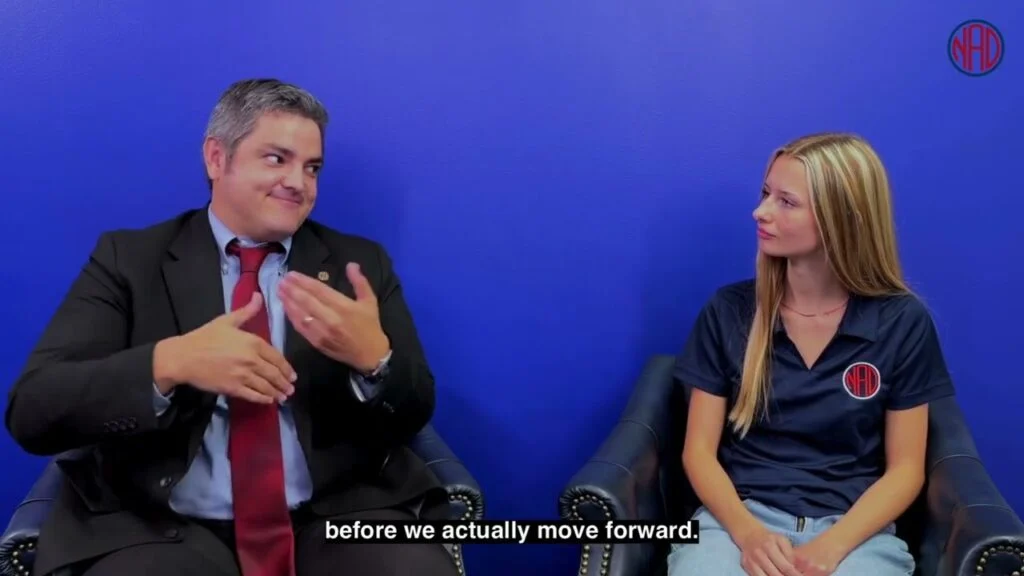
The dialogue with Marisa Goff highlighted a critical disconnect between the NAD and its younger members. Goff pointed out that many youth feel alienated from the organization’s primary events and decision-making processes. The lack of visible chapters at the state and local levels has created a barrier to entry for the next generation of activists.
Kiego responded by validating the importance of the youth pipeline. He noted that the most loyal and passionate advocates within the deaf community are often those who began their involvement as youth. The proposed solution involves a two-pronged strategy:
- Digital Integration: Utilizing social media not as a primary destination, but as a "window" into the organization, providing a glimpse of the culture that encourages physical attendance at conferences and events.
- Collaborative Advocacy: Empowering Jr. NAD representatives to use their own networks and platforms to bridge the gap between the national office and local youth, effectively making them ambassadors for recruitment and engagement.
Broader Implications for the Deaf Community
The candid nature of this interview carries significant implications for the future of the NAD. By publicizing the reality of its limited resources, Kiego is effectively pivoting the organization’s strategy toward a decentralized, community-powered model. This approach moves the NAD away from a top-down structure and toward one that relies on shared responsibility.
From a policy and organizational standpoint, the focus on "grace and patience" is a strategic plea for the community to recognize that organizational turnarounds in the non-profit sector rarely occur overnight. The move to bring in expert volunteers—particularly in grant writing and legal advocacy—suggests that the NAD intends to leverage the latent talent within the community to bolster its legal and policy influence in Washington, D.C.
For the deaf and hard of hearing community, this shift signifies a call to action. The era of passive membership is being replaced by an expectation of active participation. If the NAD is to regain its stature as a fully resourced civil rights powerhouse, it will require a collective effort to bridge the resource gap through volunteerism, advocacy, and a renewed commitment to mentoring the next generation.
As Kiego concluded in his conversation with Goff, the goal is not to present a "golden and shiny" image of an organization that has already succeeded, but to be honest about the work that remains. The partnership between the current executive leadership and the youth ambassador serves as a microcosm for the broader goal: ensuring that the NAD remains a relevant, resilient, and effective advocate in an evolving civil rights landscape. With the foundation of the first 30 days now established, the organization looks toward a future defined by transparency, increased volunteer engagement, and a renewed focus on the next generation of deaf leadership.