
The accident serves as a stark reminder of the volatile nature of rock formations in mining environments. Despite advancements in extraction technology and safety engineering, highwall instability remains one of the most significant risks for personnel working in surface mines. As investigations into the specific site conditions proceed, the mining industry is once again evaluating the effectiveness of current prevention measures against falling debris.

Chronology of the Incident and Immediate Response
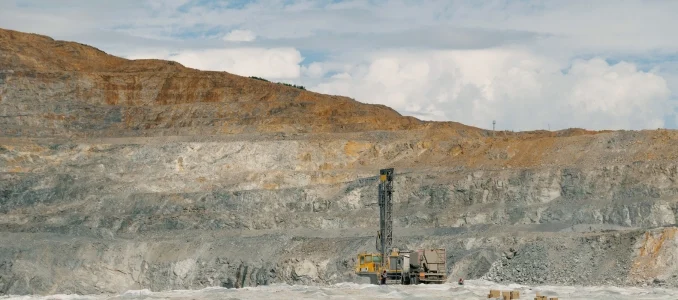
The fatality took place during a standard shift on August 24. According to preliminary reports from federal regulators, the victim was actively engaged in drilling operations at the base of a highwall when a sudden release of rock occurred. The falling material struck the operator, resulting in fatal injuries.
Following the report of the incident, MSHA inspectors were deployed to the site to secure the area and initiate a comprehensive investigation. The agency’s initial assessment focused on identifying the geological triggers that led to the collapse, including potential structural fractures, moisture levels in the rock face, and any recent seismic activity in the surrounding region. While the investigation remains ongoing, the site has been placed under heightened regulatory scrutiny, with operations in the immediate vicinity suspended to prevent secondary incidents and to facilitate the safe retrieval of equipment.
Geological Hazards and Environmental Variables
The instability of highwalls is rarely the result of a single factor; rather, it is often the culmination of cumulative environmental stressors. Mining engineers emphasize that rock faces are dynamic structures. Precipitation, for instance, is a primary catalyst for rock falls. When water infiltrates cracks and fissures in a highwall, it increases hydrostatic pressure and reduces the frictional strength between rock layers.

Furthermore, temperature fluctuations—specifically cycles of freezing and thawing—can exacerbate these conditions. As water trapped in rock crevices freezes, it expands, exerting immense pressure that can shatter rock and destabilize larger sections of the face. The August 24 incident occurred during a time of year when localized weather patterns can cause rapid shifts in soil and rock moisture, potentially masking latent instability that would otherwise be visible during dry, stable weather conditions.
MSHA has emphasized that the "crest" of the highwall—the top edge—is particularly vulnerable. Overhangs, which are often created by improper blasting techniques or natural erosion, represent significant overhead hazards. When these sections lose structural integrity, they can dislodge without warning, posing a lethal risk to any personnel or machinery stationed below.
MSHA Recommendations and Best Practices
In response to this fatality, MSHA has issued a directive to mine operators across the country, reiterating the mandatory safety protocols required to mitigate the risk of highwall failure. The agency’s guidelines are predicated on a multi-tiered approach to site management:

- Rigorous Highwall Examinations: Operators are instructed to conduct thorough inspections of highwalls prior to the commencement of any shift. This includes examining the face from the bottom, the sides, and the top or crest. These inspections must be documented, and where ground conditions are identified as volatile, the frequency of these checks should be increased.
- Proactive Scaling: Scaling—the process of removing loose or unconsolidated rock from a highwall—is a critical preventative measure. MSHA advises that this task must be performed from a safe, protected location, ensuring that personnel are never positioned directly beneath potential slide zones.
- Strategic Use of Benches: Benches are designed to capture falling material and prevent it from reaching the pit floor. To be effective, these benches must be of sufficient width to accommodate the equipment used during routine cleaning and to provide a "catchment" area for debris.
- Protective Equipment: The agency reinforces the mandate that all mobile equipment operating in high-risk zones must be equipped with Falling Object Protective Structures (FOPS). These structures are engineered to withstand the impact of debris, providing a vital buffer between the operator and the geological environment.
Industry Implications and Safety Trends
The death of the drill operator is the latest in a series of incidents involving surface mining hazards. Statistical data provided by the National Institute for Occupational Safety and Health (NIOSH) indicates that while the overall rate of mining fatalities has trended downward over the past two decades, accidents related to "powered haulage" and "ground failure" remain the most persistent causes of workplace deaths in the sector.
The economic implications of these incidents are significant. Beyond the human cost, a single fatality can lead to extensive legal challenges, increased insurance premiums, and long-term regulatory oversight that can impact the operational continuity of a mine. Industry experts argue that the cost of implementing advanced monitoring technologies—such as laser scanning, slope stability radars, and automated vibration sensors—is far lower than the cost of a catastrophic structural failure.
"Safety culture is not just a regulatory requirement; it is a fundamental operational necessity," said a mining safety consultant who reviewed the MSHA alert. "When an operator is on the floor, their focus is on the drill. They rely on the site management to ensure that the environment above them is secure. If the geology is not understood or if the benches are not sized correctly, the operator is essentially working in a blind spot."

The Role of Technological Innovation in Mitigation
As the mining industry moves toward increased automation, new technologies are being deployed to monitor highwall stability in real-time. Ground-based interferometric radar systems are increasingly used to detect sub-millimeter movements in a highwall. If the rock face begins to shift, these systems can trigger automated alarms, allowing for the immediate evacuation of the pit floor long before a collapse occurs.
However, technology is only as effective as the protocols surrounding it. MSHA’s current guidance serves as a baseline, but many mining firms are adopting "best-in-class" standards that exceed federal requirements. These include digital twin modeling, which allows engineers to simulate the structural integrity of a mine site based on geological survey data, and the use of drone surveys to inspect the crests of highwalls without placing personnel in harm’s way.
Moving Forward: A Commitment to Prevention
The investigation into the August 24 fatality will continue to examine whether the site’s specific rock mechanics were adequately assessed and whether the existing safety protocols were strictly adhered to at the time of the collapse. For the broader mining community, the incident serves as a call to action.

The consensus among safety professionals is clear: surface mining requires a constant vigilance that treats the rock face as a living, changing entity. By integrating advanced geological monitoring with the traditional, time-tested practices of scaling, benching, and site-specific hazard training, mine operators can better protect their workforce.
As the industry mourns the loss of another colleague, the focus remains on the implementation of these life-saving measures. The objective of MSHA and mining operators alike is to ensure that the lessons learned from this tragedy are translated into tangible, structural changes in the way mining sites are managed, inspected, and maintained. The goal remains a zero-fatality environment, a target that requires the unwavering commitment of every stakeholder, from the drill operator on the ground to the management teams in the boardroom. The tragedy of August 24 is a somber reminder of the stakes involved, and the vital importance of prioritizing human life over production efficiency.


