The Strategic Importance of Information Architecture in Public Services
Information architecture is traditionally defined as the practice of deciding how to arrange the parts of something to be understandable. Within the context of the Cabinet Office and GDS, this discipline involves planning, designing, and researching user behavior to create deep understandings of how the public interacts with government services. While visual design and technical coding often dominate conversations regarding accessibility, GDS experts argue that the underlying logic of a service determines its ultimate usability for those with cognitive, motor, or visual impairments.
Becky Ashley, Lead Information Architect at GDS, emphasizes that accessibility must be embedded at every level of an organization. This "shift-left" approach—moving accessibility considerations to the earliest stages of the design process—is intended to move beyond simple compliance toward a collective mindset of intuitive and inclusive design. According to GDS, this requires structured integration into internal workflows and a commitment to education across all skill sets.
Chronology of Accessibility Integration in UK Digital Standards
The focus on information architecture is part of a broader evolution of digital standards in the United Kingdom. Since the launch of the Government Digital Service in 2011, the UK has been a global leader in user-centered design.
- 2012: The Government Digital Strategy. GDS introduced the "Digital by Default" standard, mandating that services be so good that those who can use them prefer to do so.
- 2018: The Public Sector Bodies Accessibility Regulations. This legislation required all public sector websites and mobile applications to meet the Web Content Accessibility Guidelines (WCAG) 2.1 AA standards.
- 2020–2023: Expansion of the GDS Design System. The focus shifted toward robust components and patterns that work across various assistive technologies.
- 2025: The "Unlocking Accessibility" Series. This current initiative seeks to break down accessibility by profession, acknowledging that developers, content designers, and information architects each hold unique keys to unlocking digital barriers.
The Three Pillars of Inclusive Architecture: Ontology, Taxonomy, and Choreography
Senior Information Architect Rik Williams identifies three specific pillars of IA that directly impact accessibility: ontology, taxonomy, and choreography.
Ontology refers to the definition of concepts and the relationships between them. In an accessible system, ontologies use clear and consistent concepts. This is particularly beneficial for users with cognitive disabilities, learning differences, or those who lack specific domain knowledge. By standardizing what things are called and how they relate, architects reduce the mental energy required to understand a service.
Taxonomy involves the organization and classification of information. Predictable and logical structures are essential for users who rely on screen readers or those with mobility impairments who may navigate via keyboard. A well-structured taxonomy ensures that information is where a user expects it to be, following established mental models rather than internal government hierarchies.
Choreography dictates how a user interacts with information across different channels and over time. For keyboard users, this translates to a logical tabbing order and a clear indication of focus. For all users, it means consistent navigation patterns and understandable calls to action. Williams notes that when these three pillars are aligned, the resulting system is "deeply usable," which he argues is the fundamental basis of accessibility.
Supporting Data: The Impact of Digital Exclusion
The drive to refine information architecture is supported by significant demographic and economic data. According to the UK’s Office for National Statistics (ONS), nearly one in four people in the UK reports having a disability. Furthermore, research from the charity Scope suggests that the "Purple Pound"—the spending power of disabled people and their families—is worth approximately £274 billion a year to the UK economy.
In the public sector, the cost of exclusion is even higher. When a digital service is inaccessible, users are forced to rely on more expensive channels, such as telephone helplines or in-person appointments. GDS data has historically shown that digital transactions are significantly cheaper than non-digital alternatives. Therefore, refining IA to be more accessible is not only a matter of social equity but also one of fiscal responsibility.
Professional Advocacy and the "POUR" Principles
Educating diverse teams—including developers and content creators—remains a primary challenge for information architects. Becky Ashley advocates for the use of the "POUR" principles as a shared framework:
- Perceivable: Information and user interface components must be presentable to users in ways they can perceive.
- Operable: User interface components and navigation must be operable.
- Understandable: Information and the operation of the user interface must be understandable.
- Robust: Content must be robust enough that it can be interpreted reliably by a wide variety of user agents, including assistive technologies.
Sally Creasey, Senior Information Architect at GDS, highlights the importance of "being the change." She argues that IAs must champion intuitive labeling and wayfinding. A critical but often overlooked aspect is the accessibility of the "backend"—the Content Management Systems (CMS) used by government employees. Creasey notes that frontend users are not the only ones with disabilities; civil servants tagging content or organizing taxonomies also require accessible tools to perform their roles effectively.
Common Pitfalls: The Paradox of Choice and Stakeholder Bias
The GDS team identified several recurring mistakes that hinder digital accessibility. One of the most prevalent is "organisational mirroring," where a website’s structure reflects the internal departments of the government rather than the needs of the citizen.
Sally Creasey warns against the "paradox of choice," where users are presented with too many sections with similar purposes, leading to decision paralysis. This is especially taxing for users with neurodivergent conditions or those experiencing high levels of stress. The use of jargon and the lack of a controlled vocabulary further exacerbate these issues, adding unnecessary mental load.
To combat these pitfalls, the team utilizes several specialized processes:
- Noun and Verb Foraging: Analyzing the language users naturally use to describe their needs.
- Card Sorting and Tree Testing: Validating whether the proposed structure makes sense to real people before any code is written.
- Object-Oriented Design (OOD): Creating information environments built around tangible "objects" rather than abstract concepts, which helps maintain consistency across different technologies.
Simulations and Their Limitations
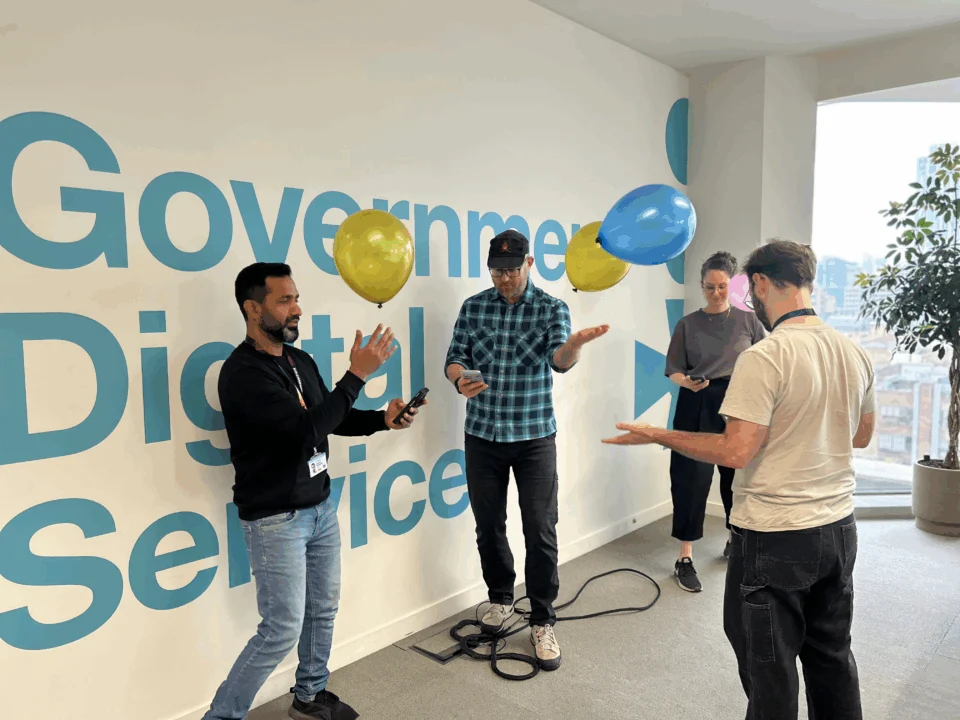
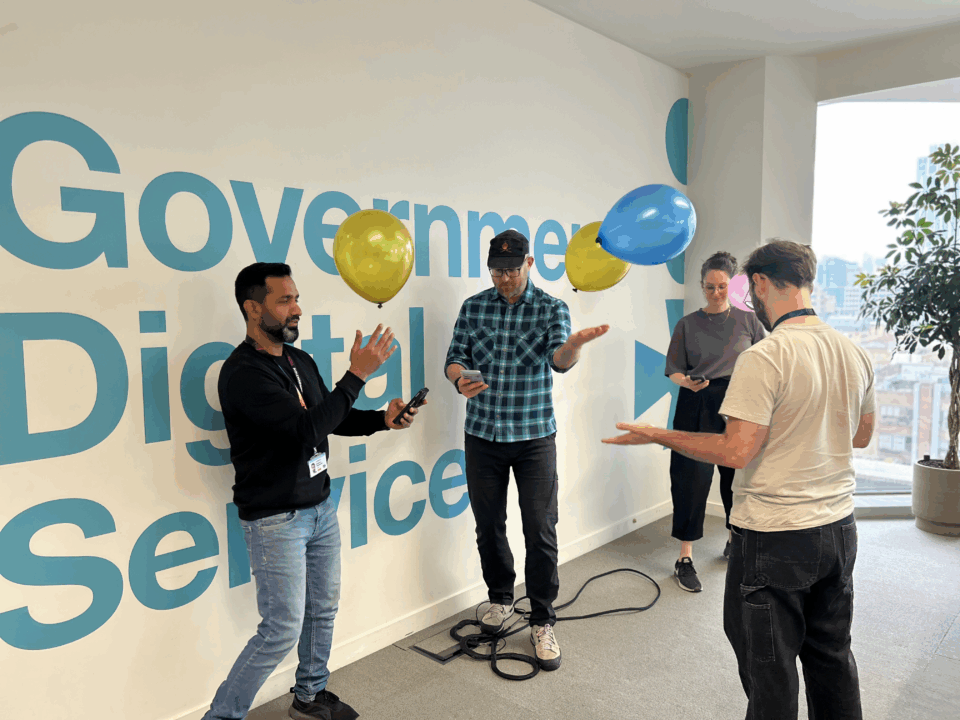
To build empathy within design teams, GDS occasionally employs simulations, such as "empathy balloons"—a game designed to simulate the frustrations of those with cognitive or dexterity issues. Other methods include using vision-impairing glasses or motor-control-limiting gloves.
However, Rik Williams cautions that while these simulations are valuable for uncovering broad issues, they have limitations. They cannot fully replicate the lived experience of disability or the sophisticated workarounds that disabled people develop over a lifetime. Consequently, GDS maintains that direct research with users who have diverse access needs remains the "gold standard" for information architecture.
Analysis of Implications: The Future of AI and Universal Design
The move toward more structured and metadata-rich information architecture has significant implications for the future of government services, particularly regarding Artificial Intelligence (AI). As GDS invests in more sophisticated ontologies, these structures will likely serve as the training data and frameworks for future AI-driven public assistants.
If the underlying IA is accessible and logical, AI tools will be better equipped to serve relevant, simplified content to users based on their specific preferences or assistive technology requirements. Conversely, poor IA today could lead to "automated exclusion" tomorrow.
The GDS "Unlocking Accessibility" series suggests that the role of the information architect is shifting from a technical specialist to a central coordinator of user experience. By focusing on the "universality" of the web—a concept championed by Web founder Tim Berners-Lee—GDS aims to ensure that the UK’s digital services remain a global benchmark for inclusivity.
The ongoing work at GDS serves as a reminder that accessibility is not a "one-and-done" task but a continuous process of iteration. As Becky Ashley concludes, information systems must be able to adapt to emerging user needs, ensuring that as technology evolves, no citizen is left behind due to the way information is structured.