These challenges were the central focus of a high-level technical Q&A webinar hosted by Occupational Health & Safety on July 29, 2026. The session featured Derek Vigstol, a licensed master electrician and veteran safety consultant with e-Hazard. With a career spanning decades in construction, apprenticeship instruction, and policy advisory roles within the NFPA, Vigstol provided a deep dive into the five most persistent gray areas that plague modern electrical safety management.
The Conflict Between Production and Protection
The common refrain, "We can’t shut it down," serves as the ultimate litmus test for a company’s safety culture. In modern manufacturing, where downtime can cost thousands of dollars per minute, the pressure to perform "live" work is immense. However, safety professionals must reconcile these economic demands with the reality of arc flash and shock hazards.
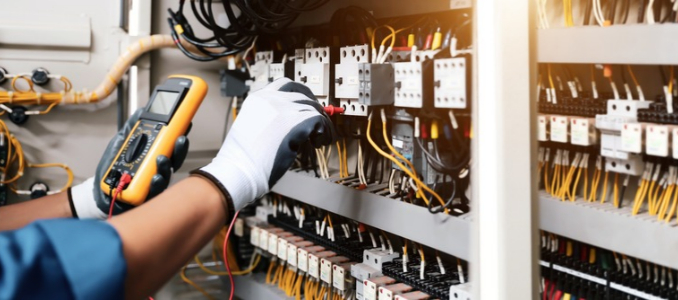
According to data from the Bureau of Labor Statistics (BLS), electrical hazards continue to be a leading cause of workplace fatalities and severe injuries. While the number of electrocutions has trended downward over the last two decades, the severity of non-fatal injuries—often resulting in permanent disability—remains a critical concern. Vigstol argues that when a facility claims it "cannot" shut down, it is rarely a technical impossibility and almost always a business decision. The gray area emerges when that business decision is mislabeled as an operational necessity, effectively bypassing the rigorous risk assessments required by law.
Chronology of Regulatory Evolution
To understand why these gray areas exist, one must look at the evolution of safety standards. In the early 20th century, electrical safety was largely reactive. It was not until the formalization of the NFPA 70E in 1979 that the industry began to shift toward a proactive, risk-based approach.
- 1979: Publication of the first edition of NFPA 70E, designed to assist OSHA in developing electrical safety regulations.
- 2000–2010: The "Risk Assessment" era, where standards began to move away from prescriptive rules toward performance-based requirements.
- 2015–2021: Refinement of the "Hierarchy of Controls," emphasizing that energized work should be the last resort, permitted only under specific, documented conditions.
- 2026: Current landscape, where the integration of digital smart-grid technology and automated diagnostics is blurring the lines of what constitutes "maintenance."
Redefining Electrical Work: The Hazard-First Approach
One of the most persistent sources of workplace confusion is the classification of labor. A common scenario involves a non-electrician maintenance technician performing routine troubleshooting on a machine. The question arises: Is this electrical work?
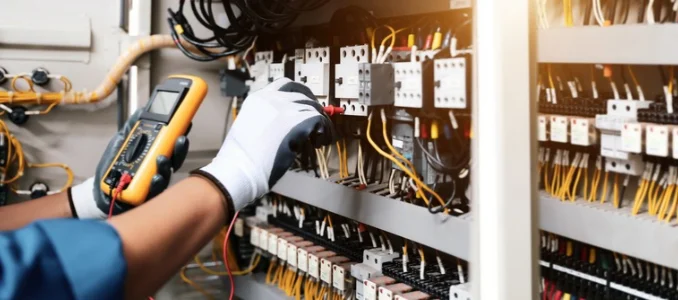
Vigstol emphasizes that the answer must be derived from the hazard, not the job title. If an employee is exposed to an electrical hazard—defined by the potential for contact with energized parts or the release of arc-flash energy—the work must be governed by electrical safety protocols, regardless of the employee’s title.

"If the task requires you to open a panel and expose yourself to live parts to take a measurement, you are performing electrical work," Vigstol explained during the webinar. This shift is critical because it forces employers to move away from "grandfathering" workers into roles. If a mechanic is tasked with troubleshooting a control board, they must possess the same level of training, PPE, and safety oversight as a certified electrician. Failure to acknowledge this reality is a leading contributor to "near-miss" incidents, where staff—unaware of the specific hazards of a panel—erroneously believe their routine task is exempt from electrical safety standards.
The Myth of "Impossible" De-energization
When production teams insist that equipment cannot be shut down, Vigstol challenges the premise by dissecting the underlying justification. Under NFPA 70E, energized work is permitted only under two primary conditions:
- Infeasibility: Where de-energizing introduces additional or increased hazards (e.g., life-support systems, emergency alarms).
- Infeasibility due to operational limitations: Where de-energizing is not possible due to equipment design or operational necessity.
The "gray area" exists because many managers confuse "inconvenience" with "infeasibility." If a plant manager states that shutting down a line will lose a day of production, that is an economic concern, not a safety justification. True infeasibility is rare and typically reserved for mission-critical infrastructure. Vigstol suggests that if a facility lacks the ability to test or maintain equipment without shutting it down, the facility design itself is deficient. The implication is clear: if the work cannot be performed safely while energized, and the equipment cannot be safely shut down, the organization must invest in redundant systems or updated electrical architecture.
Qualified Personhood and Training Standards
A significant portion of the webinar addressed the definition of a "Qualified Person." OSHA defines a qualified person as one who has demonstrated skills and knowledge related to the construction and operation of electrical equipment and installations and has received safety training to identify and avoid the hazards involved.

However, the "gray area" is the subjectivity of "demonstrated skills." Employers often rely on a worker’s years of experience as a proxy for qualification. Vigstol warns against this complacency. "Years of experience is not the same as years of training," he noted. A worker might have spent twenty years performing the same task, but if they have never been trained on the latest arc-flash calculations or PPE requirements, they are not qualified by modern standards.
Organizations are now being encouraged to adopt a competency-based verification system. This involves:
- Written Assessment: Testing the worker’s knowledge of current standards and hazard identification.
- Hands-on Demonstration: Observing the worker perform a task in a controlled environment.
- Periodic Re-qualification: Ensuring that skills are refreshed, especially as technology changes.
The Impact of Emerging Technologies
The introduction of digital diagnostic tools and IoT-connected sensors has further complicated the safety landscape. Many modern panels allow for external testing via digital interfaces, which can reduce the need for an employee to open an energized panel. However, this has created a false sense of security.
Vigstol cautions that these technologies do not eliminate the hazard; they merely relocate it. If a sensor fails or the digital interface provides a faulty reading, the technician may still need to access the panel internally. Furthermore, the reliance on digital diagnostic tools has sometimes led to a decline in manual troubleshooting skills, which are essential when the "smart" systems fail.

Broader Implications for Industry
The implications of these gray areas are significant for both legal liability and worker safety. From a regulatory perspective, OSHA’s General Duty Clause requires employers to provide a workplace free from recognized hazards. When an incident occurs, investigators do not look for the job description; they look for the risk assessment. If an employer cannot demonstrate that they performed a proper hazard analysis, they are in immediate violation of safety standards.
For safety professionals, the path forward requires a shift in mindset. Instead of viewing electrical safety as a checklist of tasks to be completed, it must be viewed as a dynamic risk management process. This means:
- Documenting the "Why": Every time energized work is deemed necessary, it should be documented with a formal risk assessment that explains why de-energizing was not feasible.
- Empowering the Workforce: Employees at all levels must be empowered to stop work if they believe the hazard has not been adequately mitigated.
- Continuous Education: Investing in training that keeps pace with both technological advancements and regulatory updates.
As the industry moves toward 2027 and beyond, the gap between the "real world" of production and the "ideal world" of safety standards will likely continue to narrow as companies adopt better predictive maintenance tools and safety-by-design infrastructure. Until then, the ability to navigate these gray areas remains the primary hallmark of a competent and proactive safety professional. The objective is not to find a way to work around the rules, but to create an environment where the rules are the foundation for every operational decision.