The Anatomy of the Accident
On the morning of May 19, operations at the facility were proceeding under standard production protocols. The assistant shift foreman, whose identity remains withheld pending final family notifications, was overseeing a crew of contractors tasked with maintenance and operational support. Without warning, a substantial section of the mine rib—the vertical side wall of the excavation—suffered a structural failure.
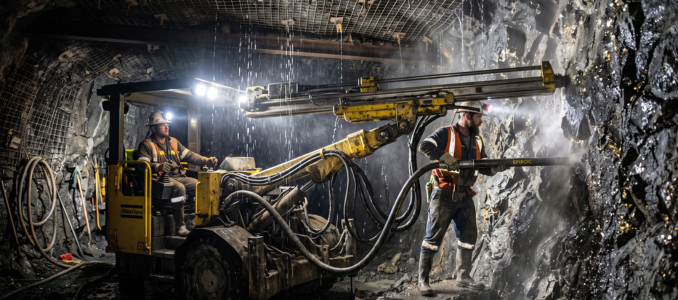
The collapse, characterized by the sudden detachment of a large rock mass, struck the assistant shift foreman with fatal force. Two contractors operating in the immediate vicinity were also caught in the collapse, sustaining non-life-threatening injuries that required immediate medical evacuation. Emergency protocols were triggered instantly, halting all production at the site to allow for rescue efforts and the subsequent arrival of MSHA inspectors.
Rib falls, while distinct from roof falls, present a unique set of challenges. Unlike overhead roof failure, which is often mitigated by systematic bolting and screen support, rib instability is frequently driven by lateral stress and the degradation of rock strata along the tunnel walls. As mining progresses, the redistribution of stress loads can cause rib material to buckle, crack, or—in this instance—dislodge entirely.
Chronology of MSHA Intervention
Following the incident, MSHA mobilized a specialized team of investigators to the site to conduct a root-cause analysis. The investigation timeline involved an initial scene stabilization, where inspectors assessed the remaining geological integrity of the tunnel. This was followed by a forensic review of the mine’s roof control plan and historical examination logs.

MSHA’s report highlights that the accident occurred during a period where mining conditions were undergoing significant shifts. Preliminary findings suggest that as the mine expanded, the structural pressure on the ribs increased, a common phenomenon in deep-vein or high-seam mining operations. The agency is currently reviewing whether the site’s existing safety protocols, specifically those regarding geological monitoring and rib support, were sufficient to mitigate the risk posed by the shifting environment.
Supporting Data on Underground Hazards
The tragedy on May 19 is not an isolated event but rather a sobering entry in the broader data set of mining fatalities. According to historical data from the National Institute for Occupational Safety and Health (NIOSH) and MSHA, falls of ground—including both roof and rib collapses—remain a leading cause of death and injury in underground mining operations.
Statistics over the last decade reveal that while overall mining fatalities have trended downward due to improved technology and stricter regulatory oversight, rib-related incidents have shown a stubborn resistance to these improvements. Factors contributing to these persistent risks include the increase in mining heights, which exposes larger surface areas of the rib to air and moisture, leading to faster weathering and structural decay. Furthermore, as mines reach greater depths, the "crush" or "bump" potential—where the surrounding rock mass releases stored energy—increases, making the walls of the tunnel inherently less predictable.

Industry data suggests that approximately 15 to 20 percent of ground-control-related accidents involve the rib rather than the roof. This discrepancy often leads to a focus on overhead stability at the expense of side-wall reinforcement, a trend that MSHA is now actively working to reverse through targeted training and updated compliance mandates.
MSHA Recommendations and Safety Protocols
In response to the May 19 fatality, MSHA has reiterated the necessity of "active observation." The agency’s guidelines emphasize that pre-shift and on-shift examinations must be more than a cursory glance. Inspectors are now being instructed to look for visual indicators of stress, such as "sloughing" (the peeling of small rock fragments), tension cracks, or the sound of popping rock, which often precedes a major failure.
The agency’s core recommendations for mine operators include:

- Heightened Examination Rigor: Operators must conduct thorough examinations of the roof, face, and ribs at the start of every shift and throughout the day as environmental conditions fluctuate.
- Immediate Hazard Mitigation: If any sign of instability is detected, work must be suspended immediately. No personnel should be allowed in the affected area until it is either scaled down or supported with structural steel, mesh, or additional bolting.
- Safe Scaling Practices: MSHA emphasized the use of appropriate tools, such as mechanical slate bars, to safely remove loose material from a distance. Miners are strictly prohibited from standing beneath or adjacent to unsupported ground while attempting to scale the area.
- Adaptive Support Systems: In areas where mining heights increase or where geological surveys indicate weaker rock mass, operators are required to install additional posts or floor-to-roof supports. These must be set from a position of safety, ensuring that the installer is never exposed to the unsupported ground they are working to secure.
- Adherence to Approved Plans: The site’s approved roof control plan is a legal mandate, not a suggestion. MSHA warns that deviating from these plans—even in the interest of production speed—is a primary driver of preventable accidents.
Industry Implications and Broader Impact
The death of the assistant shift foreman has sparked a wider conversation regarding the culture of safety in underground mining. Safety experts argue that while the technical aspects of roof control are well-understood, the "human element"—the decision to continue working in a questionable area—is where the greatest vulnerability lies.
Industry unions and trade associations are expected to use this incident as a case study for future safety briefings. The consensus among safety professionals is that mining operations must prioritize the "Stop Work Authority." This policy empowers any miner, regardless of rank, to halt production if they identify a potential hazard. Cultivating an environment where employees feel comfortable exercising this authority without fear of retaliation is critical to reducing future fatalities.
Furthermore, the legal implications for the mining company involved are significant. MSHA’s investigation will likely conclude with a formal citation process. Depending on the findings, the operator could face heavy fines and mandatory compliance upgrades. More importantly, the incident places the mine under increased regulatory scrutiny, requiring more frequent inspections and potentially limiting production capacity until the agency is satisfied that the rib stability issues have been fully remediated.
The Road Ahead
As the investigation into the May 19 incident draws toward a close, the mining community faces a stark challenge: how to reconcile the economic necessity of high-output extraction with the physical reality of increasingly unstable geological conditions.
Technological advancements, such as automated longwall mining and remote-sensing geological mapping, offer potential paths toward a future where human exposure to high-risk areas is minimized. However, until such technologies are universally adopted, the fundamental reliance on vigilant, well-trained, and empowered miners remains the first and last line of defense.
MSHA continues to provide comprehensive resources, training modules, and technical support through its official website, MSHA.gov. For mine operators, the directive is clear: the cost of a safety intervention, no matter how disruptive to production, is negligible compared to the loss of a life and the subsequent erosion of trust, regulatory standing, and operational continuity. The memory of the assistant shift foreman who lost his life in this tragedy serves as a solemn call to action for the industry to redouble its efforts in ground control, ensuring that every miner returns home safely at the end of every shift.