The Evolution of Core Vocabulary Instruction
The "Year of Core Vocabulary" project originated as a systematic response to the difficulty practitioners often faced in planning daily, meaningful lessons. By providing a curated list of target words for each month, the initiative allows for a "saturation" approach, where specific terms are modeled repeatedly in natural settings. This method is supported by the principle of aided language stimulation, where the communication partner models the use of the AAC system while speaking, thereby creating a visual and auditory map for the user to follow.

A Chronological Overview of Resource Development
The development of these resources has unfolded in distinct phases, reflecting the growing needs of the AAC community and the refinement of instructional strategies:
- 2013–2015: The Foundational Series: The initial "Year of Core Vocabulary" was launched to establish a baseline for practitioners. It focused on a small, manageable set of high-frequency words per month, providing a baseline for teachers and parents who were just beginning to incorporate core boards and devices into the classroom.
- 2016–2019: Expansion and Refinement: Following the success of the initial set, a secondary series was developed. During this period, Rachael Langley, an AAC-specialized speech-language pathologist and co-founder of Talking AAC, introduced activity calendars. These calendars provided a daily guide for integrating core words into school routines, bridging the gap between theory and clinical application.
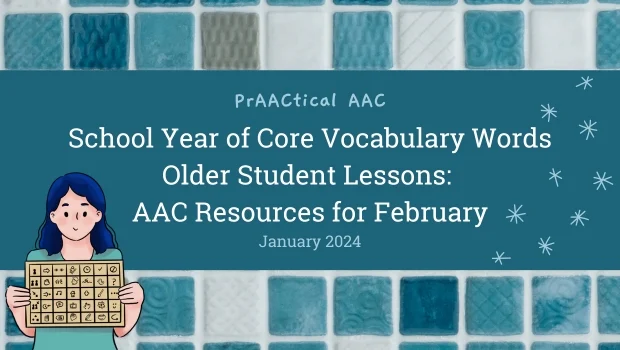
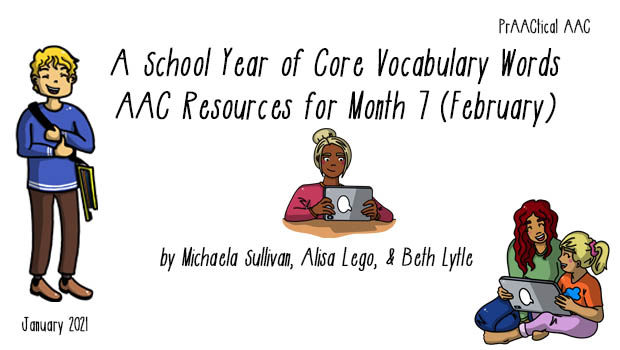
- 2020: The School Year of Core Vocabulary: A significant evolution occurred with the publication of the "School Year of Core Vocabulary Words," authored by Michaela Sullivan, Alisa Lego, and Beth Lytle. This project moved beyond simple word lists, offering comprehensive lesson plans, data collection templates, and classroom strategies tailored specifically to the school-age population.
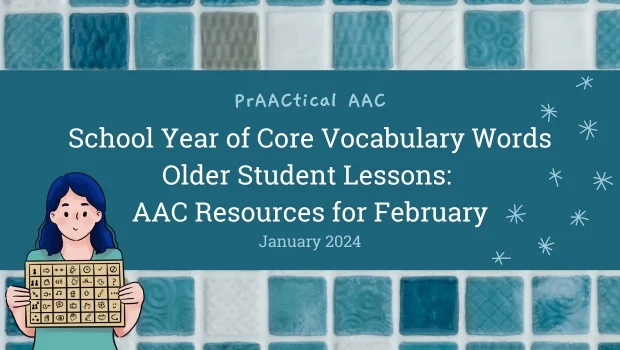
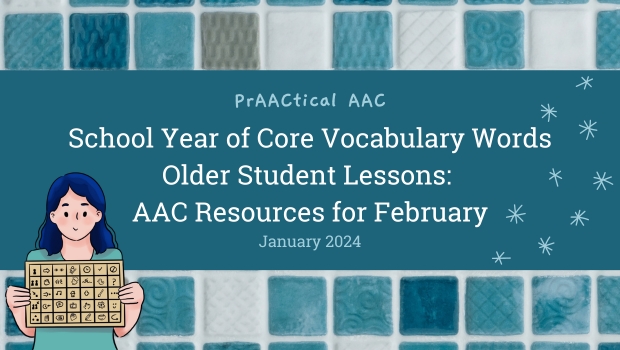
- 2023–2024: Addressing the Older Student Population: Recognizing that communication needs evolve as students transition to adolescence and adulthood, the project expanded to include lessons specifically for older students. This phase, contributed by Michaela Sullivan and Lindsay Dougherty, addressed the need for age-appropriate, respectful, and cognitively stimulating activities that move beyond the early childhood developmental level.
The Pedagogical Importance of Targeted Instruction
The efficacy of the "Year of Core Vocabulary" lies in its intentionality. Research in speech-language pathology suggests that for an AAC user to achieve linguistic competence, they must see their communication system used by others in a variety of contexts. According to data from the National Joint Committee for the Communication Needs of Persons with Severe Disabilities, consistent modeling is the most critical factor in successful AAC implementation.
The February resources specifically highlight how these programs adapt to different developmental tiers. For preschool students, the focus remains on functional play-based interactions. For middle and high school students, the vocabulary transitions into academic language, social interaction, and self-advocacy. By providing these tiered resources, the project ensures that the curriculum grows with the learner, preventing the plateau often associated with rigid, static communication systems.
Expert Perspectives and Community Impact
The collaborative nature of this initiative is frequently cited by professionals as a primary reason for its sustained success. By involving multiple contributors—including clinicians, researchers, and educators—the resources benefit from a diversity of perspectives.
"The consistency of the resource delivery allows for a cohesive approach to intervention," notes an independent clinical consultant familiar with the project. "When a speech-language pathologist can share a uniform set of materials with a student’s classroom teacher and family, it creates a unified communication environment. That environmental support is what drives long-term language growth."
The feedback from the AAC community underscores a shift in professional culture. Educators who once struggled to find relevant materials now have access to a repository of lesson plans that are not only theoretically sound but also practically implementable within a standard school day. The ability to print and distribute these materials—as facilitated by the project’s accessibility tools—remains a critical feature for busy professionals working in high-caseload environments.
Implications for Future Practice
The ongoing nature of the "Year of Core Vocabulary" project serves as a model for how specialized communities can foster professional development. As digital accessibility tools improve, the distribution of these resources has become more efficient, allowing for global reach.
The implications for AAC users are profound. When an individual has access to a core vocabulary that is intentionally taught, their ability to participate in social and academic discourse increases significantly. Data suggests that students who are provided with systematic, core-based instruction show higher rates of expressive language growth compared to those who are limited to noun-heavy, "requesting-only" vocabularies.
Furthermore, the expansion into older student resources addresses a long-standing "gap" in the field. Historically, many AAC resources were heavily skewed toward the early intervention demographic. By codifying strategies for secondary school students, the project contributors have highlighted the necessity of lifelong communication support.
Sustaining the Initiative
As of January 2026, the reprising of these resources remains a vital service to the field. With new cohorts of educators and parents entering the AAC sphere annually, the "Year of Core Vocabulary" ensures that the knowledge gained over the past decade is not lost. The resources serve as a "living curriculum"—one that is constantly updated, reviewed, and adapted to meet the changing technological landscape of communication devices.
For those implementing these programs, the goal remains unchanged: to empower non-speaking individuals to express their unique perspectives with the same spontaneity and breadth as their verbal peers. By leveraging the structured support provided in these monthly resources, practitioners can move beyond the mechanics of operating a device and focus on the human necessity of connection, education, and expression.
In summary, the continued curation of the February resources represents a disciplined, collaborative effort to standardize best practices in AAC. Through the combined expertise of contributors like Sullivan, Lego, Lytle, and Dougherty, the initiative provides a robust framework that supports the communication journey from early childhood through high school graduation. As the project continues to evolve, it remains a testament to the power of community-driven resources in improving the quality of life for AAC users worldwide.