The Evolution of Core Vocabulary Instruction
The pedagogical philosophy underpinning this initiative centers on "core vocabulary"—a relatively small set of words that account for approximately 80% of what is said by typical communicators. Unlike fringe vocabulary, which consists of nouns specific to a topic, core vocabulary consists primarily of verbs, pronouns, prepositions, and adjectives that are highly functional across diverse contexts.
The initiative began as an experimental series aimed at simplifying the overwhelming task of selecting target words for AAC learners. Over the past several years, the project has evolved from a singular list of words into a multi-tiered curriculum. The chronological development of these resources reflects the growing sophistication of the AAC field:

- 2013-2015: The initial "Year of Core Vocabulary Words" series was launched to address the need for a systematic, month-by-month approach to teaching high-frequency words.
- 2016-2019: The project expanded to include a second iteration, incorporating user feedback and diverse instructional strategies, including the popular activity calendars pioneered by SLP Rachael Langley.
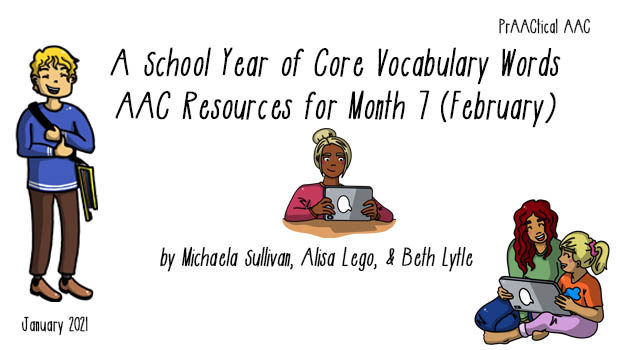
- 2020: The "School Year of Core Vocabulary Words" was introduced, specifically designed for classroom integration. This phase saw collaboration from experts Michaela Sullivan, Alisa Lego, and Beth Lytle, who tailored materials to meet the rigorous demands of educational settings.
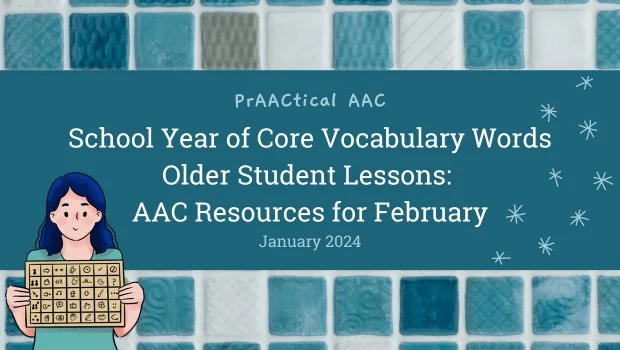
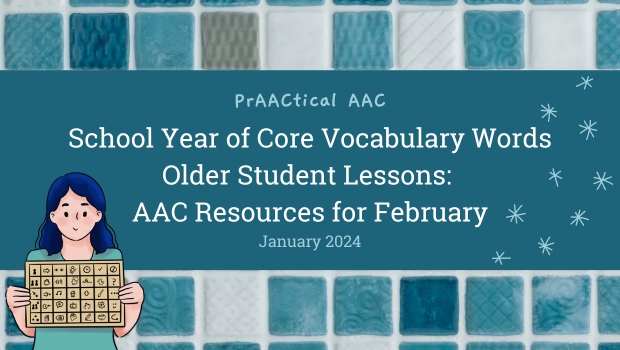
- 2023-2024: Recognizing the unique linguistic and social requirements of adolescent and young adult learners, the initiative expanded its scope to include resources specifically for older students, authored by Michaela Sullivan and Lindsay Dougherty.
Data-Driven Approaches to Language Acquisition
The importance of this initiative is underscored by data regarding language acquisition in AAC users. Research suggests that language growth in children using AAC is often stunted by "input deprivation," where the child is expected to use a device without receiving sufficient modeling from communication partners.
By utilizing a structured, year-long curriculum, practitioners and parents are provided with a consistent "language diet." Data from the American Speech-Language-Hearing Association (ASHA) indicates that when communication partners utilize modeling (aided language stimulation) consistently, users demonstrate higher rates of spontaneous communication. The February resources, which are currently being revisited by the community, focus on specific high-frequency terms that serve as a springboard for expressive language, helping users transition from labeling items to requesting, commenting, and protesting.
Structuring February: A Multi-Tiered Implementation
The February toolkit represents a critical juncture in the school year, where learners move past initial onboarding and into more complex social-communicative exchanges. The materials are categorized into three distinct tracks to ensure developmental appropriateness:
1. The Foundational Track (Sets 1 & 2)
These resources are aimed at early learners or those in the initial stages of AAC implementation. The focus here is on foundational verbs and descriptive words. The materials include low-tech communication boards, visual scenes, and structured activities that encourage the user to pair the core word with an action or a sensory experience.
2. The Classroom Track (School Year of Core Vocabulary)
Designed for the K-12 environment, this segment provides lesson plans that align with common core standards. It emphasizes the integration of AAC into academic subjects like science, mathematics, and literacy. By embedding core words into these subjects, the curriculum ensures that the student is not just practicing isolated words, but using them in contextually relevant academic tasks.
3. The Secondary Education Track (Older Student Lessons)
One of the most significant advancements in the project’s history has been the inclusion of resources for middle and high school students. Older students often face the challenge of "pedagogical infantilization," where learning materials are too simplistic to be engaging. The materials developed by Sullivan and Dougherty pivot toward social advocacy, vocational readiness, and peer-to-peer interaction, ensuring that the vocabulary taught is age-appropriate and socially empowering.
Expert Perspectives and Community Collaboration
The success of the "Year of Core Vocabulary" initiative is largely attributed to its collaborative, open-access model. By sourcing content from active practitioners in the field, the project ensures that the strategies remain grounded in clinical reality rather than just theoretical conjecture.
Industry observers note that the shift toward curated, monthly resources has significantly reduced the administrative burden on SLPs. "The biggest barrier to AAC success is often the time required for lesson planning," notes an anonymous contributor familiar with the project. "By providing a ready-made structure, we allow the therapist to focus on the child rather than the paperwork."
Broader Implications for Special Education
The ongoing availability of these resources carries profound implications for the special education sector. As schools face increasing pressure to provide inclusive environments, the use of universal design for learning (UDL) principles—such as those embedded in these core vocabulary resources—becomes essential.
The ripple effect of this initiative is measurable in the improved outcomes for students with autism, cerebral palsy, and other developmental conditions. By standardizing the vocabulary introduced, educators can facilitate better transitions between different settings, such as from the speech therapy room to the general education classroom and eventually to the home environment.
Furthermore, the emphasis on professional development inherent in these materials helps to bridge the gap between specialists and general educators. When classroom teachers are provided with the same, easy-to-use core vocabulary tools as the SLP, the consistency of communication input increases, which is the single most significant predictor of long-term AAC success.
Implementation Guidelines for Educators and Families
For those intending to implement these February resources, the suggested workflow involves a three-step process:
- Modeling: The communication partner should use the target core words on the user’s AAC device throughout the day, even before the user is expected to produce the words independently.
- Environmental Arrangement: Educators and parents are encouraged to set up the environment to elicit the use of the target words. For example, if the target word is "help," a desirable object might be placed out of reach.
- Expansion and Recast: When a student communicates using a single core word, the communication partner should respond by adding to that word (e.g., if the student hits "more," the partner responds with "more milk" or "more play"), thereby modeling more complex syntax.
Looking Toward the Future of AAC
As the "Year of Core Vocabulary" moves into its next phase, the focus of the AAC community is shifting toward digital integration. With the advent of more sophisticated speech-generating devices and integrated mobile applications, the next iteration of these resources will likely include digitized templates and data-tracking features.
However, the core principle remains unchanged: technology is merely a tool, and it is the quality of the linguistic interaction that determines success. By providing a structured, accessible, and community-vetted curriculum, the "Year of Core Vocabulary" remains a cornerstone of modern AAC practice. As February approaches, the availability of these resources ensures that students from preschool through high school have the tools they need to engage with their world, one core word at a time. The continued participation of guest authors and the active engagement of the AAC community ensure that these materials will remain dynamic, evolving alongside the students they serve.