Legal Precedent: Addressing Communication Failures in Law Enforcement
A primary focus of the current advocacy agenda involves rectifying discriminatory practices in public safety interactions. Director of Legal Services Brittany Shrader, Esq., announced a significant settlement of $1.2 million involving a Deaf mother and her two 11-year-old daughters. The incident, which serves as a catalyst for the NAD’s ongoing campaign for police reform, involved an officer wearing a face mask who refused to provide the necessary accommodations for effective communication.
Compounding the violation, the officer attempted to compel the young children to serve as ad-hoc interpreters for their mother. The refusal to provide qualified, professional interpreters led to a breakdown in communication and the subsequent arrest of the mother, an event described as deeply traumatic for the family. This settlement is not merely a financial resolution; it represents a strategic legal intervention intended to reinforce the legal requirement under the Americans with Disabilities Act (ADA) and the Rehabilitation Act that public entities must provide effective communication.
Legal experts suggest that this case underscores a persistent vulnerability in the Deaf community regarding law enforcement interactions. By securing this settlement, the NAD is signaling a zero-tolerance policy toward the use of minors as interpreters, a practice that is both professionally unethical and legally insufficient. The organization intends to use this victory to press for national standards in police training, ensuring that departments understand their obligations to provide qualified, certified interpreters regardless of the circumstances.
Educational Policy and the BEDE Initiative
Concurrent with its legal efforts, the NAD is advancing its "Blueprint on Excellence in Deaf Education" (BEDE). Dr. Marla Hatrak, an educational policy consultant for the organization, has positioned the BEDE initiative as a cornerstone of the upcoming 2026 conference. The initiative seeks to overhaul the national system of Deaf education by establishing a standardized framework for quality and equity.
The BEDE project is a response to long-standing disparities in Deaf education outcomes across the United States. By providing a structured "blueprint," the NAD aims to provide educators, administrators, and policymakers with a roadmap that prioritizes linguistic access and academic rigor. The upcoming workshop in San Francisco is expected to serve as a hub for practitioners to collaborate on refining these standards, which could influence state-level educational policies in the coming decade.
2026 Biennial Conference: Logistics and Strategic Planning
The 58th biennial NAD conference, scheduled for this summer in San Francisco, represents the organization’s most significant mobilization of the year. Assistant to the Interim CEO Nancy Bloch reported that the designated conference hotel is already at 60% capacity for the room block, a metric that indicates high levels of member engagement and anticipated attendance.
The conference serves as both a cultural milestone and a professional summit for the Deaf community. It encompasses the Council of Representatives—the primary body responsible for setting the organization’s priorities—as well as extensive programming, business meetings, and networking opportunities. With the registration deadline set for May 20, 2026, the NAD is urging attendees to secure their accommodations early. The logistical complexity of the event is being managed in close collaboration with local California organizations, whose contributions have been instrumental in the planning phase.
Empowerment of the Next Generation
The NAD has placed a renewed emphasis on youth leadership, integrating three core programs into its 2026 agenda: the Youth Leadership Camp (YLC), the Jr. NAD Pages program, and the biennial College Bowl.
The YLC, which will host 64 participants, is designed to foster teamwork and advocacy skills through intensive outdoor and leadership-focused curriculum in the Pacific Northwest. By immersing youth in a environment that prioritizes Deaf identity and professional development, the organization aims to cultivate the next cohort of community leaders.
The Jr. NAD Pages program offers a more direct, civic-oriented experience. Students aged 13 to 17 gain firsthand exposure to the governance processes of the NAD by assisting with workshops and observing the Council of Representatives. This "learning-by-doing" approach is essential for ensuring institutional continuity. Finally, the College Bowl continues its tradition as a platform for intellectual competition, drawing teams from universities nationwide to address complex questions, thereby highlighting the academic achievements of Deaf students in higher education.
Organizational Transition and Governance
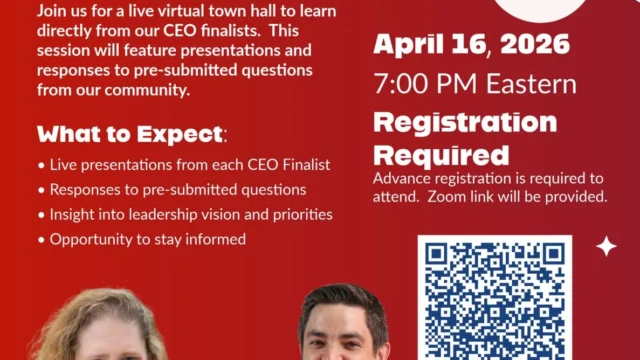
The broader institutional landscape of the NAD remains in a state of deliberate evolution. Dr. Scoggins, who has served as interim CEO, is currently managing a dual-track strategy: supporting the current staff and board while facilitating the transition to a permanent leadership structure.
The CEO search process is ongoing, with a transition period planned through July 31, 2026. Dr. Scoggins has emphasized that her role during this tenure is to ensure stability and momentum. By maintaining support for the staff’s current initiatives, she is ensuring that the organization does not lose traction on critical legal and educational policy fronts during the leadership change.
Analysis of Broader Implications
The cumulative effect of these activities points to a sophisticated, multi-pronged strategy by the NAD to influence the lives of Deaf citizens. By combining aggressive litigation with long-term policy development and intentional youth development, the organization is addressing the immediate needs of its constituents while simultaneously building a foundation for future advocacy.
The $1.2 million settlement serves as a benchmark for accountability, while the BEDE initiative offers a proactive vision for educational reform. Together, these efforts suggest that the NAD is moving toward a more assertive posture in the public sphere. The 2026 conference, therefore, serves as more than a gathering; it is the focal point for the organization’s strategic plan, where policy, legal advocacy, and leadership training converge.
As the organization approaches the summer conference, the primary challenge remains the execution of these initiatives on a national scale. The high rate of hotel bookings and the depth of the programming suggest that the membership is highly engaged with these objectives. For observers of civil rights and disability advocacy, the NAD’s trajectory in the latter half of 2026 will provide significant insight into the evolving relationship between the Deaf community and federal institutions.
The success of the upcoming conference will be measured not only by attendance but by the concrete outcomes of the business meetings and the extent to which the BEDE framework is adopted by stakeholders. As the organization transitions to new leadership, the continuity of these programs will be the primary metric for long-term organizational health and impact. With the legal, educational, and youth development pillars firmly in place, the NAD is positioned to maintain its role as the leading voice for Deaf and hard-of-hearing Americans throughout the remainder of the decade.