The Genesis of the Center for Hearing Access
The Center for Hearing Access (CHAA), a national nonprofit established in 2024, emerged from a profound realization at the Shedd Institute, a performing arts center in Eugene, Oregon. Despite having installed multiple hearing loops – a highly effective form of assistive listening technology – the Institute observed that a surprisingly low number of patrons with hearing loss utilized them. This gap stemmed not from a lack of need, but from a pervasive lack of awareness regarding the existence of such systems, how to use them, and crucially, individuals’ rights under the Americans with Disabilities Act (ADA) to request and expect communication access. This discovery catalyzed the formation of CHAA, aiming to transform assistive listening from a niche solution into a widely understood and readily available standard.
CHAA’s mission is multifaceted, focusing on educating consumers about hearing accessibility and empowering them to advocate for their rights. Simultaneously, the organization works systemically across various sectors, including senior residences, performing arts venues, airports, courtrooms, and healthcare facilities, to elevate awareness and drive tangible improvements in hearing access. Wynne Whyman, CHAA’s Director of Communication and Advocacy, emphasizes that "advocacy is a team sport," recognizing the necessity of collaboration among consumer groups, audiologists, hearing instrument specialists, medical providers, and state agencies to effect meaningful change. The organization leverages a network of highly motivated advocates with lived experience of hearing loss, fostering mentorship and support within the community to amplify their impact.
Pioneers of Hearing Access: The Leadership Team
Leading CHAA’s advocacy efforts are two distinguished figures with extensive experience in hearing health and accessibility. Dr. Juliette Sterkens, AuD, serves as Hearing Access Advocate, bringing over 45 years of experience in audiology, hearing rehabilitation, and assistive listening. Dr. Sterkens is widely recognized for her tireless advocacy for hearing loops, particularly through her involvement with the Hearing Loss Association of America’s (HLAA) "Get in the Hearing Loop" campaign. Her advocacy has directly contributed to the installation of over 1,000 hearing loops, earning her the American Academy of Audiology’s Presidential Award. Her TEDx Talk, "What You Don’t Know About Hearing Aids," has reached over 1 million viewers, significantly raising public awareness.
Wynne Whyman, Director of Communication and Advocacy, also brings a powerful blend of professional expertise and personal experience, having lived with progressive hearing loss since childhood. Her advocacy work, including instrumental efforts to add hearing loop accessibility information to Google Maps, earned her HLAA’s National Community Access Award. With two master’s degrees and a background in executive leadership development, education, and nonprofits, Whyman is uniquely positioned to drive CHAA’s communication strategies and systemic initiatives.
Shari Eberts, host of "This Week in Hearing" and founder of the popular blog "Living with Hearing Loss," serves as a passionate hearing health advocate herself. Her personal experience with adult-onset genetic hearing loss fuels her commitment to helping others navigate their hearing challenges, making her an ideal moderator for discussions on practical solutions.
The Landscape of Assistive Listening Technologies
Assistive listening technologies (ALTs) are designed to overcome the limitations of distance, background noise, and reverberation by delivering amplified, clear sound directly to a listener’s ears. The discussion highlighted several key technologies:
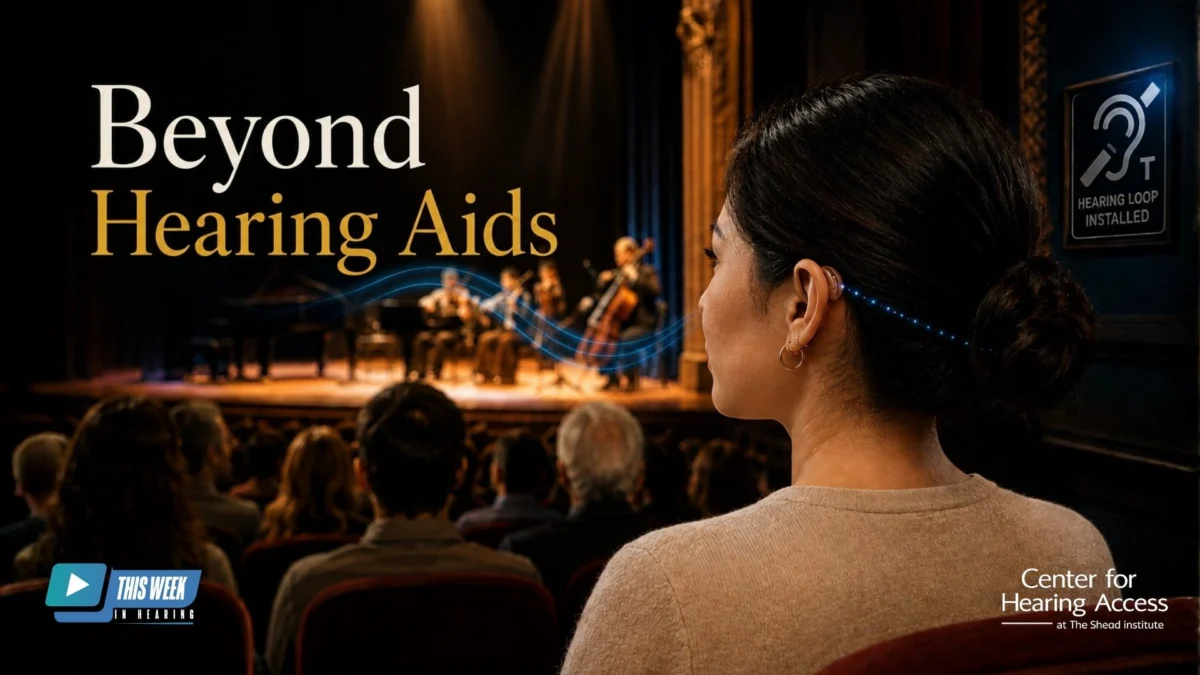
- Hearing Loops (Audio Frequency Induction Loops): These systems transmit sound electromagnetically to a telecoil (T-coil) receiver, typically built into most modern hearing aids and cochlear implants. Users simply switch their devices to the "T" setting to receive clear, direct audio. Hearing loops are particularly effective in public venues like theaters, places of worship, and auditoriums, as they offer a seamless, hands-free experience without the need for additional equipment for those with T-coils. Dr. Sterkens’ extensive work has proven their transformative power, with personal anecdotes such as a parish priest reporting the significant difference a loop made for parishioners, and a patient tearfully exclaiming, "I was able to hear the minister lick his lips."
- FM Systems: These utilize radio frequencies to transmit sound from a microphone to a receiver worn by the listener. They are versatile and can be used in various settings, often requiring specific receivers provided by the venue.
- Infrared (IR) Systems: Similar to FM systems, IR systems transmit sound using infrared light. They are line-of-sight dependent, making them suitable for enclosed spaces like movie theaters or courtrooms where signal containment is desired.
- Auracast™: This is the newest frontier in assistive listening, a feature of Bluetooth® LE Audio. Auracast™ allows an audio transmitter (e.g., a public address system, a TV) to broadcast one or more audio streams to an unlimited number of nearby compatible devices, including hearing aids, cochlear implants, smartphones, and dedicated receivers. This technology promises a more universally accessible and flexible solution, as it leverages widely adopted Bluetooth standards.
Expanding Accessibility: Resources and Advocacy
CHAA’s website, centerforhearingaccess.org, serves as a comprehensive "one-stop shop" for resources tailored to three primary audiences: consumers, hearing healthcare providers, and facility staff. Wynne Whyman describes the site’s design as non-linear, allowing users to "hop on in, get what you need, and go." The platform offers a treasure trove of practical handouts, guides, and action-oriented templates designed to simplify the process of understanding and advocating for hearing access.
For consumers, resources include explanations of the differences between assistive listening devices and systems, the essential role of telecoils for ADA compliance, and how to connect to Auracast™ broadcasts. Critically, CHAA provides templates for asking facility staff for equipment and, if issues arise, for submitting formal feedback or complaints. This empowers individuals to move beyond feeling shy or resigned, transforming personal challenges into collective advocacy. As Shari Eberts noted, advocating for oneself inherently benefits the entire community, contributing to broader systemic change. The importance of providing lead time to venues for better preparation was also highlighted, allowing staff to refresh their memory of available offerings.
For hearing healthcare providers, CHAA offers educational materials, including CEU training links, emphasizing the need for audiologists to integrate discussions about assistive technologies into patient care. Dr. Sterkens passionately argues that patients must be "set up for success," which entails including both telecoils and Auracast™ compatibility in hearing aids and educating patients about the limitations of their devices from the outset. By proactively discussing ALTs, professionals can reassure patients that solutions exist for challenging listening environments, fostering greater satisfaction and better outcomes.
Facility staff can access templates for understanding ADA requirements and implementing effective communication access. The goal is to standardize practices and prevent the need for venues to "reinvent the wheel," thereby streamlining the adoption of accessibility features nationwide.
The Audiologist’s Imperative: A Missing Link
Dr. Sterkens often points out that audiologists and hearing care professionals can sometimes be a "missing link" in the chain of hearing access. Too many patients, she observes, leave the clinic without ever hearing the words "telecoil" or "assistive listening device." This oversight can leave individuals unaware of crucial functionalities built into their hearing aids and available in public spaces.
The Center for Hearing Access advocates for a paradigm shift in the fitting process:
- Comprehensive Device Features: Hearing aids should ideally include both telecoil and Auracast™ capabilities to ensure compatibility with both existing infrastructure and future technologies.
- Patient Education: Clinicians must educate patients about the inherent limitations of hearing aids in complex acoustic settings, immediately followed by reassuring them that assistive technologies offer solutions.
- Demonstrations and Practice: Hands-on demonstrations of ALTs, repeated over time, are crucial. Patients need opportunities to try these technologies in real-world scenarios.
- Community Resources: Providing a list of local venues equipped with hearing loops or Auracast™ systems encourages patients to experience the benefits firsthand. Dr. Sterkens’ personal success in Wisconsin, where loops became so integral that residents "uproared" when one needed repair, exemplifies the transformative power of enabling access.
- Professional Familiarity: Audiologists themselves must personally try and understand how these technologies work, including the quality of the source audio (e.g., microphone setup) feeding the ALTs.
This holistic approach ensures that patients are not only fitted with advanced hearing aids but are also equipped with the knowledge and tools to maximize their communication abilities in all environments.
Auracast: Promise, Peril, and a Realistic Timeline
Auracast™ represents a significant leap forward in assistive listening, offering the potential for universal, standardized audio access. Its ability to broadcast to any compatible Bluetooth LE Audio device—not just hearing aids—means that individuals without hearing loss, or those not yet ready for hearing aids, can also benefit from enhanced audio clarity in public spaces. This broader appeal could accelerate adoption by venues and drive demand from a wider user base.
However, the transition to widespread Auracast™ implementation is not without its challenges. Dr. Sterkens offers a "realistic" assessment, vacillating between a "soon" rollout and a timeline stretching "2 to 5 years, or even more." The Bluetooth SIG, the governing body for Bluetooth standards, itself projected that a full transition could take a decade from its 2022 announcement.
Key hurdles include:
- Device Compatibility: While new hearing aids are incorporating Auracast™, older devices and many smartphones still need to catch up.
- User Familiarity: As Dr. Sterkens’ anecdote about Kiwanians revealed, many hearing aid users are not technologically savvy enough to navigate smartphone apps to find and connect to Auracast™ streams. The industry needs to deliver on the "easy button access" that was promised years ago for telecoils and is now desired for Auracast™.
- Venue Implementation: While potentially easier to install than hearing loops, venues still need to invest in the transmitting hardware and ensure proper setup and maintenance. Dr. Sterkens is actively working to lay the groundwork for Auracast™ installation in a high school auditorium opening in 2027, highlighting the long-term planning required.
- Coexistence: For years to come, Auracast™ will coexist with established technologies like hearing loops, FM, and infrared. Patients and professionals need to understand how to leverage both, ensuring comprehensive access regardless of the venue’s chosen system.
The excitement surrounding Auracast™ is palpable, but a pragmatic approach acknowledges the necessary educational and infrastructural developments required for its full potential to be realized.
Beyond Audio: The Indispensable Role of Visual Access
While assistive listening technologies primarily address audio clarity, true communication accessibility requires a multi-modal approach that often includes visual aids. Wynne Whyman strongly advocates for the integration of captioning in accessible venues. Captioning, whether open (displayed for all) or closed (selectable by individual users), provides a visual text representation of spoken words, benefiting not only individuals with hearing loss but also those with auditory processing disorders, second-language learners, or even people in noisy environments who prefer visual reinforcement.
Captioning is particularly valuable in performing arts, film festivals, educational settings, and public meetings. Whyman explains that "assistive listening should always be provided… and then adding captions." This could mean a performing arts venue offers ALTs but also schedules specific open-captioned performances, or a school board meeting provides ALTs alongside computer-generated captions. The growing demand for captions among younger generations, who are accustomed to watching content with subtitles, further underscores its importance in universal design for accessibility. The Center for Hearing Access also provides guidance on the complexities of captioning, encouraging venues to consider their mission, legal obligations, and user preferences when implementing visual access solutions. Dr. Sterkens even demonstrated the effectiveness of live captioning in a lecture using dual microphones and a computer, showcasing its immediate impact.
Collective Action for a More Inclusive Future
The conversation concluded with a strong call to action for both professionals and consumers, emphasizing that systemic change is a shared responsibility.
For Professionals (Audiologists and Hearing Care Providers):
- Fit Future-Ready Devices: Prioritize hearing aids equipped with both telecoils and Auracast™ capabilities.
- Educate and Demonstrate: Provide written materials and repeated, hands-on demonstrations of ALTs.
- Promote Real-World Use: Offer lists of local venues with ALTs and actively encourage patients to try them.
- Lead by Example: Experience the technology personally to understand its benefits and limitations.
For Consumers (Individuals with Hearing Loss):
- Understand Your Technology: Learn how to connect to Auracast™ (whether directly via hearing aids or via a smartphone/receiver) and how to use telecoils.
- Speak Up: Advocate for your right to hearing access. If you cannot hear, others likely face the same challenge. Collaborate with support groups and organizations like CHAA.
- Empower Your Professional: Bring information and handouts from resources like CHAA to your appointments to facilitate discussions with busy clinicians.
The overarching message from the Center for Hearing Access is clear: hearing access is a fundamental right, not a favor. The more individuals who confidently ask for, utilize, and speak up when assistive listening is absent or malfunctioning, the faster these technologies will become a ubiquitous standard. This collective advocacy, supported by organizations like CHAA and driven by dedicated professionals and empowered consumers, paves the way for a future where communication access is truly universal, allowing everyone to participate fully and equitably in all aspects of life.
About the Panel
Wynne Whyman is Director of Communication and Advocacy at the Center for Hearing Access, where she works to advance hearing accessibility through consumer education, advocacy, and collaboration with public venues and organizations. Living with progressive hearing loss since childhood, she combines her personal experience with expertise in nonprofit leadership to help expand communication access nationwide.
Juliëtte Sterkens, AuD, has more than 45 years of experience in audiology, hearing rehabilitation, and assistive listening. As Hearing Access Advocate for the Center for Hearing Access, she is an internationally recognized educator whose advocacy has helped install more than 1,000 hearing loops, earned the American Academy of Audiology Presidential Award, and inspired more than 1.3 million viewers through her TEDx talk, "What You Don’t Know About Hearing Aids."
Shari Eberts is a passionate hearing health advocate and internationally recognized author and speaker on hearing loss issues. She is the founder of Living with Hearing Loss, a popular blog and online community for people with hearing loss, and an executive producer of We Hear You, an award-winning documentary about the hearing loss experience. Her book, Hear & Beyond: Live Skillfully with Hearing Loss, (co-authored with Gael Hannan) is the ultimate survival guide to living well with hearing loss. Shari has an adult-onset genetic hearing loss and hopes that by sharing her story, she will help others to live more peacefully with their own hearing issues.