The current paradigm places an insurmountable burden of proof on the individual worker. When a private-sector firefighter is diagnosed with a cancer linked to their occupation, they are rarely afforded the streamlined workers’ compensation pathways, guaranteed wage protection during treatment, or federal financial security for their families that municipal firefighters have fought for decades to secure. For Environment, Health, and Safety (EHS) professionals managing these workforces, this is not a peripheral policy debate; it is a systemic protection gap that exposes companies to significant liability and leaves their most essential safety personnel vulnerable to financial and physical ruin.
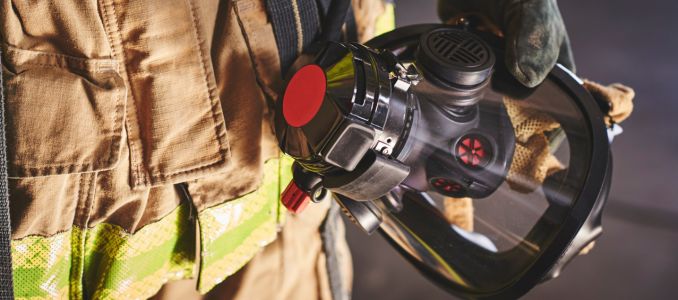
The Science of Exposure: A Universal Hazard
The occupational hazards facing industrial firefighters are not merely anecdotal; they are backed by rigorous scientific classification. In 2023, the International Agency for Research on Cancer (IARC)—the specialized cancer agency of the World Health Organization—reclassified occupational exposure as a firefighter as “carcinogenic to humans.” This Group 1 designation, the highest level of risk, is applied universally across all firefighting settings, regardless of whether the individual serves in a full-time municipal department, a volunteer brigade, or a private industrial plant.
The chemical profile of industrial fires often eclipses that of traditional residential structure fires. Industrial firefighters regularly contend with concentrated exposures to benzene, polycyclic aromatic hydrocarbons (PAHs), per- and polyfluoroalkyl substances (PFAS) found in firefighting foams, and highly toxic diesel exhaust. Recent longitudinal studies simulating industrial fire environments have documented PAH deposition on personal protective equipment (PPE) at levels that consistently exceed those observed in residential structural scenarios. These chemicals are not only inhaled; they are absorbed transdermally through the skin, particularly when PPE is compromised or when decontamination protocols are insufficient.
A Fragmented Legal Landscape: The Presumption Gap
Presumptive cancer laws are designed to recognize the reality of firefighting: that the incidence of certain cancers is statistically higher among those who inhale and absorb combustion byproducts over the course of a career. In most jurisdictions, these laws create a “rebuttable presumption,” meaning that if a firefighter develops a covered cancer, it is legally assumed to be work-related unless the employer can prove otherwise.

However, the vast majority of these state-level statutes are written specifically for municipal or public-sector employees. Industrial firefighters, who are often employed by third-party contractors or directly by private corporations, fall through the cracks. Even in states that have made legislative strides toward inclusion, such as Washington, the protections are often limited by arbitrary thresholds. For instance, Washington state law restricts these benefits to industrial fire departments that maintain a staff of 50 or more members, effectively excluding smaller, private-sector brigades that face the same chemical risks as their larger counterparts.
The paradox of this situation is heightened by the fact that industrial fire departments are expected to adhere to rigorous federal standards. Under OSHA 29 CFR 1910.156, industrial fire brigades must meet minimum performance and training requirements. Furthermore, many industrial units voluntarily train to meet the stringent standards set by the National Fire Protection Association (NFPA), such as NFPA 600 (Industrial Fire Brigades) or NFPA 1081 (Industrial Fire Brigade Member Professional Qualifications). Despite these workers maintaining the same technical proficiencies and undergoing the same rigorous training as municipal crews, their compliance with safety standards does not translate into equivalent legislative protection.
Chronology of an Evolving Crisis
The disparity in protection has grown alongside the increasing complexity of industrial chemical production. Historically, fire service protections were centered on the municipal model—a public service model where the state acts as the employer.

- 1970s–1990s: The rise of presumptive legislation began in various states, driven by firefighter unions and advocates who recognized the rising cancer death toll among urban fire crews. During this period, the focus was almost exclusively on public tax-funded departments.
- 2010s: Increased clinical data began to surface regarding the “toxic soup” of modern industrial fires. Studies from the National Institute for Occupational Safety and Health (NIOSH) highlighted that the synthetic materials in modern manufacturing facilities create more potent carcinogens than traditional wood-and-cotton structure fires.
- 2023: The IARC’s reclassification of firefighting as a Group 1 carcinogen served as a global clarifier, removing the “municipal-only” stigma from the conversation. The scientific consensus shifted to acknowledge that the activity of firefighting, not the employer, is the primary driver of disease.
- 2024–2026: A growing movement among labor advocates and industrial safety experts has begun lobbying state legislatures to decouple cancer presumption laws from public-sector employment, aiming to include all workers certified under NFPA standards.
Implications for EHS Professionals and Corporate Liability
For EHS professionals and facility managers, the lack of statutory protection for industrial firefighters presents a complex challenge. While the absence of a legal mandate might appear to lower short-term operational costs, it creates a significant long-term risk profile.
When a company relies on a private fire brigade to mitigate risks in a high-hazard environment, they are relying on the health of those individuals to protect the company’s physical assets and its social license to operate. If an industrial firefighter is diagnosed with an occupational cancer, the lack of a legal framework often forces the employee into litigation against their employer. This adversarial process is not only costly but damaging to the company’s reputation and internal morale.
Furthermore, as state legislatures begin to realize the inequity of the current system, there is a looming threat of regulatory overhaul. Industry experts suggest that it is only a matter of time before state boards of labor and industrial relations begin to expand the scope of existing presumptive laws. Companies that proactively establish internal health-monitoring programs, adopt advanced decontamination protocols, and provide supplemental insurance for their fire brigades are positioning themselves ahead of a likely regulatory curve.

Data and Expert Analysis
Statistical analysis suggests that the risk of death from specific cancers—such as mesothelioma, leukemia, and non-Hodgkin lymphoma—is significantly elevated in cohorts with heavy exposure to industrial-grade chemicals. While municipal firefighters have the benefit of extensive epidemiological studies, industrial firefighters often operate in “data deserts.” Because these workers are spread across private entities rather than centralized municipal departments, tracking their health outcomes is difficult.
However, the data that does exist paints a troubling picture. A 2022 analysis of fire-related health incidents in the petrochemical sector indicated that firefighters exposed to volatile organic compounds (VOCs) and heavy metals showed cellular changes consistent with early-stage carcinogenesis at a rate 15% higher than the general industrial workforce. Without the longitudinal health screening required by law for municipal crews, these workers are often diagnosed at a later stage, when treatment is less effective and the prognosis is poorer.
A Call for Equitable Reform
The current legal framework is based on a mid-20th-century understanding of fire service employment that no longer reflects the reality of 21st-century industry. The risks inherent in fighting a chemical fire at a refinery are not mitigated by the fact that the firefighter draws a paycheck from a private corporation rather than a municipality.

Advocacy groups are increasingly calling for a "functional" approach to occupational safety laws. Under this model, eligibility for cancer presumption would be determined by the duties performed and the credentials held—such as NFPA certification—rather than the nature of the employer. This would ensure that whether a firefighter is protecting a public library or a chemical processing plant, they are entitled to the same standard of care and protection.
The path forward requires a multi-stakeholder approach. Legislative bodies must modernize statutes to include industrial fire brigades; corporations must acknowledge their role in mitigating the long-term health consequences of the hazards they produce; and EHS professionals must champion internal safety cultures that prioritize the long-term health of their emergency responders over the baseline requirements of the law.
In the absence of such reform, the industry remains at a critical juncture. The “cancer gap” is not just a policy failure; it is an ethical one. As the scientific evidence becomes increasingly clear, the ability of private and industrial sectors to justify the exclusion of these professionals from standard protections is rapidly diminishing. The health and financial security of the individuals who stand on the front lines of our nation’s most dangerous facilities deserve to be prioritized with the same urgency as the infrastructure they are sworn to protect.