The Search Process and Institutional Context
The search for a new CEO was initiated following the strategic decision to pursue fresh leadership that aligns with the current socioeconomic and technological demands facing the deaf and hard-of-hearing community. The NAD, which has served as the nation’s premier civil rights organization for deaf and hard-of-hearing individuals since 1880, requires a leader who can balance the organization’s historical mission with the modern challenges of digital accessibility, equitable education, and inclusive healthcare.
The executive search committee was tasked with reviewing a broad pool of applicants from across the country, seeking individuals with a proven track record in organizational management, public policy, and community engagement. The process involved multiple rounds of interviews, background screenings, and discussions with stakeholders, including board members, local affiliate representatives, and community leaders. By selecting Michelle Cline and Nicholas Kiego as the final two contenders, the committee has narrowed its focus to two individuals who have demonstrated both the technical acumen and the cultural competency required to lead an organization as nuanced as the NAD.
Profiles of the Finalists
The finalists bring distinct backgrounds to the table, each reflecting different aspects of the leadership spectrum necessary for the organization’s future.
Michelle Cline has long been recognized for her work in organizational development and strategic advocacy. Her career has been marked by a focus on sustainable growth and the implementation of inclusive policies within large-scale nonprofit environments. Her supporters often point to her ability to bridge the gap between grassroots activism and formal policy lobbying, a skill set that is essential for the NAD’s federal advocacy efforts.
Nicholas Kiego enters the final stage with a background heavily rooted in community engagement and direct service advocacy. His professional history emphasizes the importance of grassroots mobilization and the necessity of maintaining the NAD’s relevance in an increasingly digital world. Kiego’s vision has frequently centered on the intersection of technology and accessibility, advocating for policies that ensure deaf individuals have equal access to telecommunications and digital infrastructure.
The Virtual Town Hall: Facilitating Community Dialogue
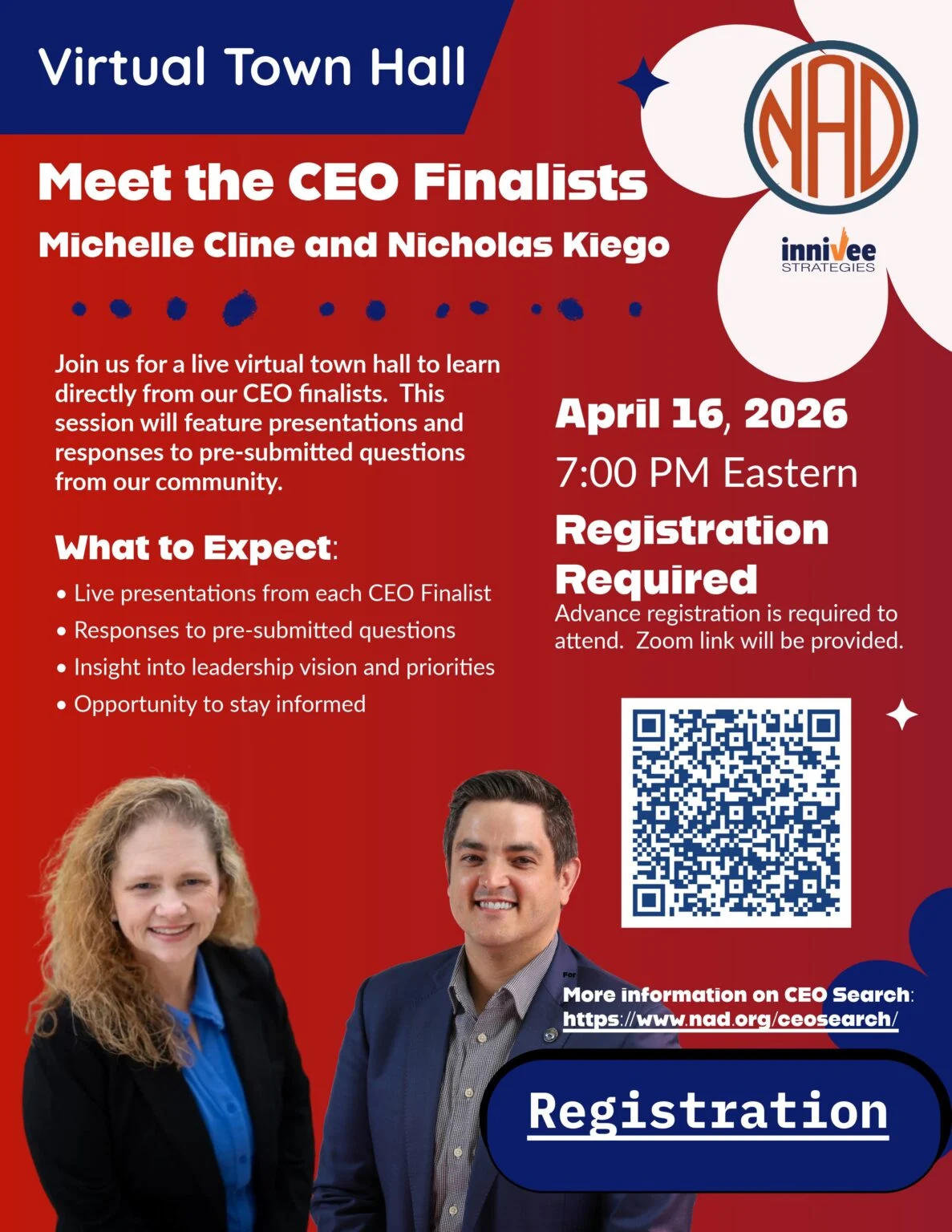
On April 16, 2026, the NAD hosted a live virtual town hall, an event designed to bring the democratic spirit of the organization to the forefront of the selection process. The format allowed for direct interaction between the candidates and the community they seek to lead. The virtual nature of the event was intentional, reflecting the organization’s commitment to accessibility and its ability to engage its national membership regardless of geographic location.
During the forum, both candidates were given the floor to present their leadership vision. The presentations were followed by a segment dedicated to answering questions that had been submitted by the public in advance. These questions ranged from the candidates’ stances on federal funding for deaf education to their strategies for addressing systemic inequities in healthcare access for the deaf community.
This transparency is a critical component of the NAD’s governance. By providing a platform for members to hear directly from the finalists, the NAD ensures that the selection process is not merely an administrative exercise but a community-informed decision. The town hall provided the membership with a clearer understanding of how each candidate would handle the challenges of lobbying Congress, managing internal operations, and fostering unity within a diverse community.
Chronology of the Leadership Transition
The timeline of the CEO search reflects a disciplined approach to executive succession. Following the announcement of the search, the organization spent the winter months of 2025 and early 2026 in private consultations.
- Late 2025: The search committee was formed, and the job description was finalized, emphasizing the need for leadership that could navigate both the internal culture of the NAD and the external political environment in Washington, D.C.
- January 2026: Applications were reviewed, and initial interviews were conducted.
- March 2026: The field of candidates was narrowed down, and final interviews took place at the NAD headquarters.
- April 10, 2026: The official announcement of the two finalists was made, accompanied by the scheduling of the virtual town hall.
- April 16, 2026: The community forum took place, serving as the final public engagement activity before the board’s final deliberation.
Data and Organizational Implications
The NAD currently operates within a highly complex environment. Federal data from the Bureau of Labor Statistics and the Census Bureau consistently highlights the persistent employment and education gaps faced by the deaf and hard-of-hearing population. With over 11 million Americans reporting some level of hearing difficulty, the organization’s influence over federal policy and public perception is substantial.
The next CEO will inherit a budget that relies on a mixture of membership dues, grants, and fundraising efforts. The financial health of the organization is tied closely to its ability to demonstrate tangible policy wins. For instance, the NAD’s recent focus on gene therapy and its ethical implications—a topic highlighted by the "Next Story" in the current news cycle—demonstrates the high-stakes nature of the work. The CEO must be prepared to articulate the organization’s position on cutting-edge medical and technological issues, which often requires a deep understanding of bioethics and civil rights law.
Analysis of Leadership Priorities
The challenges ahead for the incoming CEO are twofold: administrative stability and external impact. Internally, the organization is looking for a leader who can modernize its operational infrastructure. The shift toward more inclusive and accessible digital platforms is not just a technological upgrade but a fundamental requirement for the organization’s mission.
Externally, the CEO must navigate the shifting tides of federal disability law. As the Americans with Disabilities Act (ADA) continues to be interpreted and applied in new digital contexts, the NAD’s legal department and its leadership must be ready to challenge barriers in federal court and through administrative advocacy. The finalists’ responses during the town hall indicated a shared understanding of this responsibility, though they differed slightly in their approaches to coalition building. While one candidate emphasized working within established political frameworks, the other prioritized aggressive, disruptive advocacy as the primary tool for change.
Stakeholder Reactions and Expectations
The announcement has been met with a mix of anticipation and scrutiny. Within the deaf community, social media platforms and regional forums have been active with debates regarding the candidates’ histories. Advocates and former board members have noted that the selection of these two finalists indicates a desire for continuity in some areas and radical innovation in others.
The board of directors, which is ultimately responsible for the final hiring decision, has remained objective throughout the process. Their role is to weigh the feedback from the town hall against the private evaluations conducted during the interview process. The community expectation is that the final selection will be made shortly, ensuring that the organization does not face a prolonged period of leadership uncertainty.
Broader Impact on the Disability Rights Movement
The selection of the new NAD CEO is viewed by broader civil rights circles as an indicator of the direction of the disability rights movement at large. Because the NAD is a bellwether organization, its choice of leadership often influences the strategies adopted by smaller, state-level deaf associations.
Should the next CEO prioritize legislative lobbying, we may see a surge in the NAD’s presence on Capitol Hill. Should they prioritize community-based service, the organization may pivot toward more regional programs and direct support services. Both paths are vital, and the choice between them—or the attempt to balance both—will define the legacy of the next chief executive.
The organization stands at a crossroads. With rapid advancements in cochlear implant technology, artificial intelligence in communication, and the shifting legislative landscape regarding disability rights, the incoming CEO will have little time to settle into the role. They must hit the ground running, tasked with maintaining the trust of a diverse membership while simultaneously asserting the organization’s dominance in the national civil rights discourse.
Conclusion
The search for the next NAD CEO has been a model of transparency and engagement. By providing the public with access to the finalists and clear timelines for the process, the organization has reinforced its commitment to its core values of equity and representation. As the board moves toward its final decision, the focus remains on the primary goal: identifying a leader who can secure the rights and improve the lives of deaf and hard-of-hearing individuals for years to come.
The virtual town hall served as a reminder of the passion and dedication inherent in the NAD community. Whether it is Michelle Cline or Nicholas Kiego who ultimately takes the helm, they will do so with the full weight of a mobilized and attentive membership behind them. The implications of this appointment will resonate far beyond the walls of the NAD headquarters, affecting the policy decisions, social perceptions, and legal precedents that shape the future of the deaf community in America. As of late April 2026, the eyes of the community remain fixed on the final decision, awaiting the next chapter in the storied history of the National Association of the Deaf.