The AI Leap: AcoustIQ™ and Automatic DNN Engagement
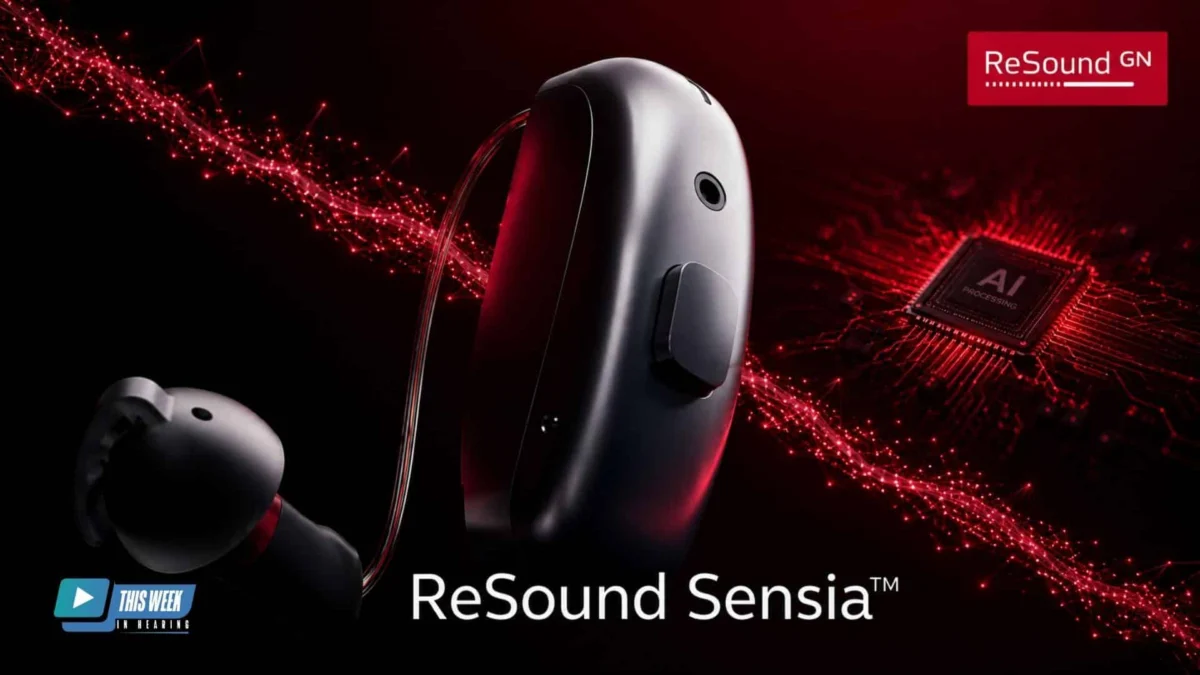
At the heart of the ReSound Sensia lies the AcoustIQ™ platform, an intelligent system designed to meticulously analyze the listening environment in real-time. This sophisticated scene classifier determines precisely when to activate a suite of advanced features, including directional processing and DNN-based noise reduction, to optimize speech understanding. The transition from ReSound Vivia, which required users to manually select a "Hear in Noise" program to engage the DNN, to Sensia’s fully automated system represents a major leap forward in user convenience and effectiveness.
Laurel Christensen, Chief Audiology Officer for GN, underscored the significance of this automation during a recent interview: "Our own data shows that only about 10% of people will change to the second program, meaning the ‘Speech in Noise’ program. They want everything to happen automatically. But automatic is not easy. You have to have the right classification and you have to engage the right features." She emphasized AcoustIQ™’s extreme accuracy in both classifying environments and engaging the appropriate features, ensuring that users consistently receive optimal support for speech understanding without conscious effort. This enhanced automation is critical for maximizing the real-world benefit of advanced features, particularly for individuals who may not be tech-savvy or prefer a "set-and-forget" approach to their hearing aids.
Brian Dam Pedersen, Chief Technology Officer of GN Group, elaborated on the broader implications of this AI integration. He acknowledged that while classical signal processing methods for improving speech-in-noise performance have seen significant advancements over the past two decades, their rate of improvement has begun to plateau. "With the advent of deep neural networks and machine learning and getting the ability to actually put that into the hearing aids, we simply open a new toolbox that will allow us, I think, to take another round of rapid improvements that we’ll see over the next years," Pedersen stated, highlighting the transformative potential of DNNs when combined with refined classical approaches. The Sensia, therefore, represents not just an incremental update but a pivotal moment in the ongoing evolution of hearing aid technology, harnessing the power of AI to unlock new levels of clarity and comfort.
A Symphony of Sound Processing: Multi-Band Beamforming and Spatial Cues
ReSound Sensia’s advanced speech processing is a complex interplay of spatial listening, asymmetric directionality, multi-band beamforming, and DNN processing, dynamically adapting to the acoustic environment and the location of speech. The system employs a sophisticated, multi-stage approach to noise reduction and speech enhancement:
-
Spatial Perception Mode (Quiet Environments): In quiet settings, the hearing aids operate in an omnidirectional mode in both ears, prioritizing spatial hearing and awareness of all surrounding sounds. This ensures a natural and expansive soundscape.
-
Better Ear Mode (Moderate Noise): As moderate noise levels are detected, Sensia swiftly transitions into "Better Ear Mode." This involves engaging a 4-microphone beamformer on one ear, dynamically selected as the "better ear"—the one with the most favorable signal-to-noise ratio (SNR) for the target speech. The other ear remains omnidirectional, allowing the user to maintain awareness of the broader sound environment. This asymmetric directionality mimics how normal-hearing individuals naturally lean into conversations in noisy settings, providing focused clarity while preserving crucial spatial cues.
-
Binaural Beamforming and DNN (Loud, Frontal Speech): In very loud environments, if speech is primarily originating from the front, Sensia activates both binaural beamformers and engages the deep neural network. This powerful combination works to significantly suppress background noise and enhance the target speech. Crucially, the DNN is only engaged under these specific conditions to avoid isolating the user from surrounding conversations. As Christensen explained, "If there are people to the table at the side, we want you to be able to engage with them. And the minute we turn on a very narrow beamformer, this is what you’re hearing is what right in front of you." This strategic engagement ensures that the hearing aid empowers, rather than dictates, the user’s listening focus.
A key architectural refinement in Sensia’s beamforming technology is its multi-band approach. Unlike broadband beamformers that process all frequencies uniformly, Sensia’s beamformer operates variably across the frequency spectrum:
- Low Frequencies: Remain omnidirectional, as beamforming offers minimal gain here due to large wavelengths. Noise reduction in this band is handled by classical single-channel methods.
- Mid Frequencies: A very narrow beamformer is applied to focus intensely on speech.
- High Frequencies: The beamformer opens up slightly, adopting a broader, less aggressive monaural and stereo approach to preserve vital spatial cues.
This multi-band strategy, according to Pedersen, is instrumental in creating a more natural listening experience, preventing the "jarring" transitions and "mono signal" sensation often associated with full-band beamforming. He noted that while a full-band beamformer might gain 3 dB in signal-to-noise ratio (SNR), the loss of spatial cues can effectively negate this benefit in terms of speech reception threshold (SRT). By intelligently blending these bands, Sensia "softens off the sound picture" and allows the brain to utilize the enhanced SNR more effectively, resulting in a significantly higher perceived benefit. This nuanced approach ensures that even in the most aggressive noise reduction modes, users retain a sense of their surroundings, able to perceive the direction of sounds and maintain engagement with a dynamic environment.
The Intentional Omission: Why Sensia Doesn’t Classify Music
One of ReSound Sensia’s most distinctive and strategically important design decisions is its deliberate choice not to classify music automatically. This counter-intuitive approach addresses a common challenge in hearing aid technology, where classifiers often misinterpret environments with background music, leading to a suboptimal listening experience.
Christensen elaborated on this reasoning: "If you classify music, the classifier gets confused. Because if you go into a restaurant and there’s music playing in the background, is that a music environment or is that a speech and noise environment? Most people will tell you that’s a speech-in-noise environment." In such scenarios, a hearing aid that classifies the environment as "music" would typically disengage directional microphones, noise reduction, and DNNs, instead boosting low frequencies and broadening bandwidth – settings that are counterproductive for speech understanding in noise. "Those are the kinds of decisions a hearing aid should not be making," Christensen asserted.
By removing music from the automatic classification equation, Sensia ensures that in environments where speech is the primary focus (e.g., a restaurant with background music), the hearing aid will consistently prioritize and optimize for speech clarity. Users who wish to fully immerse themselves in music, such as at a concert or symphony, are encouraged to manually select a dedicated music program, which can be customized for optimal audio fidelity without nonlinear processing. This empowers the user to define their listening intention, rather than relying on an ambiguous automatic classification.
This strategic decision is backed by robust research. GN cited an internal study from 2017 and a peer-reviewed Yellum study, both of which indicated that "music was the problem," with classifiers struggling to accurately categorize complex environments containing background music. Recent internal studies by GN colleagues further confirmed that without music in the background, their classifier achieves 100% accuracy in simple speech and noise environments, whereas other manufacturers’ classifiers, which include music, were often wrong at least half the time. This evidence strongly supports GN’s approach, demonstrating that sometimes, taking a feature away can lead to superior overall performance and a more reliable user experience.
Power and Connectivity: Beyond Core Performance
Beyond its core audiological advancements, ReSound Sensia offers a comprehensive suite of features designed for modern living. The hearing aids boast an impressive battery life of at least 24 hours on a single charge, even with the advanced DNN actively engaged. This ensures continuous, worry-free use throughout the day and night, addressing a common concern for hearing aid wearers.
Durability is another hallmark, with Sensia carrying an IP68 rating, signifying high resistance to dust and water ingress. This robust construction provides peace of mind for users engaging in active lifestyles or encountering unexpected weather conditions.
Connectivity options are extensive, supporting both the latest Auracast™ broadcast audio standard and traditional telecoil technology. For users requiring telecoil, Sensia offers models with integrated telecoils, or the functionality can be accessed via GN’s MultiMic accessory, providing flexibility based on individual preferences and needs. This dual approach ensures broad accessibility to various public hearing loop systems and future-proofs the device with emerging audio technologies.
Despite these advanced capabilities and extended battery life, the ReSound Sensia maintains a compact and discreet form factor, identical in size to its predecessor, Vivia. This commitment to aesthetic appeal and comfort ensures that users benefit from cutting-edge technology without compromising on discretion.
A New Era for Bimodal Users: Enhanced Cochlear Integration
A significant announcement accompanying the Sensia launch is a deepened collaboration between GN and Cochlear, building upon their established Smart Hearing Alliance. This partnership now delivers unprecedented seamlessness for bimodal users – individuals who wear a cochlear implant in one ear and a hearing aid in the other.
New ReSound Sensia Bimodal and Enzo IA Bimodal models are specifically designed to work more cohesively with Cochlear® Nucleus® sound processors. This integration allows for the use of a single remote control to manage both devices, streamlining the user experience and eliminating the need for multiple controllers. Furthermore, all GN accessories, such as the MultiMic, will now stream audio simultaneously to both the Sensia hearing aid and the Cochlear implant, ensuring synchronized and balanced sound delivery across both ears.
This development addresses a long-standing desire among bimodal users for a more unified and less cumbersome solution. As Christensen noted, "People have been waiting for this for quite some time so that these things can be married together. You don’t have two remote controls. You can make everything work together." This enhanced interoperability promises to significantly improve the quality of life for bimodal recipients, offering a more integrated and natural hearing experience across diverse listening environments.
The Road Ahead: Future of Hearing Aid AI and Signal Processing
Looking to the future, both Laurel Christensen and Brian Dam Pedersen expressed optimism regarding the continued evolution of AI in hearing aids. Pedersen highlighted that current DNN capabilities, while impressive, are merely the "first step" in a transformative journey. He pointed to advancements in academia and research labs, where more powerful computing resources demonstrate "incredible things with DNNs and speech enhancement."
While specific product roadmaps remain confidential, Pedersen affirmed that "there will be significant improvements in speech-to-noise driven by DNNs in the coming years. And that would be across the industry." This collective pursuit of enhanced AI-driven solutions is set to usher in a new wave of innovation, pushing the boundaries of what hearing aids can achieve in challenging environments.
GN’s approach is not solely focused on DNNs, however. Pedersen emphasized that classical signal processing techniques continue to be refined. Ongoing improvements to beamforming technology, underlying algorithms, and hardware optimizations – such as achieving highly aligned audio between ears and precise, low-noise audio transfer – remain critical for delivering the sharp, narrow beamformers necessary for superior speech in noise performance. This hybrid strategy, combining the strengths of traditional engineering with cutting-edge AI, positions GN at the forefront of hearing aid development.
Implications for Hearing Health and Social Engagement
The advancements embodied in ReSound Sensia carry profound implications for the millions of individuals living with hearing loss. By automating the most powerful speech-in-noise features, GN significantly lowers the cognitive load on users, reducing the mental fatigue often associated with straining to hear in noisy environments. This "set-and-forget" capability promotes greater adherence to hearing aid use and ensures that users consistently benefit from the device’s full potential, irrespective of their technical proficiency.
The ability to confidently engage in social situations – from bustling restaurants to family gatherings – without the stress of constant manual adjustments or the fear of missing out on conversations, directly contributes to improved quality of life. As Bellavia noted, "Anything that you do to enable people to go out and enjoy social situations without being stressed, without being fatigued, where they can be comfortable and relaxed, is a terrific thing." This aligns with broader initiatives to educate healthcare professionals (HCPs) on the lifestyle and health benefits of addressing hearing loss, including reducing risks of social isolation, cognitive decline, and depression. Sensia’s technological leap fosters greater social participation and overall well-being, empowering users to live fuller, more connected lives.
Background and Development
The introduction of ReSound Sensia was preceded by an exclusive media event held at GN headquarters in Denmark. Select members of the media, including Andrew Bellavia, founder of AuraFuturity and a recognized thought leader in the hearables space, were invited to experience firsthand the innovations integrated into the new ReSound Sensia and its corresponding Beltone model, Illuminate. Through a series of detailed sessions and practical demonstrations, including listening through a mannequin in simulated noisy environments, attendees gained comprehensive insights into the AcoustIQ™ system and the automatic engagement of DNN functionality. This transparent pre-launch engagement underscores GN’s confidence in its latest offering and its commitment to educating the industry and public about the profound impact of these technological advancements.
In conclusion, the ReSound Sensia represents a landmark achievement in hearing aid technology, effectively merging sophisticated AI and DNN capabilities with refined classical signal processing. Its automatic, intelligent adaptation to diverse soundscapes, coupled with a deliberate strategy for music handling and enhanced bimodal integration, sets a new benchmark for clarity, naturalness, and user-centric design. As the industry continues its rapid evolution, Sensia positions itself as a powerful tool for empowering individuals with hearing loss, enabling them to navigate their auditory world with unprecedented ease and confidence.