The Persistent Crisis of Height-Related Hazards
According to the most recent data from the Bureau of Labor Statistics (BLS), fall-related incidents continue to dominate the occupational hazard landscape. In 2023 alone, over 400 construction workers lost their lives due to falls to a lower level. This figure underscores a grim reality: while fall protection equipment is more accessible than ever, the human element of safety—training, site-specific hazard assessment, and emergency planning—often remains the weak link in the chain.
The Occupational Safety and Health Administration (OSHA) consistently ranks "Fall Protection—General Requirements" as the most frequently cited violation during site inspections. Year after year, the agency reports thousands of violations, signaling that many organizations are still struggling to translate safety standards into daily field practices. This chronic lack of compliance is not merely a regulatory issue; it is a profound failure of operational strategy that results in avoidable tragedies and significant legal and financial liabilities for contractors.
Historical Context and the ABCs of Fall Protection
The traditional approach to fall safety, codified by safety professionals as the ABCs, has served as the baseline for industrial safety for decades. The framework is simple, modular, and intended to be universal:
- A – Anchor: The critical connection point. Whether it is a permanent structural member or a temporary mobile anchor, this component must withstand extreme forces. Under OSHA 1926.502, non-engineered anchorages must be capable of supporting at least 5,000 pounds of force per worker attached.
- B – Body Wear: Typically represented by a full-body harness, this component distributes the forces of a fall across the user’s thighs, pelvis, waist, chest, and shoulders.
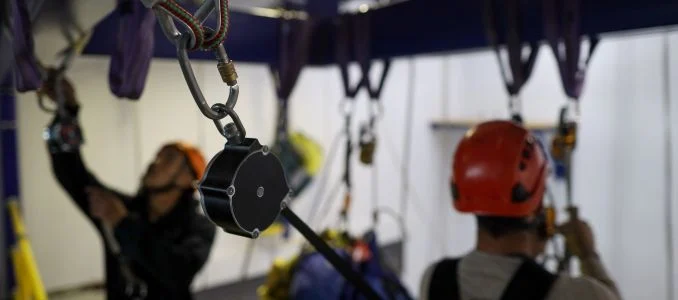
- C – Connector: The bridge between the body wear and the anchor. This category includes shock-absorbing lanyards, self-retracting lifelines (SRLs), and vertical lifelines.
While these elements are foundational, safety experts argue that the ABCs are a reactive framework. They define how to arrest a fall once it has already occurred, but they do little to address the environmental and psychological factors that lead to the fall in the first place.

Transitioning to the SAFE Model: A Proactive Paradigm
The industry is currently witnessing a transition toward the SAFE model: Secure, Attachment, Fall Arrest and Rescue, and Emergency Preparedness. This framework moves beyond the hardware and into the realm of site management and human performance.
Secure: Pre-Task Hazard Assessment
Before a worker steps onto a platform or ascends a ladder, the site must be "secured." This involves identifying the specific hazards of the task, such as leading edges, floor openings, or unstable surfaces. Security in this context refers to the implementation of engineered controls—such as guardrails or warning lines—before resorting to personal protective equipment.
Attachment: Systems and Integrity
Attachment addresses the discipline of the connection. It is not enough to have a harness; the worker must be 100% tied off. Research indicates that the most dangerous phase of work at height is the transition between different points of access. A site culture that prioritizes "Attachment" ensures that anchorages are inspected daily and that workers are trained on the specific limitations of their gear, such as swing fall risks and clearance requirements.

Fall Arrest and Rescue
The "Fall Arrest" component acknowledges that the equipment is only as good as the system design. However, the "Rescue" aspect is often the most neglected. OSHA mandates that employers provide for prompt rescue of employees in the event of a fall. Suspension trauma, or orthostatic intolerance, can occur in as little as 10 to 15 minutes after a fall. If a rescue plan is not documented and practiced, a successful arrest can still lead to a fatality.
Emergency Preparedness
The final pillar, Emergency Preparedness, focuses on the broader site culture. It involves regular drills, clear communication protocols, and ensuring that emergency response teams are equipped to handle high-angle rescues.
Supporting Data and Industry Analysis
An analysis of incident reports suggests that the majority of fall-related fatalities occur at heights of less than 20 feet. This challenges the common misconception that only "extreme" heights are dangerous. Safety professionals note that workers often grow complacent when working on low-level scaffolding or residential roofing, leading to a breakdown in standard operating procedures.

Furthermore, economic studies indicate that the cost of a single fall-related fatality—factoring in litigation, insurance premiums, lost productivity, and brand damage—far exceeds the cost of implementing a comprehensive, high-level fall protection program. Companies that have moved toward the SAFE model report a 30% reduction in near-miss reports within the first 18 months of implementation, suggesting that a shift in behavioral safety pays dividends in both worker health and project efficiency.
Official Perspectives and Regulatory Implications
Safety consultants and trade union representatives emphasize that hardware is a commodity, but expertise is an asset. "The hardware is the last line of defense, not the only line," says a representative from a major construction safety advocacy group. "When a company tells us they are compliant because they bought the best harnesses on the market, we know they are missing the point. Compliance is about the process of selecting the right equipment for the specific geometry of the job site."
OSHA’s regulatory stance remains firm, but there is an increasing push for "Qualified Person" oversight on all major projects. A qualified person, as defined by OSHA, is someone who possesses a recognized degree, certificate, or professional standing and has extensive knowledge and experience in the subject. The shift toward requiring qualified oversight ensures that the ABCs are not just installed, but engineered for the specific hazards present.

Broader Impact and Future Outlook
The integration of the ABCs with the SAFE model represents the future of site safety. As technology advances, we are seeing the introduction of "smart" PPE, such as harnesses with embedded sensors that track usage and alert safety managers when equipment has reached the end of its service life or has been subjected to impact forces.
However, technology cannot replace the fundamental requirement for a robust safety culture. Organizations that succeed are those that treat fall protection as a continuous lifecycle rather than a one-time equipment purchase. This involves:
- Continuous Training: Moving beyond initial orientation to regular, hands-on simulations of rescue procedures.
- Daily Audits: Moving beyond check-the-box compliance to active observation of work practices.
- Feedback Loops: Allowing workers to report unsafe conditions without fear of reprisal, ensuring that the "Secure" aspect of the SAFE model is always informed by real-time field data.
As the construction industry faces ongoing labor shortages and increased pressure for faster project delivery, the temptation to cut corners on safety will remain a significant risk. The shift toward the SAFE model serves as a necessary intervention, reminding the industry that every worker, regardless of the height at which they operate, has the right to return home safely at the end of their shift. By moving beyond the static hardware of the ABCs and into the dynamic, proactive strategy of the SAFE model, stakeholders can significantly reduce the incidence of fall-related trauma and build a more resilient, sustainable safety infrastructure for the future.