The Evolution of a Paradigm Shift
The inception of VOZ SOS CAAPAZ in October 2025 was not merely an administrative milestone but the result of years of professional introspection. For decades, traditional speech-language pathology has frequently prioritized verbal speech as the primary metric of therapeutic success. This clinical approach often marginalized individuals who rely on alternative modalities, such as speech-generating devices, eye-tracking systems, or icon-based communication boards.
Ordóñez’s departure from this tradition was informed by a series of pivotal experiences. First, her involvement with the "CAAmigos Angelman" program—a virtual, evidence-based initiative founded by Claudia Marimón—provided a framework for "Comprehensive Literacy." This model shifts the focus from simple request-based communication to the development of robust literacy skills, ensuring that AAC users are not just consumers of information, but active, literate participants in their own lives.
Second, the discourse within the international AAC community played a critical role. An article published in the 2025 Volume 41 of the journal AAC (International Society for Augmentative and Alternative Communication), titled "Nothing About AAC Users Without AAC Users," acted as a catalyst. The paper, authored by non-speaking advocate Gran Blasko, challenged professionals to move beyond paternalistic support structures and toward genuine, participatory inclusion in research and design.
Chronology of Community Implementation
The project’s development can be tracked through two primary, documented stages that underscore the shift from isolated therapy to social integration:
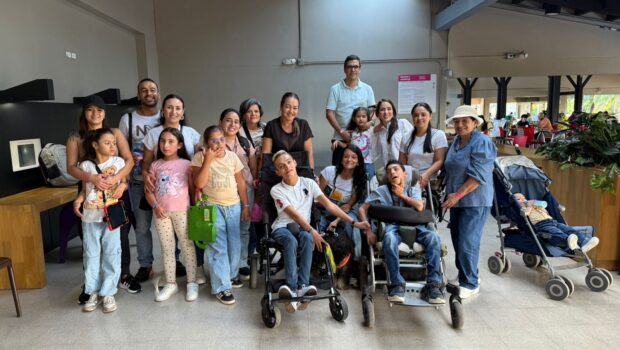
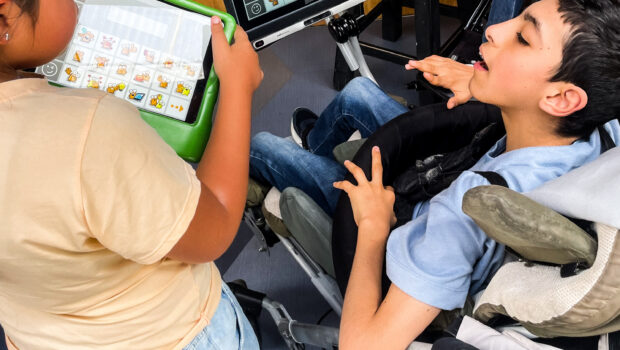
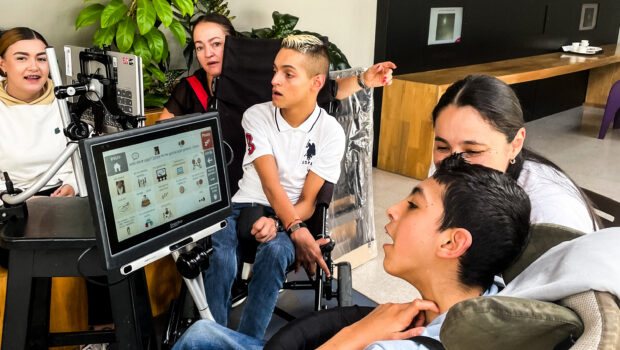
- October 2025 (AAC Awareness Month): The inaugural gathering took place at the Parque Comfama in Rionegro. The event brought together six AAC users utilizing diverse technologies, including Td Snap, Proloquo2go, and various Grid-based systems equipped with eye-tracking hardware. This event served as a public demonstration, allowing families and the general public to witness the efficacy of non-verbal communication in a real-world, high-stimulation environment.
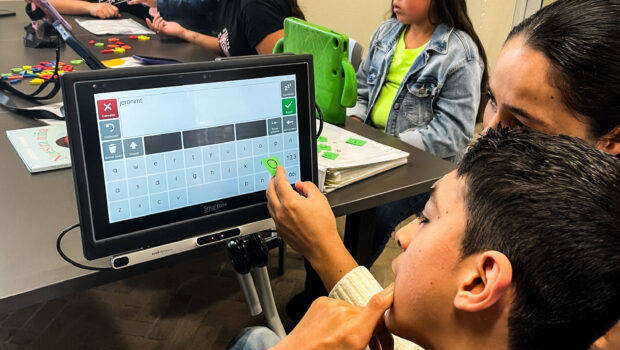
- February 2026: The project expanded to include a shared reading session hosted at a public library in Rionegro. This event focused specifically on the "Comprehensive Literacy" model, creating an environment where AAC users could interact with texts and literate peers in a manner that supports print knowledge and social engagement.
These events are designed to be recurring, with a current projection of monthly Saturday morning meetings. Each session is meticulously planned to accommodate the individual sensory and communicative profiles of the participants, ensuring that the physical environment is as inclusive as the technology being used.
Data-Driven Insights and Participant Outcomes
The effectiveness of the VOZ SOS CAAPAZ model is reflected in both the technical diversity of its users and the qualitative feedback from participants. The current participant base utilizes a wide array of sophisticated assistive technologies, ranging from tablet-based software to high-end eye-tracking hardware. This variety is critical, as it highlights that the "voice" of the user is not defined by the hardware, but by the access provided to the user to express their internal state.
One participant, Pablo Andrés Calderón Gómez, a Tobii eye-tracking system user, provided a poignant reflection on the experience: "I really liked the gathering with Angela because I met other friends. We need more people with this Right to Communication. I hope for more opportunities."
This feedback serves as a key performance indicator for the project. It underscores a fundamental tenet of the initiative: that communication is a social act. When users are limited to one-on-one therapy sessions with non-AAC-using adults, they are denied the opportunity to develop the nuanced, peer-to-peer communicative skills that are essential for adult independence and community integration.
The Neuroaffirmative Framework
At the heart of the VOZ SOS CAAPAZ model is the principle of "presuming competence." This neuroaffirmative approach assumes that all individuals possess the internal capability to communicate and learn, regardless of their motor or speech capabilities.
In practice, this means shifting the burden of communication away from the user and toward the environment. Professionals and family members are no longer merely "therapists" or "parents"; they are "communication partners" who must themselves undergo training to understand the linguistic systems used by their peers. This horizontal structure—where the specialist and the user are collaborators—is a radical departure from the hierarchical power dynamics of traditional clinical settings.
Broader Implications for AAC Policy and Practice
The success of the Rionegro initiative has wider implications for the global speech-language pathology field. It highlights a growing movement to reformulate how public and private institutions provide support for individuals with communication challenges.
- Transition to Social Models of Disability: The project shifts the focus from "fixing" the individual’s inability to speak to creating social spaces where their existing communication systems are the standard, not the exception.
- Literacy as a Fundamental Right: By integrating shared reading into their curriculum, the program challenges the common, yet scientifically unsupported, assumption that AAC users cannot or should not learn to read and write.
- Professional Development: The project suggests that AAC specialists must adopt a posture of "perpetual learner." As technology evolves, so too must the practitioner’s ability to model the use of these tools in naturalistic settings.
For families navigating the often-restrictive landscape of traditional therapy, the VOZ SOS CAAPAZ model offers a roadmap for advocacy. It encourages caregivers to seek out, or create, spaces that prioritize autonomy and provide the "scaffolding" necessary for users to thrive.
Future Projections and Sustainability
While the project is currently in its nascent stages, the model of monthly gatherings in public spaces provides a sustainable framework for replication in other regions. By utilizing existing public infrastructure—such as parks and libraries—the initiative avoids the high overhead costs associated with private clinic-based therapy, thereby increasing accessibility for families from diverse socioeconomic backgrounds.
As the project scales, the focus will remain on the intersection of technology and human connection. The "VOZ SOS CAAPAZ" (which translates to a play on words regarding "Voice" and the Spanish word for "Capable") serves as a reminder that the technology is merely the vessel. The actual communication occurs in the space between people, a space that the project is working to expand one meeting at a time.
In conclusion, the work being done in Rionegro represents a vital shift in the paradigm of care for non-speaking and minimally speaking individuals. By moving beyond the limitations of the clinical office and into the broader community, the project not only empowers individual users but also educates the public, fostering a more inclusive society where every voice—no matter how it is produced—is given the opportunity to be heard. As the community continues to grow, the emphasis remains steadfast on the belief that communication is not a skill to be mastered, but a right to be exercised in every aspect of life. The path forward involves continuous unlearning of ableist practices and a commitment to the ongoing, collaborative development of communication environments that respect the inherent dignity and potential of every participant.