The Evolution of Early Intervention Monitoring
Early intervention for children with hearing loss is time-sensitive, often described as a "race against the clock" to ensure that children reach age-appropriate milestones before the window of maximum neuroplasticity closes. Established best practices, as highlighted by Moeller et al. (2013), emphasize that the most effective monitoring occurs through authentic, strengths-based measures that capture a child’s natural environment.
Historically, the standard of care has relied on formal assessments administered in clinical or laboratory settings. While these tools provide statistical validity, they suffer from significant limitations. They are often one-time snapshots that fail to account for the child’s comfort level in a clinic, require intensive training to administer, and cannot be repeated frequently enough to track the rapid, week-to-week changes common in the first three years of life. By shifting the burden of administration to the professional, these traditional methods often alienate the parent, failing to leverage the parent’s unique insight into their child’s communicative intent.
A Chronology of Research and Implementation at Listen and Talk
The integration of the LENA developmental snapshot at Listen and Talk did not occur in a vacuum; it was the result of a deliberate, years-long effort to modernize developmental tracking.
Since 2018, the center’s birth-to-three program has systematically implemented the LENA snapshot across its cohort, accumulating a dataset comprising over 230 families. This longitudinal approach allowed researchers to move beyond anecdotal evidence and conduct a formal validity study. The criteria for the analysis were stringent: the study focused exclusively on children with bilateral hearing loss whose primary language was English, ensuring that the developmental data was not skewed by linguistic variables or varying degrees of auditory access.
A total of 115 children, ranging in age from 6 to 35 months, were selected for the study. By analyzing this specific demographic, Listen and Talk sought to bridge the gap between existing literature—which has extensively validated LENA for typically hearing populations—and the practical needs of the DHH community. The study’s primary objective was to determine if the electronic, parent-led questionnaire could achieve the same level of diagnostic accuracy as traditional, professional-led tests like the MacArthur-Bates Communicative Development Inventories (CDI) and the Preschool Language Scale (PLS).
Data Analysis and Statistical Significance
The findings of the Listen and Talk study provide a compelling argument for the adoption of the LENA snapshot. The average standard score for the participant group was 87.98, placing these children within the "low average" range—a result consistent with historical data for children with hearing loss who receive early intervention.
However, the raw averages are less significant than the range of the data. Scores for individual children fluctuated between 64 and 128, a spread that reflects the highly individualized nature of language development in the DHH population. This variance aligns with the work of researchers like Yoshinaga-Itano et al. (2017), who have long noted that hearing loss is not a monolithic condition; rather, outcomes are heavily influenced by the age of identification, the efficacy of the hearing technology (such as cochlear implants or hearing aids), and the quality of the home language environment.
To validate these results, researchers compared the LENA snapshots against established benchmarks. In the 48 cases where CDI data was available and the 35 cases where PLS results were available, there was a high degree of correlation between the LENA scores and these industry-standard measures. This correlation serves as the primary evidence that the LENA snapshot, despite its ease of use and reduced administrative burden, provides a reliable and valid metric for tracking linguistic progress.
The Role of Parents as Partners in Assessment
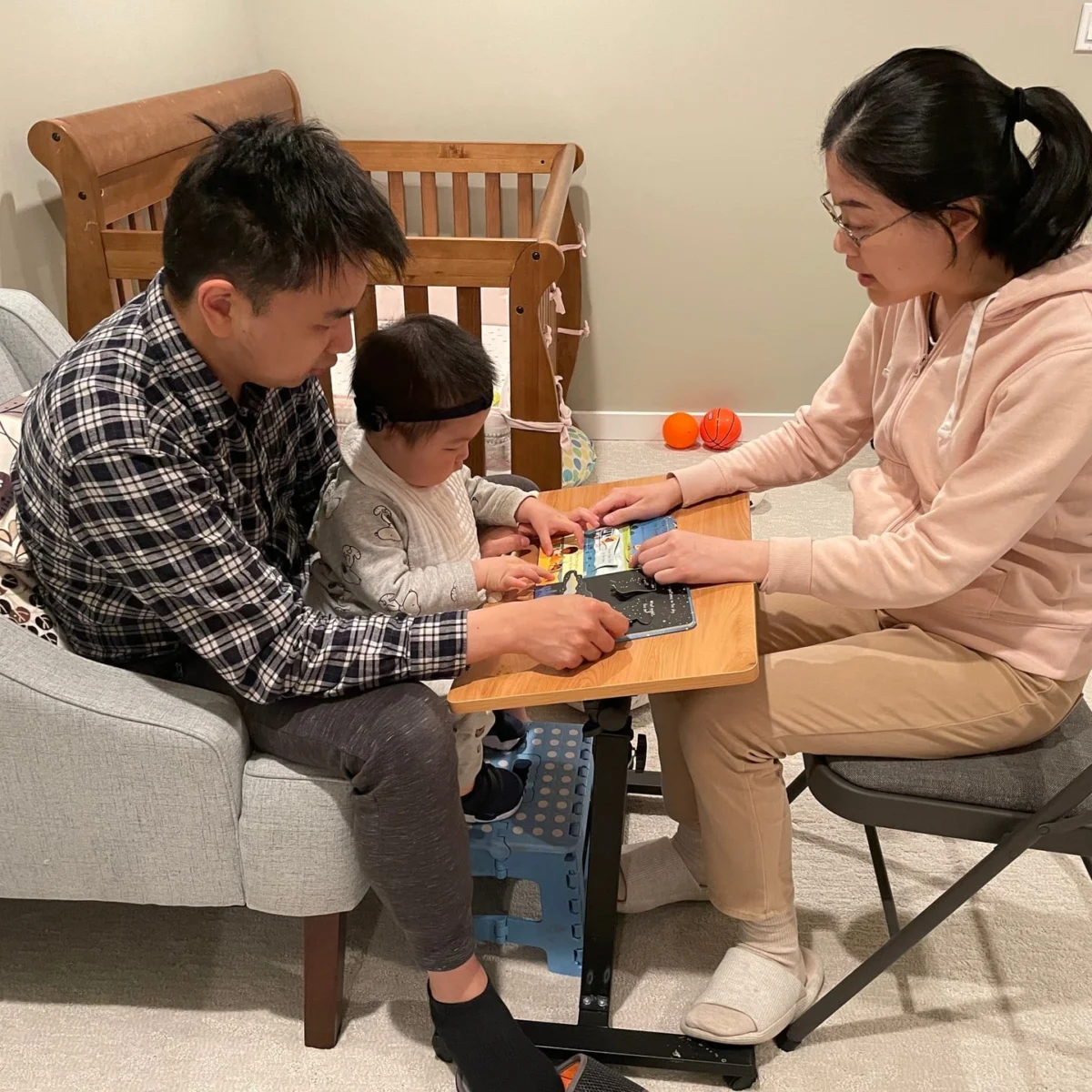
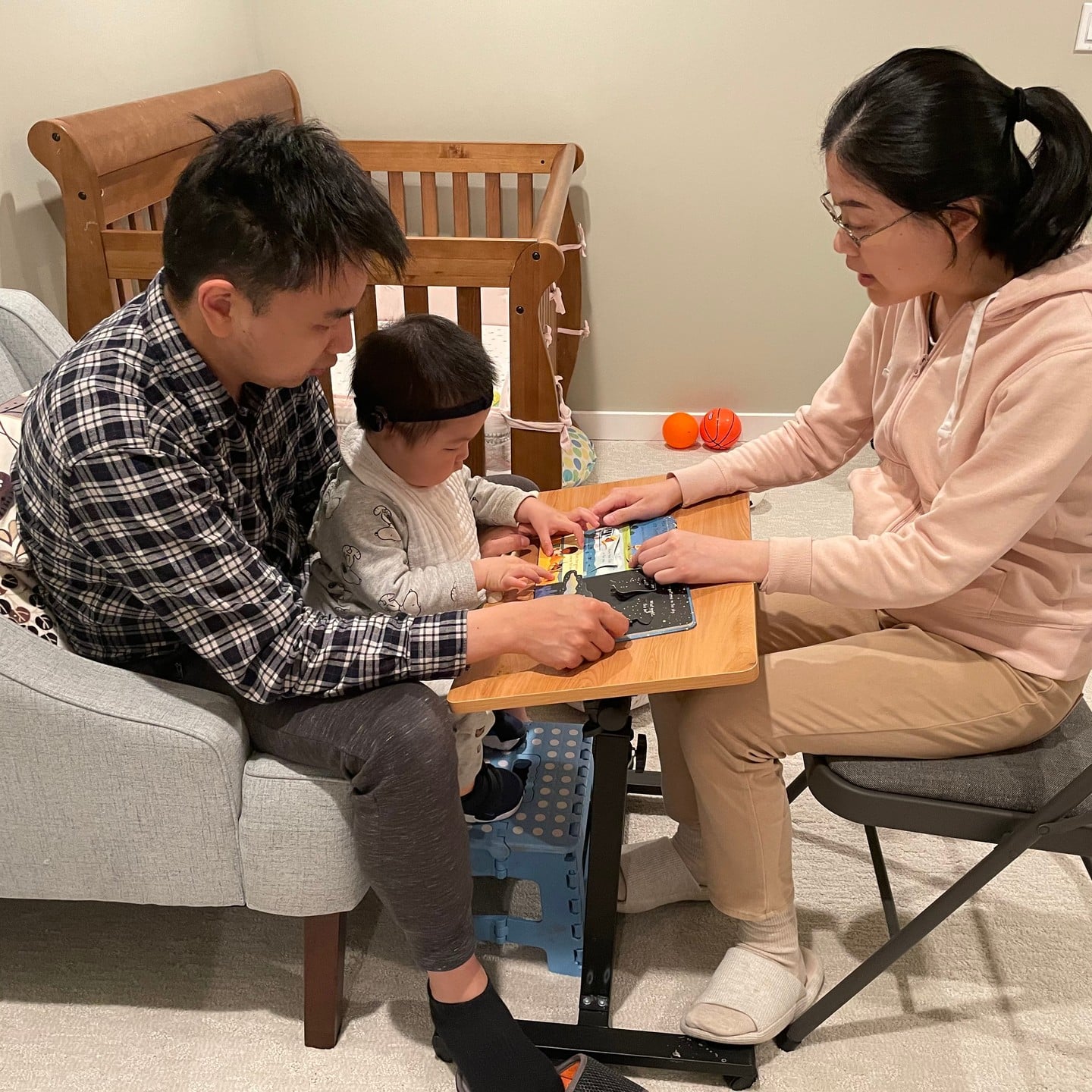
The paradigm shift toward involving parents as "experts" is supported by recent literature, including Szarkowski et al. (2024). Traditional assessments often view parents as observers, but the LENA snapshot redefines them as active participants. Because the snapshot is an electronic questionnaire that can be completed at home, it captures the child’s language in its natural ecological context—during playtime, mealtime, and daily routines.
This "ecological validity" is perhaps the most significant advantage of the tool. When a parent reports on their child’s communication, they are providing a longitudinal narrative rather than a momentary performance. Furthermore, the ability to administer the test as frequently as once a month provides a level of granular data that was previously impossible to achieve without excessive cost and disruption to the family’s schedule.
Clinical and Developmental Implications
The implications of this research are far-reaching for pediatricians, speech-language pathologists, and families of DHH children. First, the ability to monitor language growth with such frequency allows for rapid response times. If a child’s language development plateaus, providers can intervene immediately to adjust hearing technology, modify therapy goals, or conduct additional screenings for co-occurring disabilities.
The "birth-to-three" window is notoriously volatile. A child may experience a period of rapid acquisition followed by a plateau, and distinguishing between typical developmental variations and genuine clinical concerns is often difficult for parents. The LENA snapshot provides a data-driven safety net, ensuring that no child falls through the cracks due to a delay in assessment.
Moreover, the flexibility of the tool is particularly relevant in the post-pandemic landscape. Tele-intervention has become a standard, yet challenging, aspect of early intervention. The LENA snapshot is inherently compatible with remote delivery, allowing for high-quality monitoring regardless of the physical distance between the provider and the family.
Future Directions and Scientific Validation
The team at Listen and Talk, led by Dr. Mona Oster, has submitted these findings to the Journal of Early Intervention, signaling a move toward broader acceptance of this methodology within the scientific community. If accepted, this research could pave the way for a standard update in clinical protocols across the United States.
While the current study focused on English-speaking children with bilateral hearing loss, the researchers acknowledge that future iterations must address a wider range of linguistic backgrounds and varying degrees of hearing loss, including unilateral loss. The current findings, however, offer a robust foundation for the continued use of the LENA snapshot as a primary tool for developmental surveillance.
Conclusion
The research conducted by Listen and Talk reinforces a fundamental truth in the field of early intervention: when we empower families with effective, accessible, and frequent assessment tools, we improve the quality of care and the long-term outcomes for children. By demonstrating that the LENA developmental snapshot is not only a valid but a highly efficient instrument for tracking the language development of DHH children, Listen and Talk has contributed a vital resource to the clinical toolkit. As the field moves toward more personalized, family-centered care, the adoption of such tools will likely become the standard for ensuring that every child, regardless of their hearing status, has the support necessary to reach their full communicative potential.