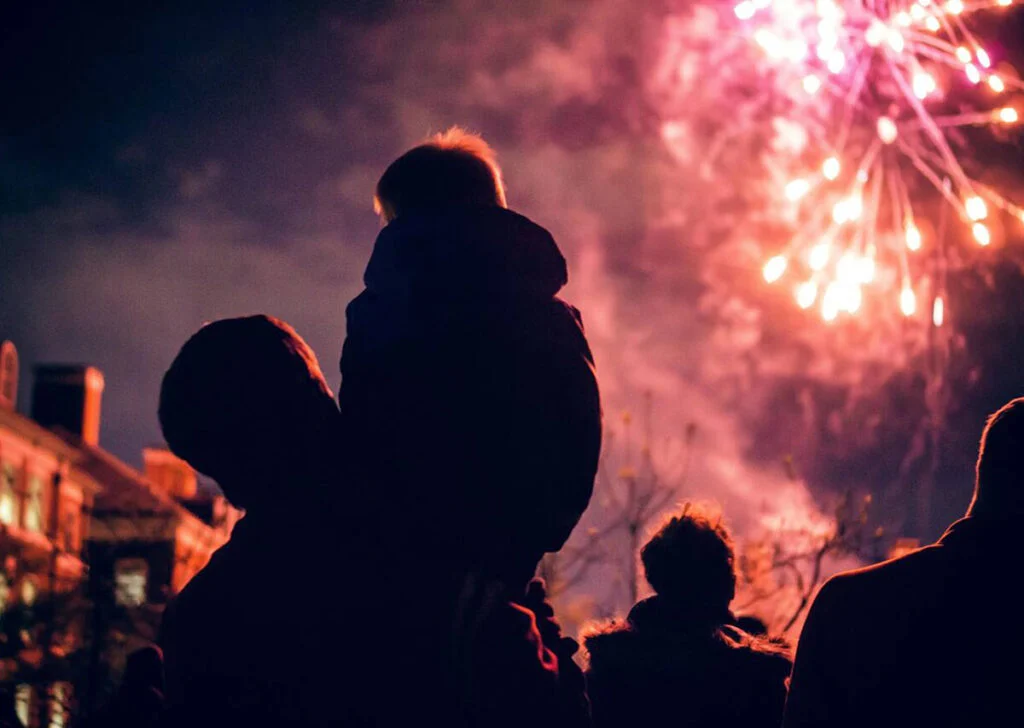
The tradition of pyrotechnics is steeped in history. Guy Fawkes Night, or Bonfire Night, commemorates the failure of the Gunpowder Plot of 1605, when Guy Fawkes attempted to blow up the House of Lords. Over centuries, the solemnity of the event evolved into a tradition of bonfires and fireworks. Similarly, Diwali, the Hindu festival of lights, incorporates firecrackers to symbolize the victory of light over darkness and knowledge over ignorance. Despite the cultural significance, the fundamental physics of these displays remain consistent: they are small, controlled explosions.
The Physics of Pyrotechnic Sound
At their core, fireworks are sophisticated chemical delivery systems. When a firework is ignited, a rapid chemical reaction occurs within the casing, generating intense heat and a sudden expansion of gas. This energy release creates a powerful blast wave, as the gas forces its way into the surrounding atmosphere at speeds exceeding the velocity of sound. This shockwave compresses air particles, manifesting to the human ear as a concussive "bang."
The volume of a firework is dictated by the magnitude of this pressure wave. Because the power of a sound is proportional to the square of the pressure, even marginal increases in chemical energy result in a non-linear increase in decibel levels. Understanding the difference between display-grade fireworks and those available to the public is critical to assessing the risk to auditory health.
Regulatory Frameworks and Sound Exposure
In the United Kingdom, firework regulations are strictly codified to mitigate the risk of injury. Fireworks are categorized into four distinct classes:
- Category 1: Indoor fireworks, posing minimal risk.
- Category 2: Garden fireworks, intended for use in smaller spaces.
- Category 3: Display fireworks, designed for large open areas.
- Category 4: Professional-grade explosives, restricted solely to trained technicians.
While public-facing campaigns frequently highlight burn prevention and fire safety, the acoustic impact on the auditory system is rarely discussed with the same urgency. The decibel (dB) scale is logarithmic, meaning that a 10dB increase represents a tenfold increase in acoustic power. The World Health Organization (WHO) and various auditory health institutes note that permanent hearing damage can be triggered by exposure to sounds at or above 85dB over a sustained period.
In contrast, professional-grade displays can reach sound pressure levels between 150dB and 175dB. While the public cannot purchase these items, they are often exposed to them at public parks or stadium events. Even consumer-grade fireworks, which are capped at 120dB at a distance of 15 meters, pose a substantial risk. Although they may seem quieter than professional displays, they often explode closer to the ground and in proximity to the audience, leading to higher localized sound pressure levels for spectators.

Chronology of Auditory Risk
The cumulative effect of noise exposure is a critical factor in sensorineural hearing loss. According to current medical research, the timeline for damage is often shorter than the public realizes:
- Immediate Exposure: At 120dB, the threshold for safe exposure is less than 10 seconds.
- Cumulative Impact: A typical backyard display lasting 20 to 30 minutes involves hundreds of individual explosions. If a spectator is within the "blast radius" of these sounds, the total acoustic energy absorbed can far exceed the safe daily limit for an adult, let alone a child.
- Delayed Symptoms: Often, individuals do not experience immediate pain. Instead, they may report a ringing sensation—tinnitus—or a temporary muffling of sound. If the hair cells in the cochlea are damaged during these events, the resulting hearing loss is often irreversible.
Official Guidance and Expert Perspectives
Public health experts and audiologists advocate for a "precautionary approach" during the bonfire season. The consensus among medical professionals is that while the visual spectacle is a cultural necessity for many, the auditory impact must be mitigated through physical intervention.
"The issue is that we often view fireworks as a visual experience, forgetting that they are inherently acoustic weapons," notes a representative from an auditory health charity. "By the time someone realizes the sound is too loud, the auditory system may have already sustained microscopic trauma."
The recommended protocols for safe viewing include:
- Distance Calibration: Maximizing the distance between the spectator and the launch site is the most effective form of noise attenuation. Doubling the distance from a noise source reduces the sound pressure level significantly due to the inverse square law.
- Protective Equipment: For families attending displays, especially those with young children, high-quality over-ear defenders are essential. These devices offer a physical barrier that reduces the peak decibel levels reaching the inner ear.
- Supervision: Children are particularly vulnerable, as their auditory systems are still developing and they are often closer to the ground where sound pressure can be more intense. Parents are encouraged to proactively monitor the proximity of their children to the fireworks.
Broader Implications for Public Health
The rise in tinnitus cases following festive periods is a recurring concern for healthcare systems. Tinnitus, often described as a ringing or buzzing in the ears, can be a debilitating condition that follows acoustic trauma. When a firework detonates, the sudden blast can lead to a phenomenon known as a Temporary Threshold Shift (TTS). If the individual is exposed to these events repeatedly—attending multiple displays over a single week—this shift can become a Permanent Threshold Shift (PTS).
Furthermore, the social implications of noise-induced hearing loss (NIHL) are profound. Individuals suffering from even mild, high-frequency hearing loss often struggle with speech discrimination in noisy environments, leading to social isolation and communication barriers. By failing to account for the intensity of sound during celebratory events, the public inadvertently trades long-term sensory health for short-term visual stimulation.
Conclusion: A Balanced Approach to Tradition
As communities prepare for the upcoming celebrations in November, the emphasis must shift toward responsible enjoyment. It is entirely possible to maintain the traditions of Diwali, Guy Fawkes Night, and other seasonal events while prioritizing the biological integrity of the auditory system.
The data is clear: fireworks are high-energy events that, by design, generate significant acoustic pressure. Whether through the use of personal protective equipment, observing strictly enforced safety zones, or opting for lower-noise, visual-focused displays, the risk of hearing damage can be managed. As we continue to celebrate, we must ensure that our enthusiasm for the sky does not come at the cost of our ability to hear the world around us. Vigilance, education, and the use of modern protective technologies remain the best defenses against the hidden dangers of the seasonal bang.