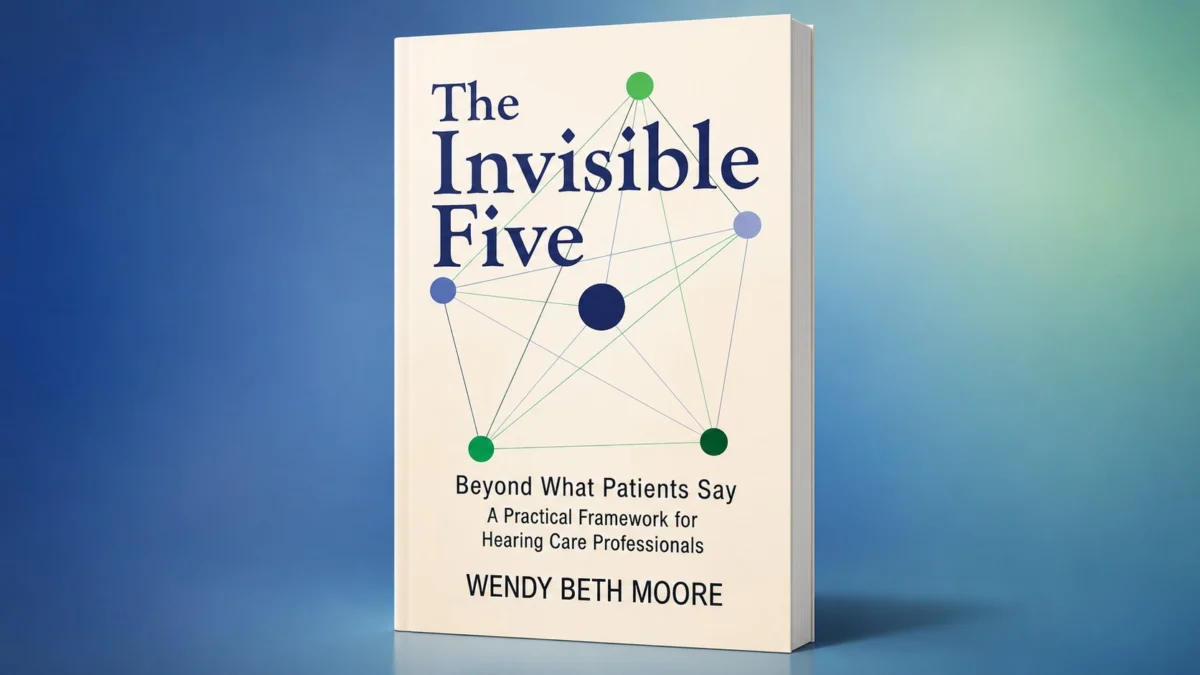
Unveiling "The Invisible Five": A Deep Dive into Patient Decision-Making
Moore’s central thesis challenges conventional wisdom regarding patient hesitation. While common deterrents such as cost, perceived stigma, cosmetic appearance concerns, and general uncertainty are widely acknowledged, The Invisible Five posits that a deeper stratum of psychological and behavioral influences often operates beneath the surface. These "invisible" factors, as Moore identifies them, are frequently unrecognized or poorly articulated by patients themselves, yet they exert a powerful sway over their ultimate choices. The book meticulously explores why individuals, despite acknowledging their hearing difficulties and discussing available treatment options with a hearing care professional, ultimately opt not to proceed with recommended technology.
"Writing The Invisible Five was deeply personal for me," Moore reflects. "Through my extensive work in hearing care, I repeatedly observed patients leaving consultations without moving forward with hearing technology, and it genuinely bothered me. I was driven by a profound desire to understand the underlying ‘why’ behind these decisions, seeking to uncover the less obvious drivers." This personal motivation, combined with her extensive professional background, underpins the book’s empathetic yet analytical approach.
The Silent Epidemic: Understanding Hearing Loss and Its Challenges
To fully appreciate the significance of Moore’s work, it is crucial to contextualize the prevailing landscape of hearing loss. Globally, the World Health Organization (WHO) estimates that over 1.5 billion people experience some degree of hearing loss, with approximately 430 million having disabling hearing loss. In the United States alone, nearly 48 million Americans report some form of hearing impairment, making it one of the most prevalent chronic health conditions. Despite this widespread need, hearing aid adoption rates remain remarkably low, often hovering between 20% and 30% among those who could significantly benefit.
The consequences of untreated hearing loss are profound and far-reaching. Beyond the obvious communication difficulties, studies have linked untreated hearing impairment to an increased risk of cognitive decline, dementia (as highlighted by the Lancet Commission on Dementia Prevention, Intervention, and Care), social isolation, depression, anxiety, and a higher incidence of falls. Economically, the burden is substantial, encompassing lost productivity, increased healthcare expenditures for related conditions, and a reduced quality of life for affected individuals and their families.
Historically, efforts to improve hearing aid adoption have largely focused on technological advancements – smaller, more powerful, and feature-rich devices – and addressing the overt barriers of cost and stigma through subsidies, insurance coverage, and public awareness campaigns. While these initiatives have made inroads, the persistent gap between the prevalence of hearing loss and the uptake of treatment underscores the limitations of addressing only the visible obstacles. This enduring challenge provides the fertile ground for Moore’s exploration into the hidden psychological terrain.
Bridging the Gap: Behavioral Economics Meets Hearing Healthcare
Moore’s innovative approach lies in her application of principles from behavioral economics and decision science to the specific context of hearing care. Behavioral economics, a field that integrates insights from psychology and economics, examines how psychological, cognitive, emotional, cultural, and social factors influence economic decisions. Decision science, a broader interdisciplinary field, encompasses the application of scientific methods to decision-making processes.
By drawing on these disciplines, Moore introduces a practical framework designed to equip hearing care professionals (HCPs) with the tools to recognize subtle, often non-verbal, signs of uncertainty or discomfort during patient consultations. This approach moves beyond simply cataloging stated reasons for hesitation, urging HCPs to look for deeper, unspoken influences that may affect a patient’s confidence in making a commitment. It acknowledges that a patient’s articulated concerns might only represent the tip of an iceberg, masking more fundamental anxieties or cognitive biases.
"I talked with hearing care professionals and patients extensively, but I kept coming back to the same question: what else might be influencing these decisions?" Moore explains. "I’m naturally curious and I love a challenge, so I went back to a framework I’d been using with my consulting clients: The Invisible Five." This framework, she emphasizes, is not intended to replace existing patient consultation practices but rather to complement and enrich them. It advocates for a more attentive, empathetic approach to patient communication, paying closer attention to both verbal cues and subtle responses to better understand the multifaceted factors affecting their decisions. This integration fosters a more robust model of shared decision-making, where the professional and patient collaboratively arrive at a treatment plan that addresses both clinical needs and personal readiness.
A Chronology of Insight: Moore’s Journey and the Book’s Genesis
Wendy Beth Moore brings an unparalleled depth of experience to this subject. With more than 40 years dedicated to understanding how people make decisions, she has established herself as a leading revenue growth strategist specializing in decision science. Her extensive career has spanned diverse sectors, providing her with a unique perspective on human behavior in various contexts.
Her specific immersion in hearing healthcare includes pivotal roles with a prominent Canadian clinic group, as well as extensive consulting engagements with hearing aid manufacturers and clinic groups across the United States, Europe, and Australia. This direct, hands-on experience on both the clinical and industry sides of hearing care provided her with firsthand observations of the challenges in patient adoption and the motivations behind professional recommendations. It was during these engagements that the seeds for The Invisible Five were sown, as she repeatedly encountered the perplexing phenomenon of patients not following through despite clear benefits.
The journey to the book’s publication on November 4, 2026, was a culmination of decades of expertise, dedicated research, and a personal commitment to solving a critical problem in healthcare. Her prior literary success, Muddled, Meager & Messy: Marketing Masterclass for Entrepreneurs & Small Business, which garnered a Silver Award at the 2026 Summit Creative Awards, demonstrates her ability to distill complex concepts into accessible, practical guidance. The Invisible Five represents a targeted application of her profound understanding of human decision-making to a sector in dire need of such insights.
Industry Reactions and Professional Perspectives
The release of The Invisible Five is anticipated to resonate widely across the hearing healthcare community. While official statements are still emerging, the book’s premise addresses a long-standing pain point for professionals and industry leaders alike.
Dr. Eleanor Vance, a lead audiologist at a prominent clinic in the UK, reflecting on the book’s potential impact, remarked, "This book provides a much-needed lens for understanding complex patient behaviors. We often see patients hesitate for reasons they don’t articulate, and Moore’s framework offers practical tools to navigate these conversations more effectively. It validates our observations and provides a scientific basis for what many of us have intuitively felt."
A spokesperson for the Global Hearing Health Alliance, an international advocacy organization, is expected to laud the initiative, stating, "Improving hearing aid adoption is a multifaceted challenge that requires innovation on many fronts. Initiatives like ‘The Invisible Five’ are vital for empowering professionals with deeper insights into patient psychology, ultimately leading to better health outcomes for millions globally. It marks a significant step towards a more patient-centric approach."
Ms. Clara Jensen, Director of the Hear Better Now Foundation, a patient advocacy group, echoed this sentiment: "Patients sometimes struggle to voice their deepest concerns, whether due to embarrassment, a lack of understanding of their own motivations, or simply not knowing how to articulate complex feelings. This book could foster a more empathetic and effective dialogue between patients and their care providers, ensuring that true barriers are addressed and individuals receive the support they need to make informed decisions for their hearing health." These anticipated reactions underscore the widespread recognition of the problem Moore addresses and the eager reception for practical solutions.
Implications for Hearing Care Practice and Beyond
The implications of The Invisible Five extend far beyond individual consultations, promising to instigate broader shifts within the hearing healthcare ecosystem.
- Enhanced Patient Outcomes: By enabling HCPs to identify and address the true underlying barriers to adoption, the book can lead to a significant increase in the number of patients who proceed with recommended technology. This, in turn, translates directly into improved communication, reduced cognitive load, enhanced social engagement, and a higher overall quality of life for individuals with hearing loss.
- Economic Impact: Increased adoption rates and earlier intervention can contribute to a reduction in the long-term healthcare costs associated with untreated hearing loss, such as those related to cognitive decline and mental health issues. It also boosts the economic productivity of individuals and the hearing care industry itself.
- Training and Education: The framework presented in The Invisible Five is poised to influence curriculum development for aspiring audiologists and hearing instrument specialists. Integrating decision science and behavioral economics into professional training programs will equip the next generation of HCPs with a more holistic and psychologically informed approach to patient care.
- Future Research: Moore’s work opens new avenues for empirical research into patient behavior in healthcare settings. It encourages further exploration into specific cognitive biases, emotional states, and social influences that impact health decisions, potentially leading to more targeted interventions.
- Broader Application: While specifically tailored to hearing care, the fundamental principles of identifying unarticulated barriers to adoption, rooted in behavioral economics, hold relevance for other areas of healthcare where patient adherence and follow-through are persistent challenges. From managing chronic conditions to adhering to medication regimens, the "invisible five" framework could offer transferable insights.
The Invisible Five: Beyond What Patients Say is positioned as an indispensable practical resource for hearing care professionals, researchers, and policymakers interested in advancing patient communication, fostering shared decision-making, and dismantling the subtle yet powerful barriers to hearing technology adoption.
The book is available through major retailers like Barnes & Noble, signifying its wide accessibility. Wendy Beth Moore, with her extensive background and proven track record, has delivered a timely and essential contribution that promises to be a catalyst for meaningful change in how hearing loss is understood and managed, ultimately improving the lives of millions. Her work champions a more nuanced, empathetic, and scientifically informed approach to patient care, moving beyond the obvious to unlock the true potential for better hearing health.