The Dawn of OTC Hearing Aids: A Market Transformation
The introduction of products like the Yeasound Robin CIC60 is a direct consequence of the U.S. Food and Drug Administration’s (FDA) landmark 2022 ruling, which established a new regulatory category for OTC hearing aids. This pivotal decision aimed to make hearing aids more accessible and affordable for millions of Americans who experience mild to moderate hearing loss but have been deterred by the high cost and professional fitting requirements of traditional prescription devices. Before this ruling, hearing aids typically cost thousands of dollars and required extensive consultations with audiologists, creating significant barriers to adoption.
An estimated 48 million Americans experience some degree of hearing loss, yet only about one-fifth of those who could benefit from hearing aids actually use them. The FDA’s move was designed to address this vast unmet need, empowering consumers to purchase hearing aids directly without a medical exam, prescription, or professional fitting. The Yeasound Robin CIC60 fits squarely into this new paradigm, targeting individuals seeking a less visible and more convenient option without the complexities associated with the traditional audiology clinic model.
Innovation in Miniaturization: Bluetooth in a CIC Form Factor
The Yeasound Robin CIC60’s most striking feature is its completely-in-canal (CIC) design coupled with Bluetooth streaming. CIC hearing aids are renowned for their near-invisibility, sitting deep within the ear canal. However, their diminutive size presents significant engineering challenges, particularly for incorporating power-hungry features like wireless streaming. Historically, Bluetooth functionality has been reserved for larger behind-the-ear (BTE) or receiver-in-canal (RIC) styles, which offer more space for batteries, antennas, and processing chips.
Each Robin CIC60 device measures a mere 18.77 × 11.79 × 5.69 mm and weighs an astonishing 1.3 grams. This makes the integration of Bluetooth not just a feature, but a testament to advanced micro-electronics and battery technology. While Yeasound claims it to be the first Bluetooth-enabled CIC OTC hearing aid, independent verification of this specific claim is still pending. Nevertheless, the successful implementation of wireless audio streaming in such a small, instant-fit device represents a significant leap forward in hearing aid design, offering users the convenience of connecting to smartphones for calls, music, and other audio content without additional visible components.
Design and Comfort: Balancing Discretion with Functionality
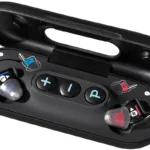
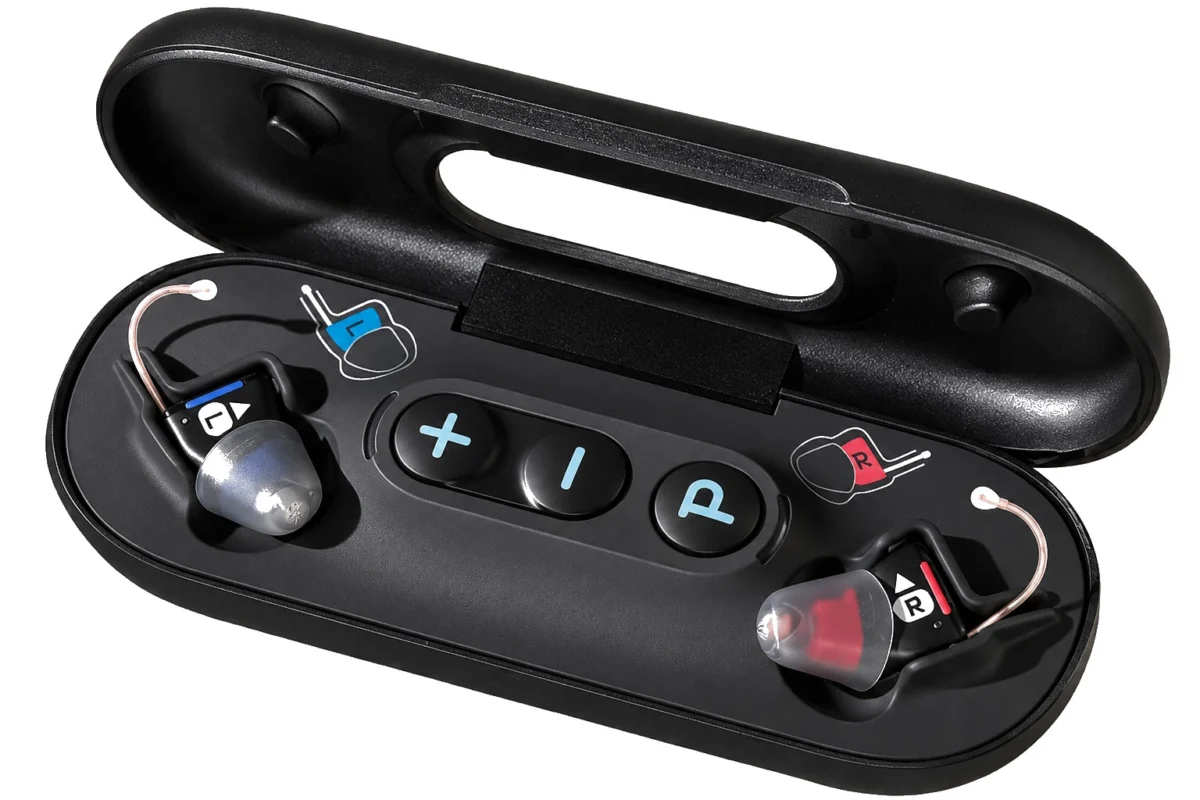
The core appeal of the Robin CIC60 lies in its discreet nature. Its placement deep within the ear canal renders it virtually invisible, a strong draw for individuals who prioritize aesthetics and wish to avoid the stigma sometimes associated with more visible hearing aids. The instant-fit design eliminates the need for custom earmolds, simplifying the purchasing and immediate use process. The package includes two hearing aids, a portable charging case that doubles as a remote control, eight pairs of domes in various sizes, wax guards, and a cleaning brush. The inclusion of multiple dome sizes is crucial, acknowledging the wide variability in ear canal dimensions among individuals and aiming to ensure a secure and comfortable fit for a broader user base.
During hands-on evaluation, the insertion and removal process, while requiring some initial familiarization to identify the correct orientation (aided by a "TOP" marking and a wearing guide), proved relatively straightforward. However, the review highlighted that fit security was not universally consistent, with some larger ear canals experiencing a less secure sensation, raising potential concerns about retention during active use. This underscores the critical importance of users experimenting with the provided dome sizes to achieve optimal stability and comfort. The small size, while advantageous for discretion, also presents a potential challenge for individuals with reduced manual dexterity, impaired vision, or difficulty manipulating very small objects.

Sound Quality and Adaptive Performance in Real-World Scenarios
The Robin CIC60’s sound quality emerged as one of its most commendable attributes during testing. The devices delivered very good conversational clarity, effective amplification, and notably, an absence of feedback—a common issue in smaller hearing aids where amplified sound can escape and be re-amplified, causing whistling. This positive acoustic performance contributes significantly to a satisfying user experience.
The hearing aids incorporate Yeasound’s first-generation AI noise reduction technology, which the company states automatically detects and adapts to diverse listening environments. This intelligent processing is crucial for improving speech understanding in noisy settings, a frequent complaint among those with hearing loss. The CIC60 appeared particularly effective for hearing profiles characterized by relatively good low-frequency hearing but poorer high-frequency thresholds. This specific configuration is highly prevalent and often leads to difficulties understanding speech, particularly high-frequency consonants such such as /s/, /f/, /th/, and /sh/, which are vital for speech intelligibility.
High-frequency sounds carry much of the clarity in human speech. While lower frequencies contribute to the perception of volume and speech energy, higher-frequency consonants allow listeners to differentiate between similar-sounding words (e.g., "cat" vs. "hat"). Individuals with high-frequency hearing loss often report being able to "hear" someone speaking but struggling to "understand" what is being said. The CIC60’s useful amplification in these specific listening situations, resulting in very good conversational understanding during evaluation, positions it as a strong option for this common type of hearing deficit. The effective feedback suppression further enhances the listening experience, emphasizing the importance of proper dome selection and a secure acoustic seal.
Connectivity and Power Management
Bluetooth connectivity remains a defining feature of the CIC60, setting it apart from many other compact OTC devices. The ability to stream audio directly from a compatible smartphone offers unparalleled convenience, allowing users to seamlessly transition between amplified listening, phone calls, music, podcasts, and even navigation instructions without needing separate headphones or additional devices. This integration streamlines daily life for many users.
According to Yeasound, the CIC60 offers competitive battery performance:
- Up to 24 hours of standard hearing aid use.
- Up to 12 hours of continuous Bluetooth streaming.
- The portable charging case provides approximately 2.5 full charges for both hearing aids.
These figures, provided by the manufacturer, underscore the trade-off between standard amplification and continuous streaming, a crucial consideration for users who plan to heavily utilize the Bluetooth functionality throughout their day. The portable charging case is not just a power bank but also a practical design element, serving as a remote control.
Intuitive Controls and Personalization Limitations
The charging case’s dual functionality as a remote control is a thoughtful design choice, addressing a common challenge with tiny hearing aids: manual manipulation. Physical buttons on the case allow users to adjust volume (+/-) and switch between listening programs (P) without having to fiddle with the small devices directly. For iPhone users, the program button also manages phone calls (answer, end, reject). This tactile control mechanism is particularly beneficial for users who prefer physical buttons over smartphone applications or who may have dexterity issues.
The companion iYeasound smartphone application is described as intuitive and easy to install, featuring descriptive listening program names (e.g., "Restaurant," "Quiet," "Outdoor") rather than generic numerical labels. This user-friendly interface enhances the overall experience by simplifying program selection.

However, a key distinction for OTC devices like the CIC60 lies in their personalization capabilities. While the device arrives pre-programmed for ease of initial setup, and the app includes a hearing test, the results of this test cannot be used to automatically program the CIC60 to an individual’s specific audiogram. The Robin CIC60 is registered under the FDA’s QUG classification for wireless OTC hearing aids, which means it offers user-adjustable volume and program settings, but not the automated, audiogram-based fitting found in self-fitting models or prescription devices. This distinction is vital: users can adjust their listening experience, but these adjustments are not equivalent to the precise, frequency-specific amplification tailored by an audiologist based on a comprehensive hearing assessment. This limitation is important for prospective buyers, especially those with more complex or unique hearing loss profiles that might benefit from highly individualized programming.
Support Ecosystem and Professional Guidance
Yeasound has established a robust support infrastructure for the Robin CIC60, accessible directly through its application. Resources include customer service access, troubleshooting guides, product documentation, instructional videos, and a ticket submission system. These resources aim to assist users with common issues like Bluetooth pairing, charging, and basic device operation.
The company also highlights access to audiology professionals for hearing-related guidance, alongside lifetime technical support and a one-year warranty. Yeasound clarifies that general customer service handles technical inquiries, while more specialized hearing concerns are referred to its audiology team, with most inquiries receiving a response within 24 hours. While these offerings are encouraging for an OTC product, prospective buyers should clarify the precise scope of professional support. It’s important to understand whether it includes personalized hearing care guidance or is primarily limited to technical assistance for the device itself. This distinction is crucial in the OTC market, where professional oversight is optional but often beneficial.
Competitive Landscape and Broader Implications
The Yeasound Robin CIC60 carves out a unique niche in the burgeoning OTC hearing aid market. Its combination of a nearly invisible CIC design and integrated Bluetooth streaming is a rare pairing. Many Bluetooth-enabled OTC hearing aids currently available tend to be larger RIC, BTE, or earbud-style devices, which, while offering more space for advanced components, are inherently more visible. At the time of review, a directly comparable Bluetooth-enabled CIC OTC hearing aid was not readily identified, suggesting the CIC60 may indeed be pioneering in this specific segment.
The competitive landscape for OTC hearing aids is rapidly evolving, with various manufacturers offering different levels of remote support and features. Brands like Jabra and ELEHEAR, among others, provide remote assistance, but the depth of audiological guidance versus technical troubleshooting varies significantly. The Robin CIC60’s appeal lies squarely in its trifecta of discreet styling, Bluetooth streaming, and convenient physical controls via the charging case.
The emergence of such technologically advanced yet accessible devices like the Robin CIC60 has profound implications for the hearing health industry. It democratizes access to hearing assistance, potentially reducing the social and economic burden of untreated hearing loss. By offering a compelling, less intimidating entry point, it could encourage more individuals to address their hearing challenges earlier. However, this market shift also necessitates greater consumer education regarding the capabilities and limitations of OTC devices. While suitable for perceived mild to moderate hearing loss, OTC hearing aids are not a panacea. They are not appropriate for individuals with more severe hearing loss, complex audiometric profiles, or underlying medical conditions that require professional intervention.
Who Benefits Most from the Yeasound Robin CIC60?
The Yeasound Robin CIC60 is designed for adults experiencing perceived mild to moderate hearing loss, particularly those who:
- Prioritize discretion and a nearly invisible hearing solution.
- Desire Bluetooth audio streaming for calls, music, and other smartphone content.
- Are comfortable with self-management of their hearing aids through a smartphone app or physical controls.
- Seek an accessible and affordable entry point to hearing assistance without the need for traditional professional fitting services.
- Exhibit hearing profiles characterized by high-frequency hearing loss, for which the device’s amplification proved particularly effective during testing.
Conversely, the device may be less suitable for individuals with unusually large or irregularly shaped ear canals where a secure fit might be challenging, those with significant dexterity or vision difficulties who may struggle with small components, or individuals whose hearing loss requires extensive, individualized, frequency-specific programming that goes beyond the CIC60’s current customization capabilities.

The broader availability of OTC hearing aids underscores the importance of a comprehensive hearing assessment. While these devices provide an accessible pathway to improved hearing, a professional evaluation remains crucial to determine the type and degree of hearing loss, rule out medical conditions that require specialized treatment, and ensure that an OTC device is the appropriate solution. Conditions such as asymmetrical hearing loss, significant conductive components, or sudden changes in hearing always warrant immediate medical investigation.
Final Assessment: A Step Forward for Accessible Hearing
The Yeasound Robin CIC60 represents an intriguing and impactful addition to the OTC hearing aid market. Its pioneering combination of a nearly invisible CIC design, integrated Bluetooth connectivity, and a multi-functional charging case sets it apart in a rapidly expanding sector. The device delivered very good sound quality, clear conversational understanding, and an absence of noticeable feedback during testing, contributing to a generally positive user experience, further bolstered by straightforward physical controls and an intuitive smartphone application.
However, as with any innovative product, there are considerations. The fit may not be equally secure for all ear canal sizes, and the diminutive size could pose handling challenges for some users. Crucially, while the companion app includes a hearing test, its results do not automatically personalize amplification to an individual’s precise audiogram, differentiating it from self-fitting models.
Priced attractively at approximately $399, the CIC60 offers a compelling value proposition for adults who prioritize discreet design and Bluetooth functionality, provided its amplification capabilities and fitting options align with their specific hearing needs. The Robin CIC60 convincingly demonstrates the feasibility of incorporating advanced wireless connectivity into exceptionally small hearing aids, pushing the boundaries of what is possible in the OTC space. Its performance in hands-on evaluation was encouraging, reinforcing the critical importance of appropriate candidacy, secure fit, and an understanding of individualized hearing care considerations. This product undeniably marks a significant step forward in making advanced hearing technology more widely available and appealing to a broader consumer base.
For additional information about the device, specifications, and available features, interested parties can visit the Yeasound Robin CIC60 product page.
*Disclaimer: This review is based on the reviewer’s personal, hands-on experience using the OTC hearing aid, its accessories, and its accompanying mobile app. The device was not tested under laboratory or clinical conditions, and the observations provided reflect a user-experience perspective only. All comments, impressions, and conclusions are specific to the reviewer’s individual use of the product and may not represent its performance in controlled or professional testing environments.
About the Author: Nausheen Dawood is an experienced audiologist and project manager with a professional background in primary health care, corporate social investment, and business development. She holds a Master’s degree in Audiology, completed cum laude, and specializes in content development and training for diverse audiences. Her expertise includes clinical research, project development, strategic planning, and technical training, with a long-term commitment to research and development initiatives.