The Evolution of the Move Over Law
For decades, the Move Over law was primarily associated with police, fire, and ambulance services. However, the legislative landscape in California has shifted to acknowledge the reality of the modern roadside environment. Under current statutes, the protection afforded by the Move Over law now extends to a broader array of roadside personnel, including utility crews, Caltrans maintenance workers, and private tow-truck operators.
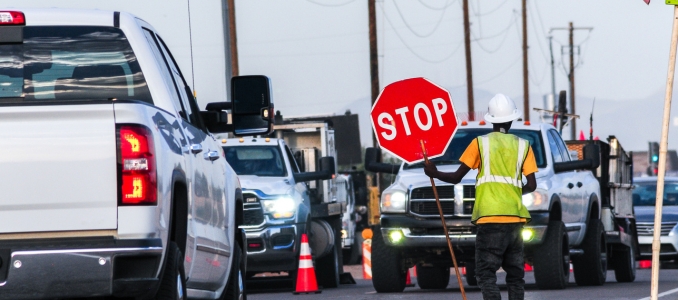
The core requirement of the law is straightforward yet frequently misunderstood: when motorists encounter a stationary vehicle displaying hazard lights, flares, or traffic cones, they are legally obligated to vacate the lane closest to that vehicle if it is safe to do so. If shifting lanes is not feasible due to traffic density or road design, the driver must reduce their speed significantly to provide a safety buffer. This legislative expansion serves as a recognition that utility workers—who are often tethered to bucket trucks or operating heavy equipment—are just as vulnerable to errant vehicles as law enforcement officers conducting traffic stops.
Chronology of Awareness: Why November Matters
Crash Responder Safety Week is observed annually in November, a period strategically chosen to coincide with the onset of darker evenings and unpredictable weather patterns. Historically, the transition from daylight saving time leads to an immediate increase in evening commute accidents, as visibility decreases and driver fatigue sets in.
In the past decade, the focus of this week has shifted from purely emergency response to a holistic “all-roadside-worker” approach. In 2023 and 2024, state agencies tracked a concerning uptick in “near-miss” reports filed by utility companies. These reports indicated that even when crews utilized advanced warning systems—such as flashing strobe lights, message boards, and delineators—drivers remained non-compliant with speed reduction mandates. By designating the second week of November as a time for heightened advocacy, Caltrans aims to institutionalize safety habits before the height of the winter storm season, when utility crews are most frequently called out to repair power lines and clear debris.

The Data Behind the Danger
Statistical analysis of roadside incidents reveals a sobering reality for utility companies and state agencies. According to data provided by the National Institute for Occupational Safety and Health (NIOSH) and mirrored in California’s own incident logs, “struck-by” incidents remain a leading cause of death and serious injury among highway maintenance and utility workers.
Data indicates that motorists traveling at speeds as low as 40 mph can turn a minor collision into a fatal event for a worker standing outside a vehicle. Furthermore, industry surveys suggest that human error is the primary catalyst in over 90% of these incidents. Distracted driving, particularly mobile device usage, has effectively reduced the reaction time for motorists, making it nearly impossible for them to navigate around unexpected work zones safely.
Insurance industry reports regarding commercial fleets corroborate these findings, noting that utility trucks involved in roadside work are struck at a rate that has remained stubbornly high despite improvements in vehicle conspicuity—such as high-visibility chevron markings and upgraded LED lighting arrays. This disconnect between safety equipment investment and actual accident reduction highlights the necessity of the current educational campaign.

Perspectives from the Frontline
The labor organizations representing utility workers have long advocated for the protections highlighted by the current Caltrans campaign. Representatives from various utility labor unions have frequently noted that for their members, the side of the highway is their office. The psychological toll of working with high-speed traffic mere feet away cannot be overstated, and labor advocates argue that the “Move Over” laws provide the only tangible barrier between a routine repair job and a life-altering tragedy.
Caltrans officials have emphasized that this is not merely a request for courtesy, but a fundamental requirement for the functioning of the state’s critical infrastructure. "When our crews are out there, they are working to keep the lights on and the roads clear for everyone else," a department spokesperson noted. "Providing them with space is not just the law; it is a basic component of keeping the state’s workforce alive."
Fact-Based Analysis: Implications for Public Safety
The implications of this campaign extend far beyond the immediate goal of reducing worker injuries. There is a direct correlation between work zone safety and overall traffic efficiency. When a roadside accident occurs involving a utility crew, it results in extended road closures, secondary collisions, and increased traffic congestion that can last for hours. By encouraging compliance with the Move Over law, agencies are effectively reducing the frequency of these secondary incidents, thereby improving the flow of traffic across the state’s highway network.

Furthermore, the campaign addresses the modern epidemic of road rage. As traffic density increases, incidents of aggressive behavior near work zones have been documented with greater frequency. When motorists become impatient with reduced speed limits or lane changes, their subsequent actions—such as tailgating or erratic lane changes—pose a significant threat to workers. The campaign serves as a public reminder that the temporary inconvenience of slowing down is a necessary trade-off for the safety of those maintaining the systems that society relies upon daily.
Best Practices for Motorists
To align with the guidance issued during this year’s Crash Responder Safety Week, drivers are advised to adhere to a four-point safety protocol:
- Scan Ahead: Drivers should maintain a visual horizon of at least 15 seconds. Identifying work zones early allows for a gradual and safe lane change, preventing the need for last-minute braking.
- Prioritize Lane Shifts: If the road has multiple lanes, moving over is the safest action. It creates a complete lane of separation, which is the most effective way to protect workers.
- Control Speed: If shifting lanes is impossible, speed must be reduced well below the posted limit. This provides the driver with more time to react to unexpected movements from workers or shifting equipment.
- Eliminate Distractions: The use of handheld devices must cease entirely when entering a construction or work zone. The cognitive load required to navigate a narrow corridor of traffic necessitates full attention.
Looking Toward the Future of Roadside Safety
The ongoing efforts by Caltrans and its partners represent a broader shift in how society views highway safety. Technology is beginning to play a larger role; some modern vehicles are now equipped with “connected vehicle” technology that can alert drivers to the presence of emergency and work vehicles before they are in the line of sight. However, until such technology is universal, the human element—driver behavior and awareness—remains the most critical factor.

The campaign serves as a stark reminder that the “infrastructure” of a state is not limited to asphalt and power lines; it includes the people who maintain them. As the state moves further into the winter season, the lessons emphasized during Crash Responder Safety Week remain vital. The goal is a permanent change in the driving culture of California, where moving over for utility crews becomes as instinctive as stopping at a red light.
In conclusion, the initiative serves as a bridge between policy and practice. By clearly defining the legal obligations of motorists and providing context for the dangers faced by utility workers, the California Department of Transportation is working to ensure that the individuals who risk their lives to maintain the state’s essential services can return home to their families at the end of every shift. While the week itself is a designated period of heightened awareness, the underlying principles of caution, respect, and adherence to the law are intended to be year-round commitments for every motorist on the road.