
The findings represent a paradigm shift in neurobiology. For decades, the primary focus of age-related cognitive research has centered on the accumulation of toxic proteins like amyloid-beta and tau, which are hallmarks of Alzheimer’s disease. However, this new data suggests that the "white matter" of the brain, composed of nerve fibers and their myelin insulation, may be just as critical to understanding cognitive longevity. By identifying a specific molecular pathway that fails in these cells, the study opens the door to repurposing existing medications to preserve thinking abilities in the elderly.
The Longitudinal Foundation: The Lothian Birth Cohort 1936
The strength of this discovery rests on the unique data provided by the Lothian Birth Cohort 1936 (LBC1936). This group consists of individuals born in 1936 who participated in the Scottish Mental Survey of 1947. Because these participants were tested for cognitive ability at age 11, researchers have been able to track their mental progression over a span of more than 70 years. This longitudinal depth is almost unparalleled in medical science, allowing the team to distinguish between lifelong cognitive ability and the specific decline that occurs in the eighth and ninth decades of life.
Between the ages of 70 and 82, the participants underwent a series of rigorous assessments every three years. These tests measured various domains of cognitive function, including verbal memory, spatial reasoning, and processing speed—the rate at which the brain can take in and respond to new information. Of the 1,091 original members of the cohort, 866 completed the full battery of tests into their 80s. While nearly all participants showed some degree of slowing, the researchers observed a wide spectrum of outcomes. Some individuals maintained sharp cognitive faculties, while others experienced a steep and debilitating decline.
By correlating these cognitive trajectories with post-mortem brain tissue analysis from a subset of the cohort, the researchers were able to look past the symptoms and identify the physical changes occurring within the brain’s architecture.
The Biological Mechanism: Myelin and Axonal Integrity
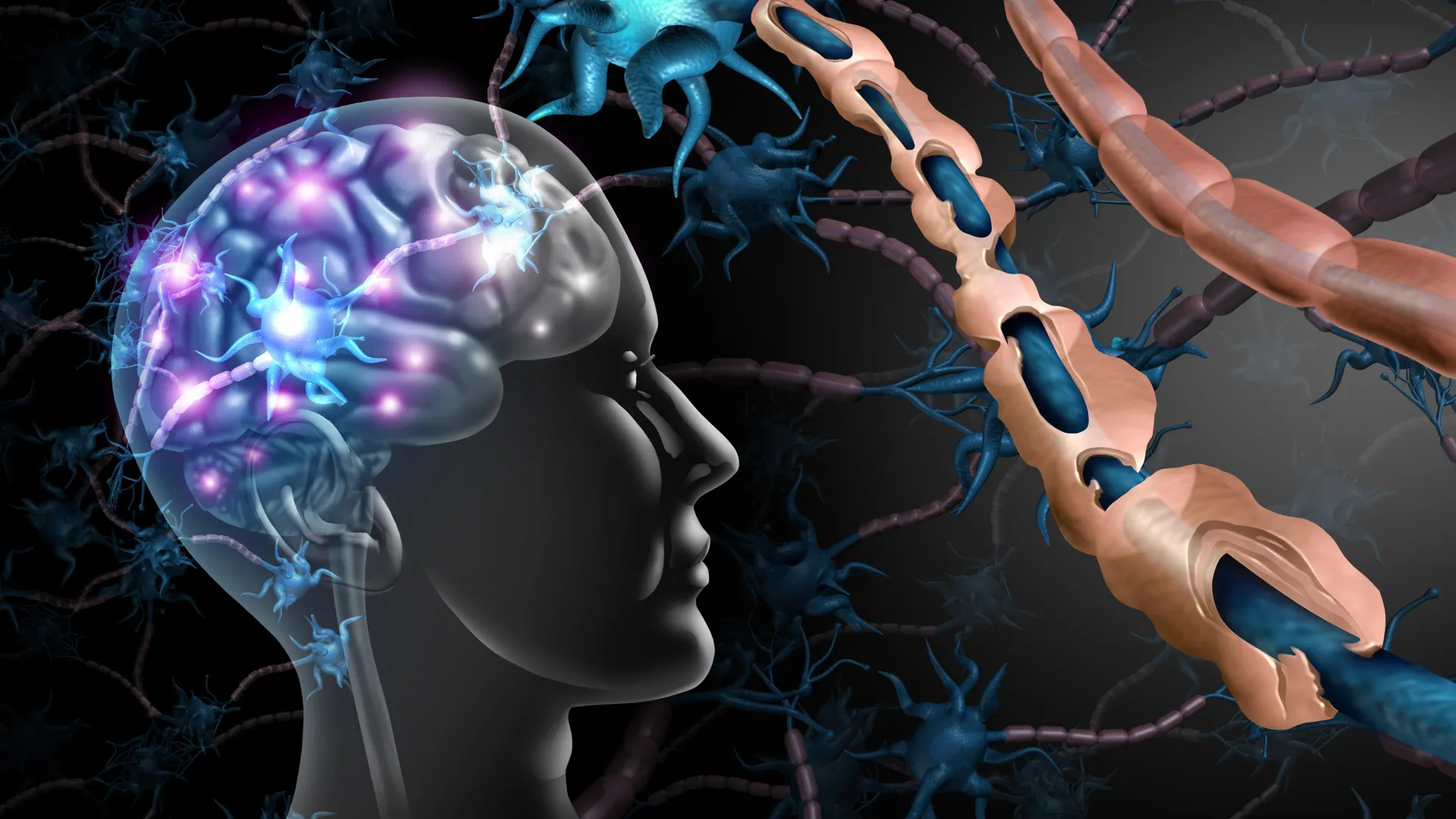
The human brain functions through a complex network of electrical signals. These signals travel along axons, which are long, thin nerve fibers. To ensure these signals move quickly and efficiently, axons are wrapped in myelin, a protective sheath produced by specialized cells called oligodendrocytes. This process is often compared to the plastic insulation on an electrical wire; without it, the signal can leak, slow down, or fail to reach its destination.
However, the study found that in the brains of those who experienced the most rapid cognitive decline, this insulation had become a liability. The tissue samples revealed a striking correlation: faster cognitive deterioration was linked to a reduction in the number of large-diameter nerve fibers and a simultaneous buildup of "unhealthy" or abnormal myelin.
Contrary to the belief that more myelin is always better, the researchers found that when oligodendrocytes become dysfunctional, they produce myelin that is disorganized or excessive in a way that interferes with axonal health. This abnormal myelin appears to contribute to the physical loss of the very nerve fibers it is supposed to protect. Crucially, these physical changes were specifically associated with the rate of cognitive decline over time, rather than the baseline intelligence the participants had exhibited earlier in life.
The NRF2 Protein: A Master Regulator in Decline
To pinpoint why oligodendrocytes fail with age, the research team focused on the molecular environment inside the cells. They discovered that individuals with the most significant cognitive impairment had markedly lower levels of a protein called NRF2 (Nuclear Factor Erythroid 2-Related Factor 2) within their oligodendrocytes.
NRF2 is a well-known "master regulator" of the body’s antioxidant response. It controls the expression of hundreds of genes that protect cells from oxidative stress, inflammation, and metabolic damage. In a healthy brain, NRF2 ensures that oligodendrocytes can withstand the rigors of aging and continue to maintain high-quality myelin. When NRF2 levels drop, the cells lose their defensive capabilities, leading to the production of the dysfunctional myelin observed in the LBC1936 tissue samples.
To confirm that the loss of NRF2 was a cause of cognitive decline rather than just a symptom, the researchers conducted controlled experiments using mouse models. By genetically reducing NRF2 activity specifically within the oligodendrocytes of aging mice, the team was able to replicate the human pathology. The mice developed the same pattern of excessive, unhealthy myelin and lost their large-diameter nerve fibers. Furthermore, these mice demonstrated a significant decrease in cognitive performance as they aged, mirroring the trends seen in the human cohort.
Potential for Therapeutic Intervention
One of the most significant implications of this study is the potential for immediate clinical relevance. Because the NRF2 pathway is already a known target in the treatment of other neurological diseases, the infrastructure for developing therapies already exists. For example, drugs that activate the NRF2 pathway, such as dimethyl fumarate, are currently approved by regulatory bodies like the FDA and EMA for the treatment of multiple sclerosis (MS).
In MS, the primary pathology involves the immune system attacking myelin. Treatments that boost NRF2 have been shown to help protect the nervous system and improve cognitive outcomes in MS patients. The Edinburgh study suggests that a similar approach could be used to treat the "normal" cognitive decline associated with aging. By pharmacologically boosting NRF2 activity in the elderly, it may be possible to stabilize oligodendrocyte function, maintain healthy myelin, and preserve the integrity of the brain’s white matter.
Veronique Miron, a lead researcher on the study and a Group Leader at the UK Dementia Research Institute, emphasized the urgency of these findings. With the global population of people aged 60 and over expected to double by 2050, the prevalence of cognitive decline and dementia is set to rise sharply. Currently, there are few effective treatments that can slow the loss of thinking abilities in the general aging population. Miron noted that the identification of the NRF2-oligodendrocyte axis provides a concrete strategy for developing new interventions to maintain cognitive health into late life.
Shifting the Paradigm of Brain Aging
The research fundamentally alters the scientific understanding of oligodendrocytes. For decades, these cells were characterized as "support cells," playing a secondary role to neurons. The work of Georgina Craig, the study’s first author, and her colleagues demonstrates that these cells are active participants in the aging process and can, under certain conditions, become drivers of pathology.
"This study has fundamentally shifted how we think about these brain cells in aging," Craig stated. "We have always considered oligodendrocytes as purely beneficial, yet here we surprisingly find that they can become dysfunctional and contribute to cognitive impairment."
This shift in perspective is expected to influence future research into various forms of dementia, including Alzheimer’s and vascular dementia. While the study focused on age-related cognitive decline in a general cohort, the breakdown of white matter is a common feature across many neurodegenerative conditions. By focusing on the health of the insulation and the cells that provide it, researchers may find a "common denominator" for cognitive preservation that transcends specific disease diagnoses.
Chronology of Discovery and Future Directions
The journey to this discovery began in 1947 with the initial testing of the Lothian children, but the specific investigation into the NRF2 pathway took years of integrated data analysis. The timeline of the research highlights the necessity of long-term funding and patient participation:
- 1936-1947: The birth and initial cognitive testing of the Lothian Birth Cohort.
- 2000s-2010s: Regular follow-up assessments of the cohort as they entered their 70s and 80s, including brain imaging and cognitive batteries.
- Post-2015: Detailed analysis of donated brain tissue and the identification of myelin abnormalities.
- 2020-2023: Mouse model experiments to isolate the role of NRF2 in oligodendrocytes.
- 2024: Publication of findings in Nature Medicine.
Looking ahead, the research team plans to investigate whether lifestyle factors or other environmental stressors influence the decline of NRF2 levels. They also aim to initiate clinical trials or pilot studies to determine if NRF2-boosting medications can safely be used in older adults without MS to slow the progression of cognitive aging.
The study was a massive undertaking involving the University of Edinburgh, the UKRI Medical Research Council, the Canadian Institutes of Health Research, and Northwestern University. It serves as a testament to the power of longitudinal studies and cross-disciplinary collaboration in solving the most complex puzzles of the human brain. As the scientific community digests these findings, the focus on the brain’s white matter and its "supportive" cells is likely to intensify, bringing the world one step closer to a future where cognitive decline is no longer an inevitable part of growing old.