Landmark Legal Settlement and Policy Implications
A central development in the NAD’s recent advocacy work is the successful resolution of a high-stakes litigation involving a deaf woman and her two 11-year-old twin daughters. The case, which centered on an encounter with law enforcement, resulted in a $1.2 million settlement. The incident occurred when an officer, masked during the interaction, failed to provide effective communication for the deaf mother and inappropriately relied on her young children to act as interpreters. The situation escalated, resulting in the mother’s arrest, an experience described by legal advocates as profoundly traumatic for the family.
Brittany Shrader, Director of Legal Services at the NAD, emphasized that this settlement serves as a critical warning to police departments across the United States. "It is our hope that this settlement will help spread the message to police departments around the country that they cannot rely on young children to interpret; they must hire and provide professional qualified interpreters," Shrader stated.
This case highlights a systemic issue within American law enforcement regarding the Americans with Disabilities Act (ADA). The ADA mandates that public entities provide effective communication for individuals with disabilities. Legal experts note that the reliance on minors for interpretation is not only a violation of civil rights but also creates significant risks for both the police and the deaf community, as children lack the training, impartiality, and linguistic proficiency required for legal and emergency settings. The NAD’s ability to secure a $1.2 million settlement suggests an increasing judicial recognition of the severe consequences of failing to provide qualified, professional interpreters in police interactions.
Strategic Educational Reform: The BEDE Initiative
Beyond its legal advocacy, the NAD is intensifying its focus on systemic educational reform through the "Blueprint on Excellence in Deaf Education" (BEDE). Dr. Marla Hatrak, an Educational Policy Consultant for the organization, is spearheading this initiative, which aims to overhaul national standards for deaf education.
The BEDE project is scheduled for a comprehensive presentation at the 2026 NAD Conference. The initiative is designed to address longstanding disparities in the academic outcomes of deaf and hard-of-hearing students. By establishing a unified "blueprint," the NAD intends to influence federal and state educational policy, shifting the focus toward a more equitable system that prioritizes linguistic access and cultural proficiency in the classroom. This initiative aligns with broader advocacy trends that emphasize the necessity of high-quality educational environments that cater specifically to the developmental needs of deaf students, rather than relying on generalized mainstream models.
Preparations for the 58th Biennial Conference
The organization is currently in the final stages of planning for its 58th biennial conference, a major event that serves as both a professional gathering and a policy-setting forum. With the event scheduled for this summer in San Francisco, logistical preparations are accelerating. According to Nancy Bloch, Assistant to the Interim CEO, the designated hotel room block has already reached 60% capacity, signaling strong attendance projections.
The conference serves as a critical junction for the deaf community. It is where the Council of Representatives convenes to set the organization’s priorities for the coming two years. Given the high volume of interest, the NAD has implemented a May 20 registration deadline to manage the influx of attendees. The event will feature a wide array of programming, including professional workshops, exhibits, and the formal business meetings that guide the organization’s trajectory.
Fostering the Next Generation of Leadership
The NAD’s Youth Programs have emerged as a cornerstone of the organization’s long-term strategy to build institutional sustainability. Claudia Giordano, Director of Youth Programs, outlined three primary initiatives designed to engage deaf youth: the Youth Leadership Camp (YLC), the Jr. NAD Pages program, and the biennial College Bowl.
The YLC is set to host 64 participants from across the country in the Pacific Northwest. This immersive experience is designed to foster leadership, teamwork, and cross-cultural communication skills. Complementing this, the Jr. NAD Pages program provides students aged 13 to 17 with direct exposure to the organizational mechanics of the NAD. By assisting in workshops and observing the Council of Representatives, these students gain firsthand experience in the democratic processes that govern the advocacy organization.
The College Bowl, meanwhile, serves as an academic competition that brings together students from various universities to test their knowledge and public speaking skills. Collectively, these programs are intended to cultivate a pipeline of future leaders who are well-versed in the history and current challenges facing the deaf community. By investing in youth, the NAD is addressing the need for intergenerational continuity in civil rights leadership.
Executive Transition and Operational Continuity
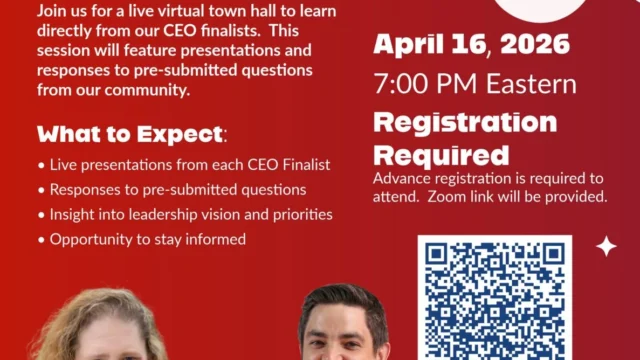
The organizational climate at the NAD is further defined by the ongoing transition in the CEO office. Dr. Bobbie Beth Scoggins, currently serving as the Interim CEO, has focused her tenure on ensuring operational stability while overseeing the search for a permanent successor.
"As your interim CEO, I help support and ensure that everything is going smoothly," Dr. Scoggins remarked, noting that her focus is divided between supporting the current staff, managing the complexities of the upcoming conference, and facilitating a seamless transition for the incoming leader. Dr. Scoggins is committed to remaining in a supportive capacity until July 31, providing the new CEO with the necessary context and institutional knowledge to hit the ground running.
This transition period occurs at a pivotal moment for the NAD. The organization is currently involved in several high-profile legal challenges, including an ongoing lawsuit against the White House regarding accessibility. The ability of the NAD to maintain momentum on these fronts, while simultaneously executing a massive national conference and internal leadership transition, reflects a robust operational framework.
Broader Impact and Implications
The combined efforts of the NAD—ranging from the million-dollar legal victory to the long-term investment in youth leadership—underscore a shift toward a more aggressive, multi-faceted advocacy model. The legal victory concerning police interactions is expected to set a standard for municipal liability, potentially forcing a nationwide re-evaluation of police training protocols.
Simultaneously, the focus on the BEDE initiative indicates that the NAD is positioning itself not just as a reactive legal entity, but as a proactive policy architect in the field of education. The confluence of these efforts suggests that the upcoming 2026 conference will be more than just a gathering; it will likely be a catalyst for new policy directives. As the organization prepares to welcome members to San Francisco, the themes of accountability, educational excellence, and youth empowerment remain the pillars of the NAD’s current strategic roadmap. The organization’s ability to successfully integrate these diverse initiatives will likely determine its influence on national disability rights policy for the remainder of the decade.