Chronology of the Safe Listening Initiative
The path to ArcTanGent’s designation as a Safe Listening Festival began well before the gates opened in late summer. The project served as a direct extension of a broader, year-long campaign by Tinnitus UK, which gained momentum during Tinnitus Week 2026. This period saw increased awareness regarding the prevalence of noise-induced hearing loss (NIHL) and tinnitus, particularly within high-decibel environments.
Following successful pilot conversations and preliminary outreach at the Download Festival earlier in the summer, the ManCAD research team identified ArcTanGent as the ideal environment to test the WHO guidelines. The choice was deliberate: the festival’s demographic consists of highly dedicated music enthusiasts who engage with complex, high-fidelity soundscapes. The implementation timeline involved several weeks of pre-festival planning, including rigorous sound system design consultations, followed by four days of active on-site monitoring and real-time data collection from August onwards.
Implementing the WHO Global Standard
The WHO Global Standard for Safe Listening at Venues and Events provides a comprehensive framework for mitigating the risks associated with high-volume audio. For the festival organizers, this required a multi-faceted operational overhaul. The primary technical measures included the continuous monitoring of sound levels across all four stages, ensuring that peak levels remained within safe thresholds while maintaining the aesthetic integrity of the performances.
Beyond technical sound management, the festival prioritized accessibility. To ensure that protection was not a barrier to participation, free foam earplugs were provided at stage barriers, ensuring that those closest to the sound sources were immediately equipped to mitigate potential damage. Additionally, high-fidelity, musician-grade earplugs were made available for purchase at the Metal For Good tent and various merchandise outlets. These measures were supported by specialized staff training conducted through the HELA (Hearing Loss Awareness) initiative, which provided festival personnel with the knowledge necessary to assist attendees and manage crowd safety with auditory health in mind.
Data and Observed Trends
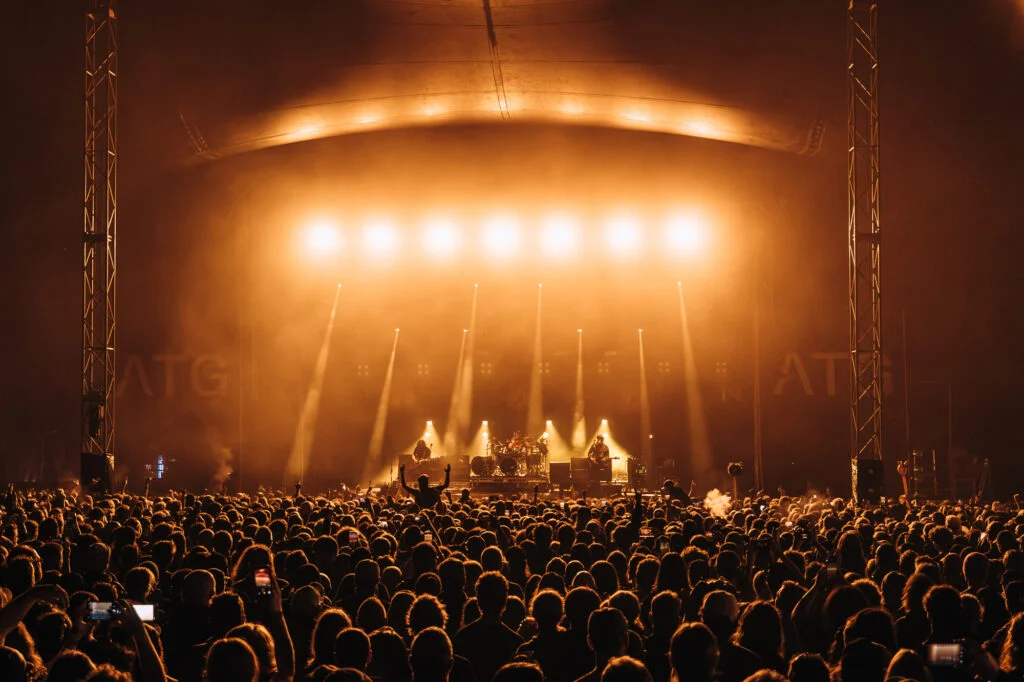
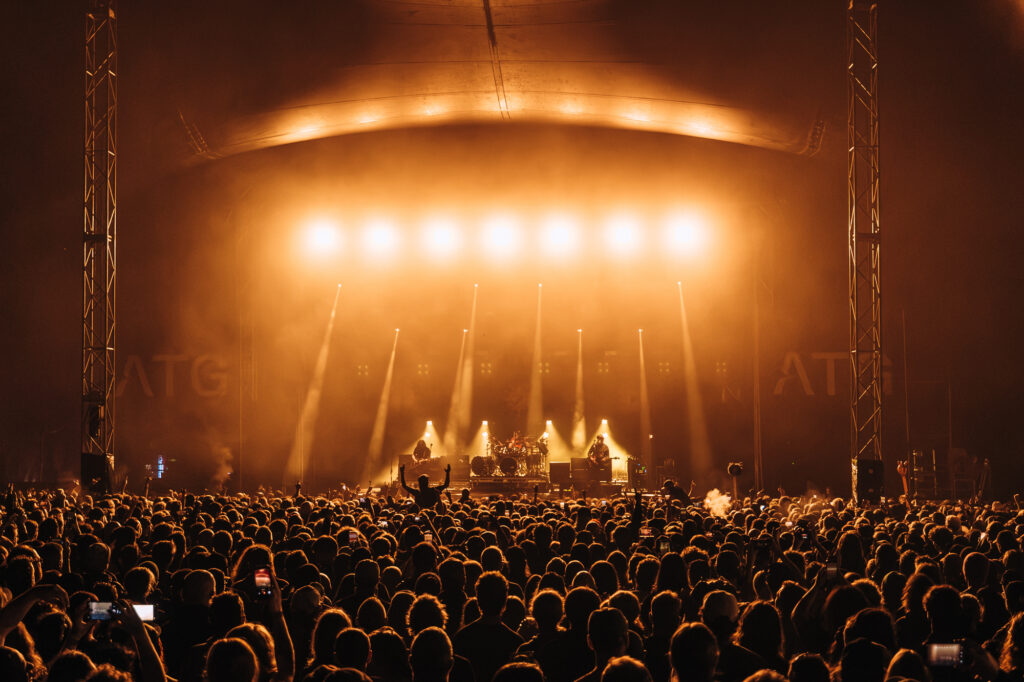
Preliminary observations at the event indicated a high level of compliance and awareness among the attendee base. Data collected by on-site researchers suggested that more than 50% of the audience utilized some form of hearing protection, a figure that skewed even higher as observers moved closer to the sound stages.
This behavior highlights a shifting culture within the extreme and experimental music scenes. Historically, the use of earplugs at live events was sometimes viewed as detrimental to the listening experience, characterized by the belief that it would muffle the sound or reduce the impact of the performance. However, modern high-fidelity protection has largely neutralized these concerns, providing flat-frequency attenuation that allows for clarity at lower decibel levels. The research conducted at ArcTanGent aimed to validate this shift, with feedback from attendees suggesting that the quality of sound—rather than the volume—was the primary driver of their enjoyment.
Official Perspectives and Expert Analysis
The collaboration between academia and the live music sector has been viewed by industry analysts as a vital step in modernizing event production. Dr. Samuel Couth, a lecturer at ManCAD, emphasized that the objective of the project was not to diminish the power of live music, but to ensure its sustainability.
"Live music is a cornerstone of our cultural identity," Dr. Couth noted during the event. "The challenge lies in ensuring that the environment is sustainable for the human ear. By putting the WHO standards into practice, we are demonstrating that safety and artistic expression are not mutually exclusive. Our goal is to provide empirical evidence that these measures are both practical for organizers and acceptable to the audience."
From the perspective of Tinnitus UK, the initiative serves as a proof-of-concept for the broader music industry. The organization argues that as the understanding of the long-term impacts of exposure to loud music grows, the responsibility for hearing health must be shared between the individual, the performer, and the venue operator.
Broader Implications for the Music Industry
The success of the ArcTanGent model carries significant implications for future event planning across the UK and beyond. The findings gathered by the ManCAD researchers—derived from interviews with sound engineers, touring artists, and festival staff—are expected to form the basis of a best-practice guide for future festivals.
The economic and logistical implications of these changes are noteworthy. Implementing sound level monitoring and staff training requires upfront investment, but the long-term benefits include reduced liability, improved reputation, and an enhanced experience for a more health-conscious audience. Furthermore, as international standards become more rigid, festivals that proactively adopt these measures are likely to be better positioned to comply with future regulatory requirements regarding noise exposure.
The broader challenge remains the normalization of hearing protection. While the ArcTanGent audience showed high levels of awareness, the industry at large still faces a significant task in educating the general public. The "safe listening" movement is currently transitioning from a niche concern for audiologists to a standard operational requirement for venue management.
Moving Toward a Sustainable Future
The integration of these safety standards at a festival known for its uncompromising, loud, and experimental lineup serves as a powerful testament to the viability of the WHO’s recommendations. By treating hearing health as an integral part of the production value, ArcTanGent has set a precedent that challenges the long-held assumption that louder is always better.
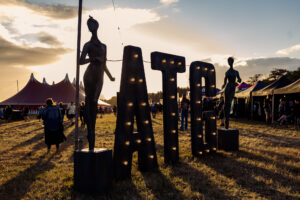
As the festival circuit continues to evolve, the lessons learned at this year’s event will likely influence how sound is managed in diverse settings, from indoor clubs to large-scale open-air festivals. The focus remains clear: to protect the auditory health of the next generation of music lovers without sacrificing the raw, immersive power of the live performance.
For the average concert-goer, the message is increasingly simple: the enjoyment of music is a lifelong pursuit, and the tools to preserve that experience are now more accessible and effective than ever. As the industry moves toward a new era of professional sound management, the act of packing earplugs is increasingly viewed not as a precaution against enjoyment, but as a commitment to the longevity of the musical experience itself. Future research will continue to assess the longitudinal impact of these interventions, but the immediate results from this year’s festival suggest that the music industry is ready to listen—and to protect—more effectively than ever before.