The Evolution of Accessibility: From Static Solutions to Dynamic Wearables
Historically, individuals with hearing loss have navigated a complex array of accessibility tools, each with its own set of advantages and limitations. Early solutions ranged from TTY devices for telephone communication to the advent of closed captions on television in the 1970s. In public spaces, technologies like Communication Access Realtime Translation (CART) and hearing loops have provided critical support. CART involves a stenographer transcribing spoken words into text displayed on screens, while hearing loops transmit audio directly to hearing aids and cochlear implants. More recently, Auracast, a new Bluetooth standard, promises broadcast audio directly to personal devices in public venues.
Despite these advancements, a significant gap in consistent, reliable, and personal communication access persists. CART services, while highly accurate, require dedicated personnel and equipment, making them impractical for spontaneous or smaller gatherings. Hearing loops and Auracast rely on venue installation and compatibility, which are far from universal. Many public spaces, from local theaters to smaller conference rooms, still lack adequate provisions, leaving individuals with hearing loss frequently marginalized or excluded from crucial information and social interaction. According to the World Health Organization, over 430 million people globally experience disabling hearing loss, underscoring the vast need for more comprehensive and flexible accessibility solutions.
Early iterations of captioning glasses, while pioneering, presented their own set of challenges. Users often reported issues such as noticeable latency between speech and text, heavy and uncomfortable frames, and poorly positioned text that could induce eye strain or make sustained use difficult. These initial hurdles often limited their practical application, particularly in one-on-one conversations where maintaining eye contact is paramount and glancing at a phone-based speech-to-text app might be simpler. However, continuous innovation in display technology, miniaturization, and real-time transcription algorithms has significantly improved the user experience, paving the way for more practical and comfortable devices.
RayNeo iO Smart Glasses: A Case Study in Emerging Technology
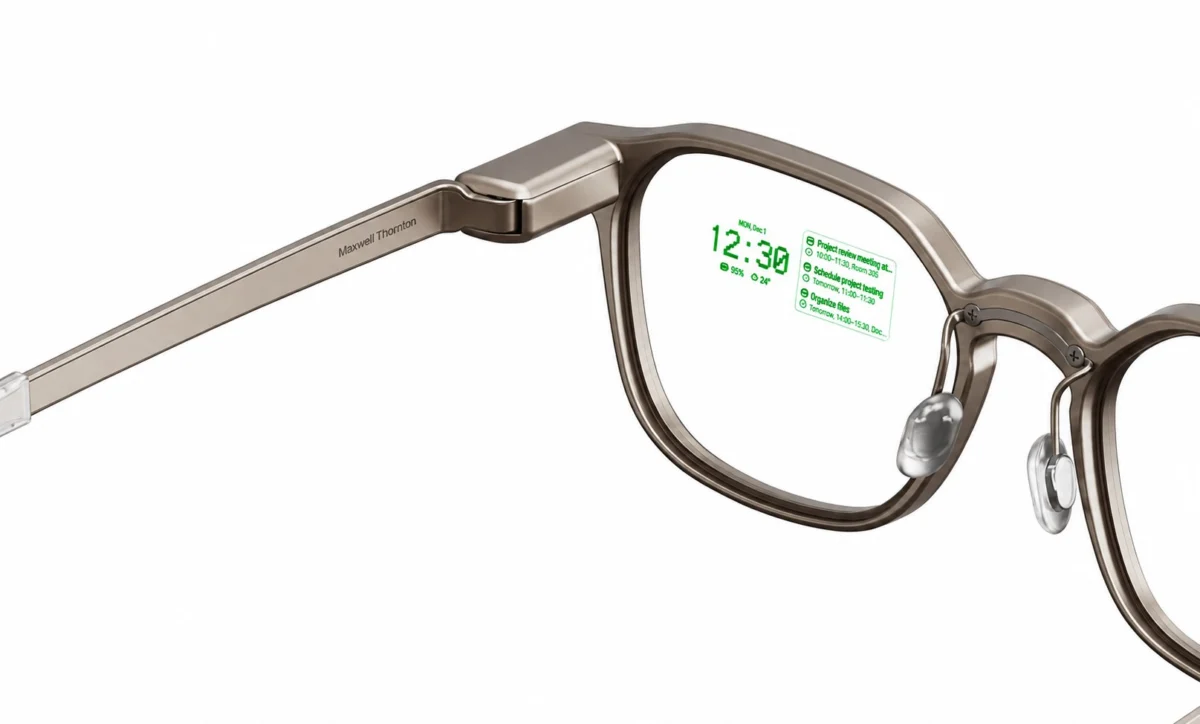
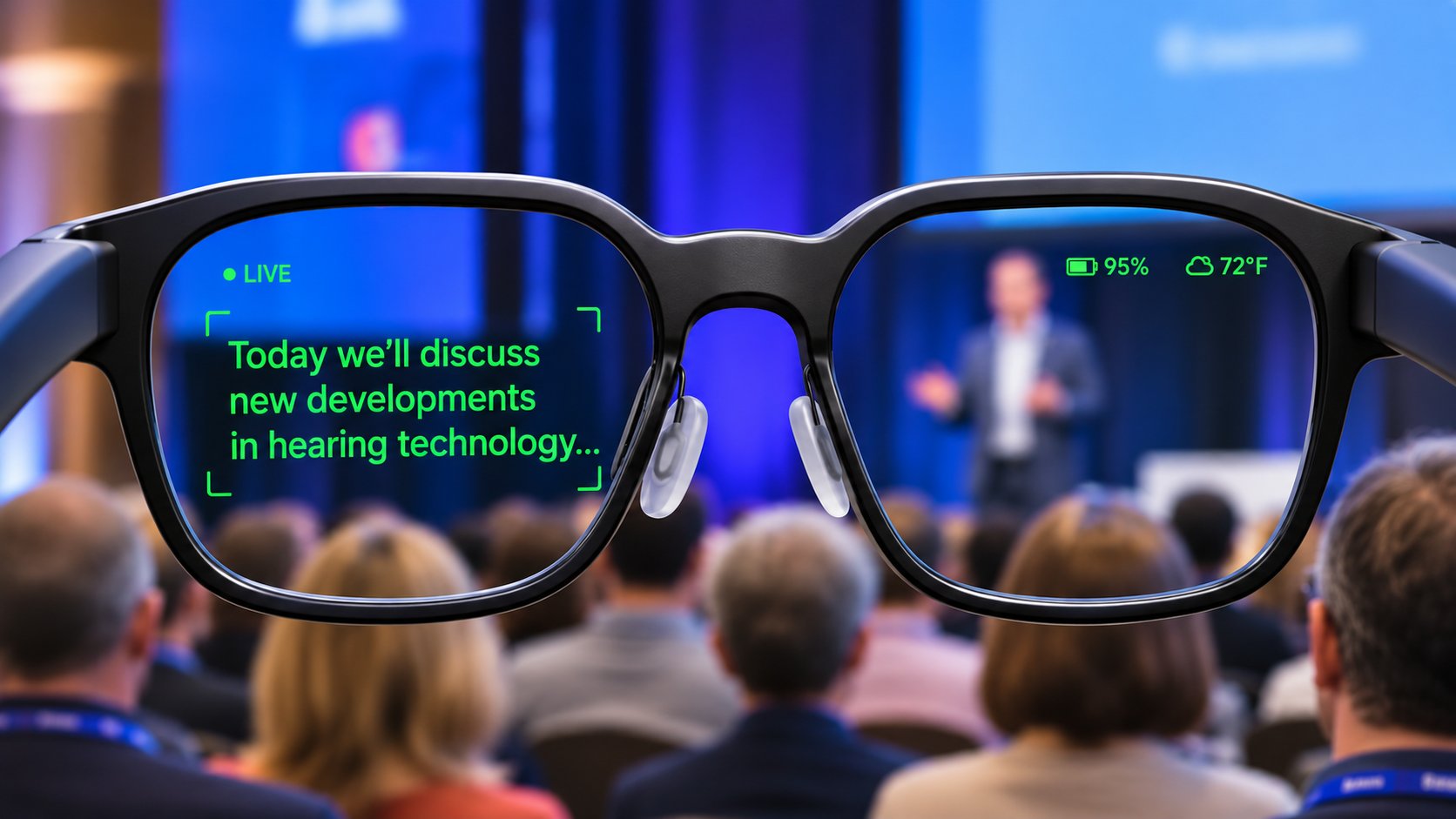
A recent evaluation of the RayNeo iO Smart Glasses highlights the rapid progress in this sector. This particular model, which resembles an ordinary pair of spectacles and weighs a mere 33 grams, integrates advanced features designed to enhance communication accessibility. The glasses project real-time captions as green text onto a transparent display within both lenses, with adjustable size and placement via a companion smartphone application. The device supports translation in 55 languages, boasts an impressive battery life of up to two days of typical use or six hours of continuous translation, and is Apple MFi certified. Notably, the absence of a camera addresses potential privacy concerns, positioning it as a dedicated accessibility tool rather than a general-purpose smart wearable. Beyond captioning, the RayNeo iO also offers features like a teleprompter, meeting notes, and an AI assistant, though these functionalities were not the primary focus of the recent testing.
The RayNeo iO is positioned at a price point of $499, or $549 when bundled with a charging case, with additional costs for prescription lenses and certain AI assistant integrations. While this represents a significant investment for many, promotions are periodically available, indicating a market strategy to broaden accessibility as technology matures and production scales.
Real-World Application: Testing the Waters at a Conference
To thoroughly assess the practical utility of these advanced captioning glasses, a series of real-world tests were conducted. One key experiment involved deploying the RayNeo iO glasses at the 2026 HLAA New York State Conference in October. This environment presented a unique testing ground because the conference itself was already meticulously accessible, featuring CART captioning on large screens, a hearing loop, and Auracast. This redundancy allowed for a direct comparison of the glasses’ performance against established, high-quality accessibility provisions.
The primary objectives of this test were to evaluate the glasses’ ability to keep pace with live speakers, assess the accuracy of transcription, and observe the legibility of captions in varying visual contexts, such as when speakers were presenting alongside projected slides. The results were largely positive: the glasses demonstrated commendable accuracy and responsiveness, effectively keeping up with the spoken dialogue. The controlled audio environment, where speakers typically used microphones, likely contributed to the high fidelity of the transcription.

However, the experiment also revealed nuanced challenges. While the glasses provided an effective "another option" in a fully accessible setting, their distinct advantage emerged when considering less-equipped scenarios. The visibility of the green text captions proved sensitive to background colors; bright white presentation slides, for instance, could wash out the text, making it harder to read, whereas darker backgrounds offered better contrast and legibility. This observation underscores the importance of display technology and user interface customization in diverse visual environments.
The conference test concluded with a clear implication: while not necessarily superior to comprehensive CART services in an ideal setting, the glasses fill a critical void in environments where such robust provisions are absent. For conferences lacking dedicated captioning or during individual talks without on-screen text, these glasses could be an indispensable tool, empowering attendees to follow presentations independently and seamlessly. The reviewer’s decision to integrate them into their "next conference" travel bag speaks volumes about their perceived utility.
Enhancing the Cinematic Experience: A Personal Revolution
Perhaps one of the most compelling applications for captioning glasses lies in public entertainment venues, particularly movie theaters. Most large cinemas offer some form of captioning device, ranging from individual seat-mounted displays to personal screens on flexible arms. While these devices can be effective when operational, their reliability is a persistent concern for the hearing loss community. Common complaints include devices running out of battery mid-film, losing connection to the theater’s system, or displaying captions that are out of sync with the movie. These failures are not merely inconvenient; they are profoundly disruptive, forcing users to choose between missing crucial dialogue or interrupting their experience to seek a replacement device, often with no guarantee of improved performance.
The RayNeo iO glasses were put to the test in a movie theater setting, and the results were transformative. The ability to "bring your own" accessibility device eliminated the anxieties associated with theater-provided equipment. Users could ensure the glasses were fully charged, control the caption size and placement via their personal phone app, and rely on the glasses’ integrated microphones to capture the movie’s dialogue directly from the theater’s sound system. This autonomy offered a seamless and uninterrupted viewing experience, a stark contrast to the frequent frustrations of traditional cinema captioning. The positive reactions from hearing friends present during the test further underscored the efficacy and unobtrusiveness of the technology. The resounding "I would do it again" from the reviewer highlights the significant improvement in personal agency and reliability these glasses provide in a common public setting.
Broader Implications and the Future of Accessibility

The emergence and refinement of captioning smart glasses like the RayNeo iO signal a crucial paradigm shift in accessibility. This technology represents a move from passive, venue-dependent provisions to active, user-controlled solutions. While it is imperative that venues continue to uphold their responsibility to provide comprehensive accessibility – including CART, hearing loops, and Auracast – personal captioning devices offer an invaluable layer of backup and empowerment.
Market Growth and Technological Trajectory: The smart glasses market, currently valued at several billion dollars, is projected to experience exponential growth, driven by advancements in augmented reality (AR), artificial intelligence (AI), and miniaturization. Accessibility features are increasingly recognized as a key application and differentiator within this burgeoning market. As AI-powered real-time transcription continues to improve in speed and accuracy, and as hardware becomes more discreet and affordable, the adoption of captioning glasses is expected to rise. Industry analysts predict that such devices will become increasingly mainstream, moving from niche medical aids to widely accepted personal communication tools.
Empowerment and Inclusion: For individuals with hearing loss, these glasses foster a sense of independence and inclusion. The ability to bring reliable, personalized access to any environment – be it a casual conversation, a business meeting, a lecture, or a night at the movies – significantly reduces communication barriers. This empowerment can lead to greater participation in social, professional, and educational settings, ultimately enhancing quality of life. Accessibility advocates view these advancements as critical steps towards a more inclusive society, where communication access is not a privilege but a fundamental right supported by readily available personal technology. "These glasses represent a significant step towards personalizing accessibility, giving individuals greater control over their communication needs and reducing reliance on often inconsistent external provisions," states Sarah Chen, a spokesperson for Global Hearing Access Initiative.
Challenges and Considerations: Despite the promising trajectory, challenges remain. The current price point of around $500 for devices like the RayNeo iO, plus additional costs for prescription lenses, makes them inaccessible for a significant portion of the population. Efforts to reduce manufacturing costs and explore insurance coverage or government subsidies will be crucial for wider adoption. Furthermore, while accuracy is improving, real-time transcription still grapples with nuances like accents, rapid speech, and complex terminology, indicating continued need for AI refinement. The battery life, while good, may still be a concern for extended, multi-day events without convenient charging options.
The Hybrid Model of Accessibility: The future of accessibility will likely involve a hybrid model, where robust public infrastructure (CART, hearing loops, Auracast) is complemented by advanced personal devices. This approach ensures maximum coverage and flexibility, catering to diverse needs and situations. "While not a replacement for medical intervention or traditional hearing aids, these devices empower users in social and public settings where other solutions fall short, providing a vital bridge in communication," comments Dr. Evelyn Reed, a leading audiologist specializing in assistive technologies.
In conclusion, captioning smart glasses are rapidly moving from a niche innovation to a potentially transformative accessibility solution. The RayNeo iO Smart Glasses demonstrate a compelling blend of discreet design, advanced real-time transcription, and user-centric features that address long-standing frustrations faced by the hearing loss community. While not a panacea, their ability to provide consistent, personal, and reliable communication access in a wide array of public settings marks a significant leap forward, solidifying their place as an indispensable tool in the pursuit of a more inclusive world. The journey towards perfectly seamless communication continues, but with devices like these, the path forward is clearer and more empowering than ever before.