The publication, formally titled "Updated Guidelines for Best Practice in the Audiological Management of Adults with Severe and Profound Hearing Loss," represents the collective wisdom of an 18-member international group. This diverse panel comprised audiologists, hearing scientists, and other specialists, ensuring a multidisciplinary perspective on the challenges and solutions associated with significant hearing impairment. Building upon the foundational 2020 recommendations, these updated guidelines specifically target adults aged 19 and older diagnosed with severe or profound sensorineural hearing loss in their better ear. These classifications adhere to World Health Organization (WHO) definitions, corresponding to hearing thresholds of 61–80 dB HL for severe loss and 81 dB HL or greater for profound loss.
The Evolving Landscape of Hearing Healthcare: Why an Update Was Necessary
The decision to update the 2020 guidelines stemmed from a recognition of the dynamic nature of hearing science and technology. As articulated by the authors, the rapid pace of scientific discovery, the continuous evolution of hearing technologies, and the ever-changing needs of patients necessitated a refreshed perspective. While clinical protocols for mild-to-moderate hearing loss are largely standardized and effective, individuals grappling with severe and profound hearing loss often present with a unique set of challenges that demand specialized assessment, advanced amplification strategies, tailored counseling, and intensive rehabilitation.
These patients typically contend with substantially diminished residual hearing, compressed dynamic ranges, impaired frequency resolution, and significantly limited speech understanding, even when sounds are amplified to audible levels. Consequently, merely increasing amplification often proves insufficient to adequately address their profound communication difficulties. The original 2020 guidelines provided a crucial baseline, but the subsequent four years witnessed an explosion of new evidence and technological innovations that could not be overlooked. The updated recommendations meticulously incorporate evidence published through the first quarter of 2026, ensuring the guidance is at the forefront of contemporary practice. This includes expanding the original advice into several areas that have gained considerable clinical importance, such as cochlear implantation, the burgeoning field of remote hearing aid services, the revolutionary Auracast broadcast audio standard, advanced electrophysiological assessment techniques, and the promising horizon of emerging genetic therapies for hearing loss.
It is noteworthy that research specifically focused on adults with severe and profound hearing loss remains relatively limited compared to studies on less severe impairments. Acknowledging this gap, the guidelines judiciously combine the available robust scientific evidence with expert consensus where direct research is still in its nascent stages. This balanced approach ensures that practical, actionable guidance is provided even in areas where empirical data is still accumulating.
Key Enhancements and Expanded Recommendations: A Detailed Overview

The 2026 guidelines introduce several critical changes and expansions, reflecting a more comprehensive and patient-centered approach to managing severe and profound hearing loss.
More Comprehensive Audiological Assessment: Beyond Basic Thresholds
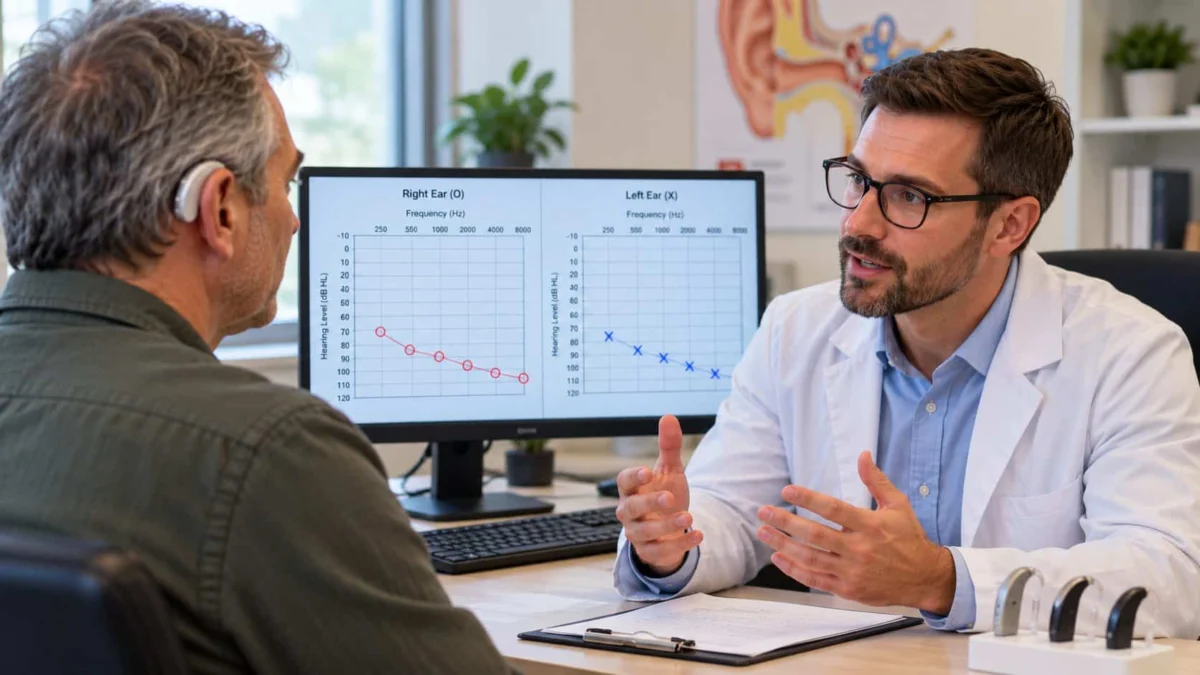
A central tenet of the updated guidelines is an amplified emphasis on individualized assessment. This goes beyond simply measuring auditory function, delving into the patient’s broader communication needs, lifestyle, and psychosocial context. While behavioral audiometry and speech recognition testing remain foundational, the guidance now extensively discusses the strategic application of objective measures. These include otoacoustic emissions, electrocochleography, auditory steady-state responses (ASSR), and cortical auditory evoked potentials.
Specifically, for patients whose behavioral thresholds are difficult to establish reliably—a common scenario in severe-to-profounds—the authors strongly advocate for considering ASSR. This is recommended as a more robust alternative to relying exclusively on auditory brainstem response (ABR) testing, particularly when striving for accurate threshold estimation in the most challenging hearing ranges. Moreover, the guidelines underscore the importance of assessing a patient’s communication goals, psychosocial concerns, and co-occurring factors such as cognition, vision, dexterity, and general health. This holistic evaluation is deemed essential for developing truly effective and personalized treatment plans.
Refined Hearing Aid Fitting and Verification: Maximizing Residual Hearing
The revised guidance rigorously reinforces the critical importance of precisely prescribed and meticulously verified amplification. This is particularly crucial given the limited residual dynamic range and elevated risk of distortion frequently encountered by patients with severe and profound hearing loss. Key recommendations include the judicious use of multichannel wide-dynamic range compression, appropriate output limiting to prevent discomfort and further damage, the use of custom earmolds for optimal acoustic seal and retention, and objective verification using probe microphone or coupler measurements to ensure prescribed targets are met.
A significant addition concerns frequency lowering technology. The authors recommend initially disabling this feature, activating it only when clinically indicated and then employing validated fitting procedures with the minimum effective strength. This cautious approach acknowledges the potential benefits but also the perceptual trade-offs associated with frequency lowering. Furthermore, the updated document broadens its discussion on music listening, acknowledging that hearing aid settings optimized for speech intelligibility may not necessarily deliver satisfactory music perception. This highlights the growing recognition of quality of life aspects beyond mere communication.
The Growing Role of Cochlear Implantation and Bimodal Hearing
Cochlear implantation (CI) receives substantially expanded attention in the 2026 guidelines, reflecting its increasing prevalence and effectiveness. The document delves into detailed aspects of candidacy assessment, the compelling evidence for its clinical effectiveness, and the synergistic benefits of combining a cochlear implant in one ear with contralateral acoustic amplification (bimodal hearing). The recommendations firmly underscore the importance of introducing and discussing cochlear implantation as an integral component of comprehensive treatment planning from an early stage, rather than relegating it as a last resort when conventional amplification has reached its limits. This proactive approach aims to maximize patient outcomes by facilitating timely access to this transformative technology.
The guidance also emphatically recognizes the paramount importance of individualized decision-making in CI. This includes thoroughly considering each patient’s unique communication goals, personal preferences, and realistic expectations. The conversation surrounding cochlear implantation is framed as a shared decision-making process between the clinician and the patient, empowering individuals to make informed choices aligned with their life aspirations.
Integrating Modern Technologies: Auracast, Assistive Devices, and Remote Care
One of the most notable and forward-looking additions to the guidelines is a dedicated discussion of Auracast broadcast audio. This groundbreaking technology, leveraging Bluetooth LE Audio, holds immense potential for democratizing access to high-quality sound in public environments, from airports and conference centers to theaters and places of worship. The guidelines explore its potential role in significantly improving sound access for individuals with hearing loss.

Beyond Auracast, the guidelines comprehensively address remote microphone systems, a wide array of assistive listening technologies (ALDs), mobile applications, and alerting devices as essential components of a holistic hearing rehabilitation plan. The document also provides expanded consideration for remote hearing aid fitting and follow-up services. While acknowledging the immense convenience and accessibility offered by telehealth, it meticulously outlines clinical limitations, essential accessibility requirements, safety protocols, and the additional challenges inherent in managing severe and profound hearing loss remotely, ensuring that quality of care is not compromised.
Beyond Technology: Accessibility, Sign Language, and Emerging Therapies
The 2026 edition broadens its scope to include expanded recommendations for supporting adults who utilize sign language. This section emphasizes the critical importance of culturally responsive care, recognizing the diversity of communication preferences and goals within the hearing loss community. Accessibility recommendations extend to interpreter services, visual communication tools, comprehensive staff training, and practical modifications to clinical environments to ensure inclusivity.
Crucially, the guidelines also introduce a forward-looking discussion on genetic hearing loss and the rapidly advancing field of emerging gene therapies. This reflects the burgeoning research interest in treatments that hold the promise of addressing certain underlying causes of hearing loss at a molecular level. These groundbreaking developments are presented within the context of evolving clinical research, clearly distinguishing them from established treatment alternatives for the broader adult population. This cautious yet optimistic approach acknowledges the potential future impact of these therapies while maintaining a focus on currently validated interventions.
Implications for Hearing Care Professionals: Shaping Future Practice
Beyond its comprehensive updated recommendations, the publication is designed as a practical resource for clinicians. It includes meticulously compiled evidence tables, actionable practical toolkits, and detailed clinical checklists. These resources are specifically intended to empower professionals to evaluate their current practices, identify areas for enhancement, and seamlessly integrate the new guidelines into their daily routines.
A central, unifying message permeating the entire document is that the successful management of severe and profound hearing loss transcends the mere provision of appropriately fitted hearing aids. Truly comprehensive care, as championed by these guidelines, necessitates a multifaceted approach. This often involves the strategic integration of advanced assistive technologies, thorough cochlear implant evaluation, the development of robust communication strategies, essential psychosocial support, and ongoing, tailored rehabilitation programs.
For clinicians globally, these updated guidelines offer an invaluable opportunity to critically review existing assessment and treatment protocols. By aligning their practices with the latest evidence and expert consensus, particularly as new technologies and therapeutic approaches continue to expand the spectrum of options available to patients, audiologists can elevate the standard of care. The document serves not only as a benchmark for excellence but also as a catalyst for continuous professional development, ultimately enhancing the quality of life for millions of adults living with severe and profound hearing loss.
Reference: Turton L, Timmer BHB, Hockley NS, et al. Updated Guidelines for Best Practice in the Audiological Management of Adults with Severe and Profound Hearing Loss. Seminars in Hearing. 2026;47:175–276. Published online October 26, 2026. https://doi.org/10.1055/s-0046-1827039