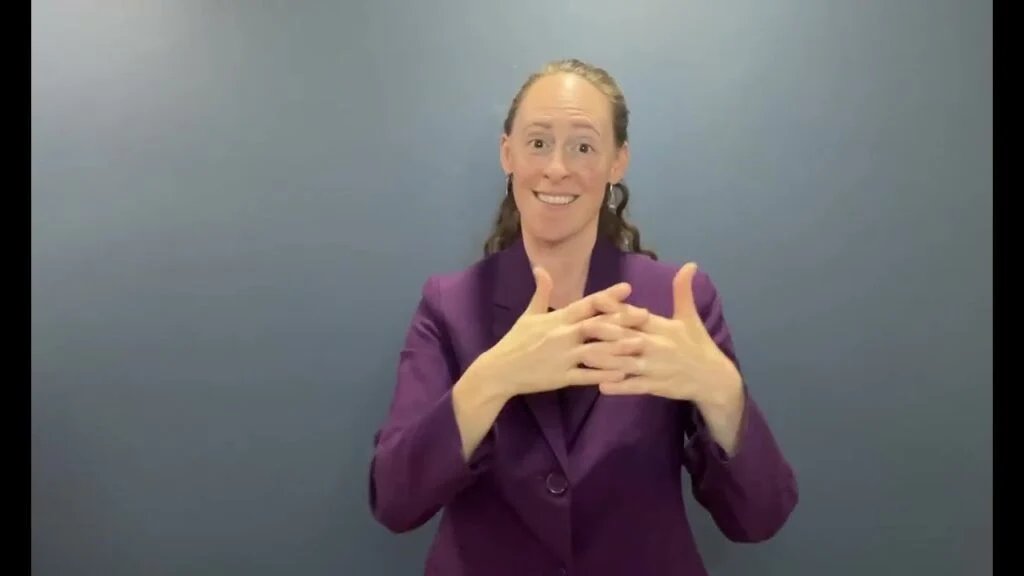
At the heart of the litigation is the question of whether the executive branch is legally obligated to provide real-time, visual access to information for millions of citizens who rely on ASL as their primary language. This hearing follows a pivotal November 2025 ruling by Judge Amir Ali, who ordered the White House to reinstate ASL interpreters for all publicly announced briefings—a service that had been abruptly discontinued in January 2025.
A Chronology of the Legal Dispute
The current legal confrontation is not an isolated incident but rather the latest chapter in a long-standing effort to secure consistent government accessibility. The timeline of this specific case, which began in mid-2025, reflects the broader challenges faced by disability rights advocates in ensuring that federal communications remain inclusive.
- January 2025: The White House administration discontinues the long-standing practice of providing on-camera ASL interpretation for press briefings, citing internal policy shifts.
- May 28, 2025: The National Association of the Deaf and Derrick Ford file a formal lawsuit against the administration, asserting that the removal of interpreters constitutes a violation of federal civil rights protections.
- November 2025: Judge Amir Ali rules in favor of the plaintiffs, issuing an injunction that compels the administration to immediately reinstate ASL interpreters for all publicly announced press briefings conducted by the President or the White House Press Secretary.
- Late 2025/Early 2026: The administration formally appeals Judge Ali’s ruling, moving the case to the U.S. Court of Appeals for the D.C. Circuit.
- October 6, 2026: Scheduled oral argument before the D.C. Circuit to determine the future of ASL accessibility in the White House.
This case draws significant weight from the legal precedent established in the 2020 landmark litigation, National Association of the Deaf v. Trump. In that instance, a federal court ruled that the White House was required to provide ASL interpretation during COVID-19 briefings, recognizing that in a national emergency, equal access to information is not merely a convenience but a life-or-death necessity. The plaintiffs argue that the same logic applies to all official government communication, regardless of whether the nation is in the midst of a pandemic.
The Scope of the Disability Gap
The impact of this case extends to a significant portion of the American population. According to data from the National Institute on Deafness and Other Communication Disorders (NIDCD), approximately 15 percent of American adults (37.5 million) report some degree of hearing loss. While not all individuals with hearing loss use ASL, a substantial number within the Deaf community consider ASL their primary language.
For these individuals, written transcripts or automated captioning—often proposed as "equivalent alternatives" by government agencies—frequently fall short. Automated captioning services, which rely on speech-to-text algorithms, often suffer from high error rates, especially during technical discussions, overlapping dialogue, or rapid-fire press questioning. ASL, by contrast, provides a nuanced, accurate, and real-time translation that captures the full context, tone, and intent of the speaker, ensuring that the Deaf community receives information with the same immediacy as the hearing public.
Legal Perspectives and Institutional Responses
The administration’s decision to appeal the injunction suggests a fundamental disagreement over the reach of federal statutes like the Rehabilitation Act of 1973, which prohibits discrimination on the basis of disability in programs conducted by federal agencies. While the White House has yet to issue a detailed public statement regarding their specific legal arguments for the appeal, observers suggest they may be testing the boundaries of judicial authority over executive branch communication protocols.
Conversely, the NAD has remained steadfast. Nicholas Kiego, Chief Executive Officer of the NAD, has characterized the case as a fundamental litmus test for equality. "This case is about whether Deaf and hard of hearing Americans can receive information from the White House at the same time as everyone else," Kiego stated. The organization maintains that because the White House press briefing room serves as the primary conduit for information between the President and the American people, the exclusion of ASL interpreters effectively disenfranchises a segment of the electorate.
The Role of the NAD Law and Advocacy Center
The litigation is being spearheaded by the NAD’s Law and Advocacy Center (LAC), which has served as the vanguard for disability rights in the United States since its inception. The LAC specializes in impact litigation—legal cases chosen not only for the immediate relief they provide to the plaintiffs but for their potential to set national precedents that force systemic change.
The LAC’s efforts are supported by a diverse base of members and donors. Because systemic discrimination often requires protracted legal battles that span years, the center relies heavily on public contributions to maintain its operations. As the October 2026 hearing approaches, the organization has intensified its outreach, encouraging members of the public to attend the proceedings to witness the judicial process firsthand.
Broader Implications for Federal Accessibility
The outcome of the October 6 hearing will have far-reaching consequences for how federal agencies handle accessibility in the digital age. If the Court of Appeals upholds Judge Ali’s ruling, it will reinforce the principle that visual access via ASL is a mandatory requirement for federal communications, potentially discouraging future administrations from scaling back these services for budgetary or logistical reasons.
Conversely, a ruling in favor of the administration could weaken the protections established by National Association of the Deaf v. Trump, potentially creating a "patchwork" of accessibility where federal agencies are permitted to decide on a case-by-case basis whether or not to provide sign language services. This would force advocacy groups to return to the courtroom every time a new administration chooses to deprioritize accessibility.
Public Interest and Transparency
The court proceedings on October 6 are open to the public, a transparency measure that the NAD has highlighted as vital. Given the security protocols at the U.S. Court of Appeals for the D.C. Circuit, the organization has advised attendees to arrive well in advance to account for mandatory security screenings. By inviting the public to attend, the NAD aims to ensure that the proceedings—and the rights of the Deaf community—remain in the spotlight.
As the legal teams finalize their arguments, the case serves as a stark reminder of the fragile nature of civil rights. The battle over a single interpreter in a press room reflects a much larger, ongoing dialogue about what it means to be an inclusive democracy. Whether the judiciary will solidify this right to access or introduce new hurdles remains to be seen, but the outcome will undoubtedly shape the standards of government transparency for years to come.
For those interested in the proceedings or seeking to support the ongoing legal efforts, the NAD continues to provide updates through its official channels. Media inquiries regarding the upcoming hearing or the broader legal strategy of the LAC may be directed to Brittany Shrader, Director of Legal Services at the National Association of the Deaf. As the date approaches, the eyes of the disability rights community will be firmly fixed on the D.C. Circuit, where the principles of equality and information access will once again be put to the test.