Bridging the Gap Between Guidance and Execution
In the chaotic environment of a chemical leak or industrial accident, first responders must balance speed with extreme precision. Traditionally, incident commanders have relied on the Emergency Response Guidebook (ERG)—a manual that provides essential protocols for identifying hazards and establishing safety perimeters. However, the ERG is a static document. Translating its generalized advice into actionable, site-specific safety zones has historically required manual calculations, which are prone to human error and time delays.

SAFER Response bridges this gap by digitizing the ERG and overlaying its recommendations onto a dynamic, visual map. When a release occurs, the software generates a plume model that predicts the direction and dispersion of the hazard based on live weather data. This allows commanders to visualize, in real-time, which areas are at risk and where evacuation orders or shelter-in-place mandates are most critical. By viewing the hazard alongside the digital guidance, responders can immediately identify the necessary isolation distances and the specific protective equipment required for entry teams.
Technical Integration and Data Connectivity
The efficacy of any decision-support platform rests on the quality of its inputs. Industrial Scientific has designed SAFER Response to function as a central hub for environmental intelligence, drawing from a variety of hardware sensors. The system is fully compatible with the company’s Ventis Pro5 personal monitors and Radius BZ1 area monitors. These devices, which are already standard equipment for many industrial safety teams, transmit real-time gas detection data directly to the software, allowing commanders to see current concentration levels at various points of the incident site.
This connectivity ensures that the plume model is not merely a theoretical prediction but a data-driven representation of the actual conditions on the ground. For organizations with unique requirements, the platform offers flexible integration options, allowing for the addition of third-party weather feeds or customized environmental monitoring sensors as operational needs evolve. This modularity is a critical feature for large-scale industrial facilities that may require localized weather stations to account for microclimates within a complex plant environment.

Historical Context and the Evolution of Hazmat Response
The development of SAFER Response arrives at a time when the demand for sophisticated industrial safety tools is reaching an all-time high. According to data from the U.S. Environmental Protection Agency (EPA) and the Department of Transportation’s Pipeline and Hazardous Materials Safety Administration (PHMSA), thousands of chemical incidents are reported annually across the United States, ranging from minor pipeline leaks to major industrial explosions.
Historically, the response to these incidents has evolved from a reliance on manual paper-based logs to the use of basic computer-aided management of emergency operations (CAMEO) tools. While CAMEO remains a staple in the industry, the shift toward cloud-connected, real-time analytics represents the next generation of public and industrial safety. The transition is driven by the need for faster decision-making cycles. When a hazardous gas is released, the window of time to protect the public and minimize worker exposure is often measured in minutes, not hours.
Training and Operational Readiness
One of the most significant advantages of the SAFER Response platform is its utility outside of active emergency scenarios. Emergency management experts have long emphasized that the effectiveness of a response is determined long before an alarm is sounded. The software provides a sandbox environment where teams can conduct virtual drills and training exercises.

During these simulations, agencies can model various "what-if" scenarios, such as a chlorine leak during an inversion or a flammable gas release in high-wind conditions. By practicing the use of the software during training, responders gain the muscle memory required to operate the platform efficiently under stress. This capability transforms the software from a simple utility into an institutional training tool, helping departments maintain readiness and refine their emergency response plans without the need for costly and disruptive full-scale field deployments.
Implications for Public and Worker Safety
The implementation of advanced plume modeling software carries profound implications for occupational health and safety. The primary goal of any hazmat response is to minimize exposure to toxic or combustible substances. By providing an accurate visual representation of a release, SAFER Response enables incident commanders to establish more accurate "hot," "warm," and "cold" zones.
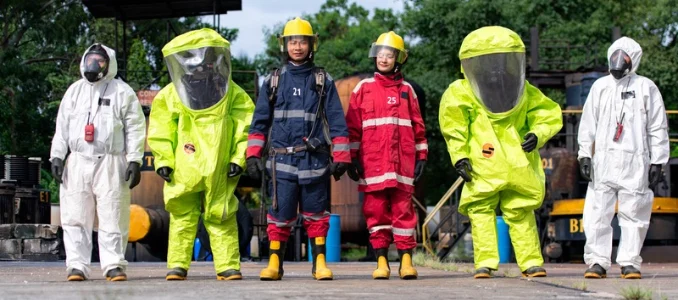
Traditional perimeter estimation often errs on the side of extreme caution, which can result in unnecessarily large evacuations or the disruption of critical infrastructure. Conversely, underestimating the risk can lead to preventable injuries. By using data-driven modeling, agencies can optimize their resources, ensuring that evacuations are targeted and that rescue teams are deployed with the correct level of personal protective equipment (PPE).

Furthermore, the integration of personal and area monitoring data creates a closed-loop system. If the concentration of a gas changes, the software updates the model, alerting command staff to adjust their safety perimeters dynamically. This level of responsiveness is a significant advancement over static perimeter markers that may remain unchanged for hours, even as atmospheric conditions shift.
Strategic Analysis: The Future of Emergency Management
As the industrial sector continues to embrace the Internet of Things (IoT) and artificial intelligence, the role of software in safety management will only become more centralized. Industry analysts suggest that platforms like SAFER Response represent a shift toward "predictive safety." Instead of merely responding to an incident as it happens, agencies are moving toward a framework where data streams from connected sensors allow for the early detection of trends—such as a slow, creeping leak that could culminate in an explosive event if left unchecked.
However, the adoption of such technology is not without its challenges. Agencies must invest in the necessary infrastructure, including reliable data connectivity and ongoing training for staff. Furthermore, as these systems become more integrated, the cybersecurity of the data streams becomes a new priority for industrial safety managers. The ability to trust the data—ensuring that sensor readings are accurate and the weather models are calibrated—is paramount.

The release of SAFER Response signals that Industrial Scientific is positioning itself at the forefront of this digital safety evolution. By standardizing the way that hazardous incidents are visualized and communicated, the company is attempting to create a common operating picture for first responders. In an environment where every second counts, the ability to synthesize complex data into a clear, actionable map is perhaps the most valuable tool an emergency manager can possess.
Looking Forward
As emergency agencies across the country evaluate their technological requirements for the coming decade, the focus will undoubtedly remain on speed, accuracy, and interoperability. The success of platforms like SAFER Response will be measured by their ability to integrate seamlessly into existing workflows while providing verifiable improvements in safety outcomes.
For the fire service and industrial safety professionals who operate on the front lines, the promise of this technology is simple: a clearer view of the invisible dangers they face. Whether the application is a routine drill or a life-critical emergency, the capacity to anticipate the path of a hazard is a fundamental advancement in the ongoing mission to protect life, property, and the environment. As the software gains traction, it will likely serve as a benchmark for future innovations in the field of hazardous materials management, marking a definitive step forward in the technological support available to those who protect our communities.