The Origins of a Communicative Shift
The catalyst for VOZ SOS CAAPAZ originated in 2025 from a critical self-reflection by practitioners regarding the limitations of traditional speech therapy. Historically, clinical interventions for individuals with complex communication needs have often focused heavily on speech acquisition, frequently neglecting the diverse, multimodal ways in which people interact with their environments.
For decades, the standard for AAC intervention has been the individual model: one therapist, one patient, and a limited weekly schedule. However, professionals in the field, including Ordóñez, began to question the efficacy of this isolation. Key research indicates that communication is fundamentally a social act that requires a dynamic, neuroaffirmative environment to flourish. The project was conceived as an answer to several fundamental questions: Are traditional therapies inherently biased toward vocal speech? Is once-a-week therapy sufficient for true communicative competence? And, most importantly, are AAC users being given adequate opportunities to interact with peers who utilize similar technologies?
A Timeline of Development
The movement toward community-based AAC in Rionegro, Antioquia, gained momentum through three pivotal events between 2024 and 2026.
In 2024, the "CAAmigos Angelman" program, led by Claudia Marimón, introduced a virtual, evidence-based model that emphasized comprehensive literacy. This program allowed practitioners to connect across Latin America, fostering a network of professionals committed to dismantling ableist frameworks that previously prioritized vocal speech as the only valid form of human expression.
Following this, a landmark 2025 article in the International Society for Augmentative and Alternative Communication (ISAAC) journal, titled "Nothing About AAC Users Without AAC Users," acted as a theoretical foundation for the initiative. The paper, authored by non-speaking advocate Gran Blasko, argued for the inclusion of AAC users in the design, research, and evaluation of the very tools they use to navigate the world.
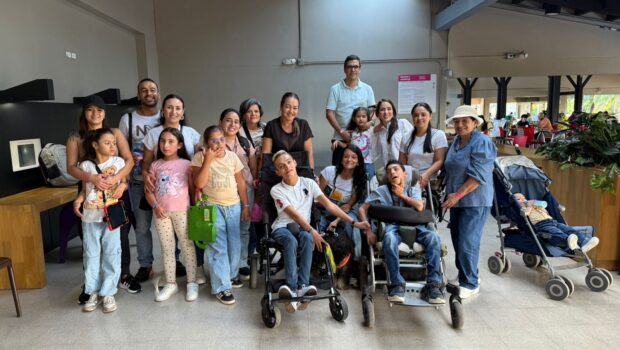
By October 2025, these theories were put into practice with the first formal meeting of VOZ SOS CAAPAZ at the Comfama Rionegro park. This inaugural event served as both a social gathering and a public demonstration of AAC technology, bringing together users of various systems—ranging from Td Snap and Proloquo2go to high-tech eye-tracking devices like Grid 3.
Data and Participation Trends
The initiative has seen consistent growth in participation, highlighting the latent demand for inclusive community spaces. During the inaugural October 2025 event, the group comprised:
- 6 primary AAC users, utilizing a diverse array of assistive technology platforms.
- 10 family members, including parents and siblings, who serve as primary communication partners.
- 1 specialized Speech-Language Pathologist.
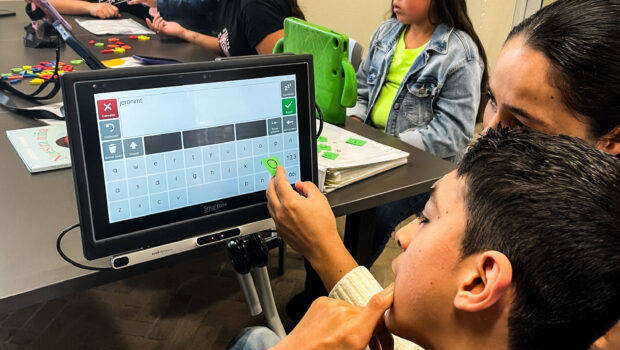
The February 2026 meeting shifted the focus toward structured literacy. Held in a public library, the session applied Erin Sheldon’s model of Comprehensive Literacy, which promotes the development of print knowledge through meaningful, real-world interactions. This gathering featured three AAC users—all categorized as being at an "emergent" level of literacy—alongside their families and community members.
The inclusion of the public space is intentional. By operating in parks and libraries, the initiative functions as an advocacy tool, normalizing the presence of AAC users in public life and educating the general public on the reality that silence does not equate to a lack of intellect or agency.
Implications for AAC Practice
The broader implications of VOZ SOS CAAPAZ are significant for the field of speech-language pathology. The model challenges the "ceiling effect" often imposed on individuals with communication challenges—a phenomenon where therapists or educators inadvertently limit a user’s progress by underestimating their potential.
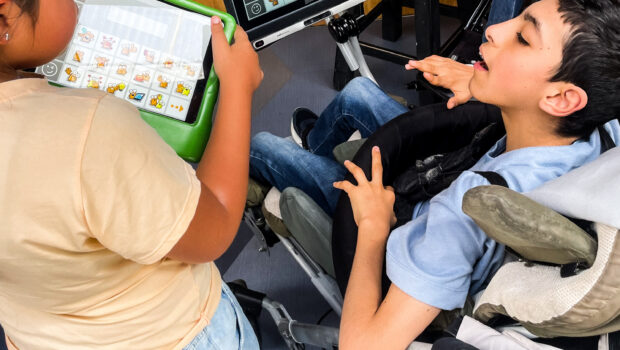
"Presuming competence" is the project’s central tenet. This principle posits that all individuals have the right to communicate, regardless of their modality. By providing a forum where users can connect with peers, the program validates the user’s identity as a communicator rather than a patient.
Professional feedback from the project suggests that communication partners—including parents and therapists—must evolve into "learners of the system." In this model, the therapist is not the gatekeeper of language but a facilitator of connection. The shift from a clinical setting to a social, community-based setting allows for a more authentic application of language, where users can practice communication in contexts that are inherently motivating and meaningful.
Feedback from the Community
The impact of these gatherings is best articulated by the users themselves. Pablo Andrés Calderón Gómez, an AAC user, noted following the October 2025 event: "I am a Tobii user. The gathering where we were with Ángela… I met other friends. We need more people with this Right to Communication."
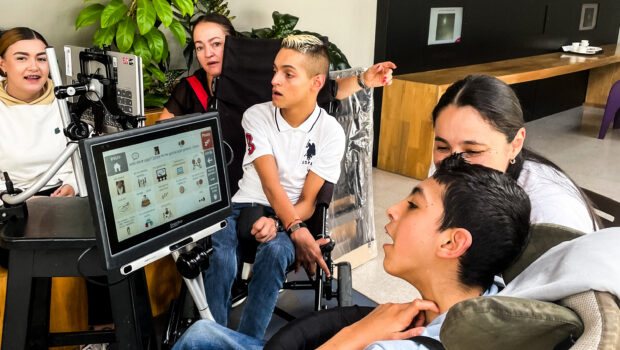
This sentiment is echoed by families who have historically struggled to find spaces that accommodate the specific sensory and communicative needs of their children. The project effectively creates a support network that mitigates the isolation often experienced by families navigating the world of assistive technology.
Future Outlook and Expansion
As of early 2026, VOZ SOS CAAPAZ has established a cadence of monthly meetings. While currently restricted to Saturday mornings in Rionegro, the long-term goal is to expand the model to include more participants and more varied public settings.
The project stands as a case study for how global evidence-based theories—such as neuroaffirmative practices and comprehensive literacy—can be successfully adapted to local, community-specific needs. By moving beyond the walls of the clinic, VOZ SOS CAAPAZ is helping to ensure that the fundamental human right to communicate is upheld in the most public and meaningful ways possible.
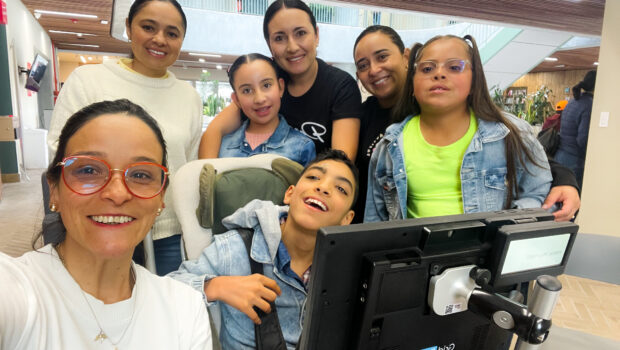
For other regions in Latin America and beyond, the project offers a blueprint: start with the needs of the local community, prioritize the voices of the users, and move boldly toward an inclusive society where every individual has the agency to project their own voice. The initiative underscores that while the technology for communication is vital, the community context in which that technology is deployed is equally critical to human development and social integration. As the project continues to evolve, it remains a testament to the fact that when barriers to communication are removed, the resulting dialogue is as profound as it is necessary.