
Early Seeds of Innovation: A Childhood Ambition
Born in Vienna in 1953, Ingeborg Hochmair’s formative years were steeped in an environment that nurtured scientific curiosity. Her father, a physicist, and her mother, a mechanical engineering professor, instilled in her a deep appreciation for the power of scientific inquiry. By the age of 13, a clear vision had taken root: to enhance the quality of life for individuals through the application of medical technology. This early ambition, far from a fleeting childhood fancy, became the guiding principle of her academic and professional life.
Her decision to pursue electrical engineering at the Vienna University of Technology was a strategic step toward realizing this goal. It was within the academic halls of this esteemed institution that her path would intersect with that of Erwin Hochmair, her future husband and lifelong scientific partner. In 1975, a pivotal moment arrived when Erwin invited her to collaborate on a project with the ambitious objective of developing a cochlear implant. This collaboration marked the beginning of an extraordinary scientific endeavor that would redefine possibilities for individuals with profound hearing loss.
The Birth of the Modern Cochlear Implant
The early years of research and development were characterized by intense dedication and a relentless pursuit of scientific breakthroughs. In 1977, just two years after the project’s inception, the world witnessed a monumental achievement: the implantation of the first microelectronic, multichannel cochlear implant. This groundbreaking device, a product of the Hochmairs’ combined expertise and vision, represented a significant leap forward in the field of audiology and biomedical engineering.

This pioneering work not only established the Hochmairs as leaders in their field but also paved the way for Ingeborg Hochmair to achieve another significant milestone. She became the first woman in Austria to earn a Ph.D. in electrical engineering, a testament to her exceptional academic prowess and her trailblazing role in a predominantly male-dominated scientific landscape.
From Speech Comprehension to Everyday Communication: The Connie Story
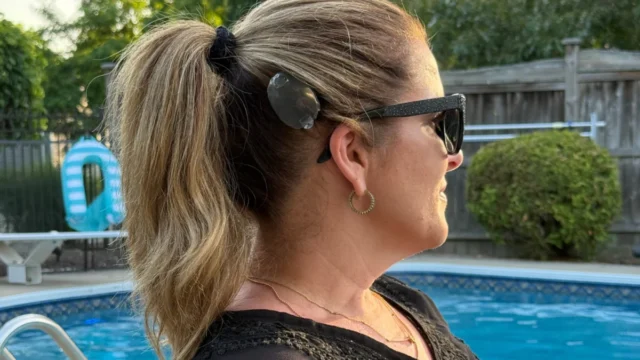
The development of a functional cochlear implant was not merely a theoretical exercise; it was deeply rooted in the practical application of technology to address real-world challenges. One of the earliest recipients of the Hochmairs’ implant was a woman named Connie. Connie became an integral part of their research, dedicating countless hours to participating in tests and trials within the Hochmairs’ laboratory. Her active involvement was instrumental in refining the first speech coding strategies, the sophisticated algorithms that translate sound into electrical signals the brain can interpret.
By 1980, the fruits of their labor were evident. Connie achieved a remarkable feat: she could understand spoken language through her cochlear implant. This was a profound achievement, one that many in the scientific community had deemed improbable, if not impossible, at the outset of the project. The skepticism surrounding the project underscored the audacious nature of their undertaking and amplified the significance of their eventual success.
Overcoming Skepticism and Founding MED-EL
The journey was not without its formidable obstacles and profound skepticism. Dr. Hochmair herself recounted the dismissive attitude of some esteemed physiologists who doubted the feasibility of creating a multi-channel cochlear implant. "The auditory nerve has 20,000 fibers—and you want to build a cochlear implant (CI) with eight channels? It will never work!" was the stark verdict they faced. However, the Hochmairs approached their task with an unwavering optimism and a profound belief in the potential of their innovation. This persistent belief, coupled with rigorous scientific methodology, was key to their perseverance.
The late 1980s marked another significant turning point. The Hochmairs relocated to Innsbruck, Austria, a move that would set the stage for the formal establishment of their entrepreneurial venture. In 1990, they founded MED-EL, a company dedicated to the continued development and widespread dissemination of cochlear implant technology. The company began by hiring its initial team of dedicated employees, a small but determined group poised to contribute to a revolutionary mission.

The COMBI 40 and the Dawn of Conversational Clarity
The early 1990s saw MED-EL solidify its position as a leader in the field with the launch of the COMBI 40 system in 1994. This eight-channel, high-rate cochlear implant represented a significant advancement over its predecessors. Rigorous clinical studies conducted on recipients of the COMBI 40 yielded compelling results. After just six months of using the implant, a substantial majority of recipients demonstrated speech understanding capabilities that were sufficient for engaging in telephone conversations with unfamiliar speakers. This ability to comprehend speech over the phone, a seemingly simple yet profoundly important aspect of daily communication, was a watershed moment for many who had lived in silence.
The Evolution of Hearing: From Basic Comprehension to Digital Connectivity
The relentless pursuit of innovation did not cease with the COMBI 40. Dr. Hochmair’s vision extended to continuously enhancing the quality of life for individuals with hearing loss. Over the subsequent three decades, MED-EL has been at the forefront of technological evolution, transforming cochlear implants from devices that merely enabled basic speech comprehension into sophisticated, connected systems.
Today’s advanced cochlear implant audio processors are a far cry from their early iterations. They possess the capability to stream audio directly from smartphones, tablets, and other Bluetooth-enabled devices, allowing users to enjoy podcasts, music, and online content seamlessly. These modern processors are remarkably compact, weighing less than a AAA battery, and are designed for discreet wear, often concealed behind the ear. The sound quality and coding strategies have been refined to an extraordinary degree, empowering individuals to communicate effectively in noisy environments and to fully appreciate the nuances of music. This level of auditory restoration, once confined to the realm of science fiction, is now a tangible reality for many.
Global Recognition: The Queen Elizabeth Prize for Engineering
The profound and far-reaching impact of Dr. Ingeborg Hochmair and Professor Erwin Hochmair’s work was formally recognized on February 3, 2026, with the prestigious Queen Elizabeth Prize for Engineering. This esteemed award, often referred to as the "Nobel Prize for Engineering," celebrates engineers whose innovations have had a significant global impact. The 2026 prize was jointly awarded to the Hochmairs and seven other visionary scientists for their seminal contributions to the design and development of modern neural interfaces. These interfaces are crucial for restoring vital human functions, with the cochlear implant standing as a prime example of their transformative power.
The Queen Elizabeth Prize is awarded every two years and celebrates engineering that has made a tangible difference to the world. Previous recipients have been lauded for innovations ranging from the World Wide Web to advanced water purification systems. For the Hochmairs, this recognition is not just an acknowledgment of past achievements but a powerful affirmation of their ongoing mission.

A Global Reach: Impacting Lives in Over 170 Countries
The dedication and scientific acumen of Dr. Hochmair have resulted in MED-EL cochlear implants being utilized by hundreds of thousands of individuals across more than 170 countries. This global dissemination highlights the universal need for effective hearing solutions and the remarkable success of MED-EL in making these solutions accessible worldwide. The company’s commitment extends beyond product development to ensuring that individuals in diverse geographical and socio-economic contexts can benefit from their technology.
Addressing the Unmet Need: The Future of Hearing Restoration
Despite the remarkable progress achieved, a significant unmet need persists. For every child who receives a cochlear implant, an estimated three more could benefit from this life-changing technology but do not have access to it. This stark statistic underscores the critical importance of continued innovation, increased accessibility, and ongoing advocacy within the hearing healthcare community.
MED-EL is actively pursuing future innovations that promise to further democratize access to hearing solutions. Emerging technologies such as remote fitting, which allows audiologists to adjust implant settings remotely, are poised to overcome geographical barriers. Robot-assisted surgery is enhancing the precision and safety of implantation procedures. Furthermore, the development of totally implantable cochlear implants represents the next frontier, offering even greater discretion and potentially simplifying the user experience.
Dr. Hochmair’s vision for the future remains as clear and resolute as it was in her youth: to continue innovating and improving the experience for all involved. As the world stands on the cusp of remarkable advancements in hearing technology, nearly 50 years after the first cochlear implant was successfully implanted, the future holds immense promise for further breakthroughs that will continue to break down barriers to communication and enhance the quality of life for millions globally. The legacy of Ingeborg Hochmair is not just one of scientific achievement, but of a profound and enduring commitment to empowering individuals through the transformative power of technology.