
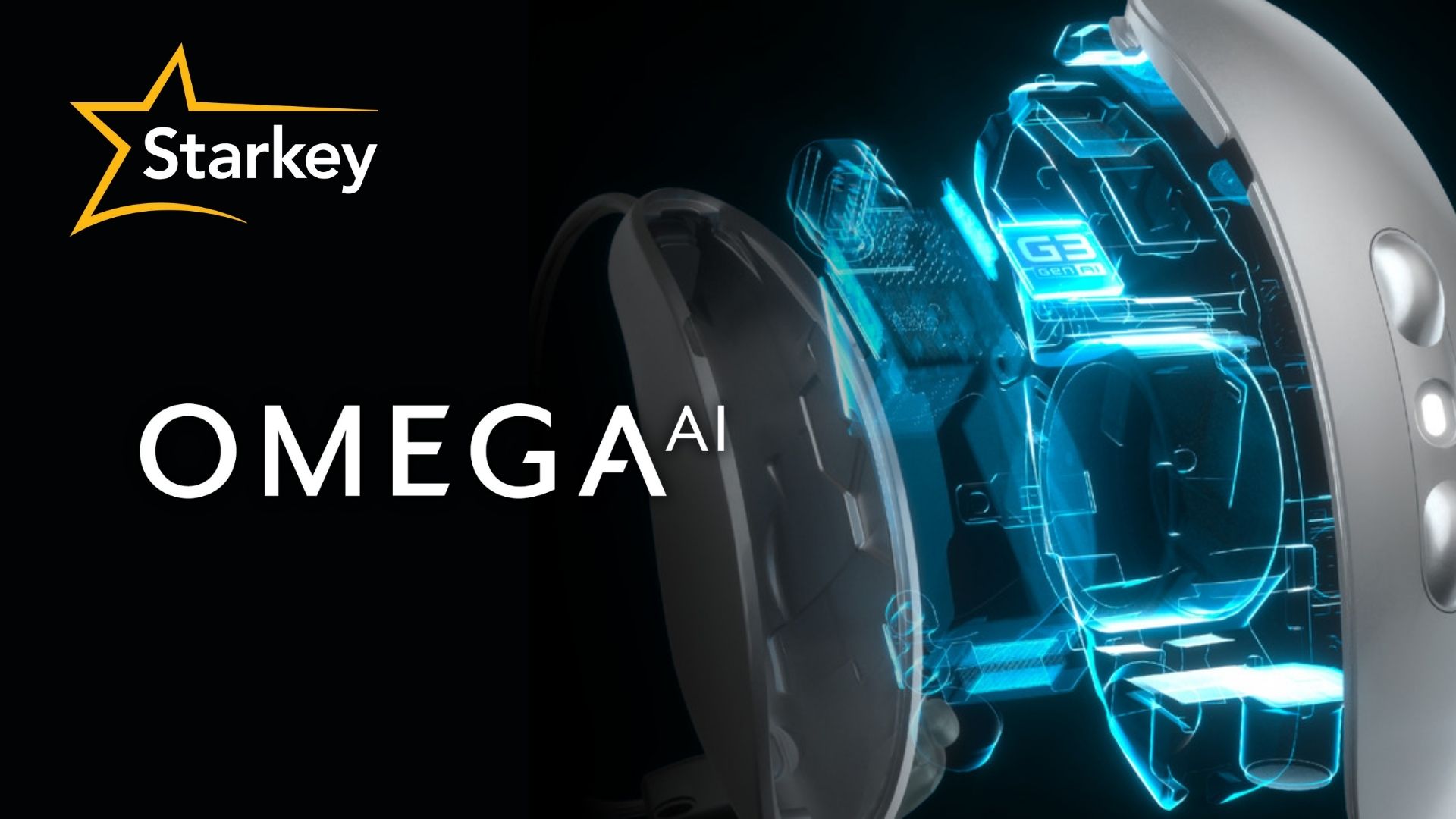
The Core of Omega AI: Revolutionizing Auditory Experience
Omega AI represents the pinnacle of Starkey’s research and development efforts, serving as the company’s most advanced hearing technology platform to date. At its heart lies a sophisticated integration of artificial intelligence capabilities meticulously engineered to empower individuals to hear, communicate, and engage more effectively in the nuances of everyday life. This platform is not merely an incremental upgrade but a generational leap, driven by Starkey’s proprietary AI technologies that collectively focus on delivering unparalleled sound quality, pristine speech clarity, seamless connectivity, and comprehensive health and wellness features. The overarching goal is to provide a profoundly personalized hearing experience that adapts dynamically to the user’s environment and individual needs.
Central to Omega AI’s revolutionary performance is its incorporation of advanced machine learning and deep neural network (DNN) capabilities. These sophisticated algorithms are designed to automatically optimize hearing performance, even in the most acoustically complex and challenging listening environments. The flagship innovation within this platform is DNN 360, which Starkey proudly positions as the hearing industry’s first deep neural network-powered directionality system. Unlike traditional hearing aids that might struggle to isolate speech amidst background noise, DNN 360 intelligently identifies and enhances speech signals originating from multiple directions, ensuring that users can comfortably participate in conversations whether they are in a bustling restaurant, a crowded meeting, or a lively family gathering. This adaptive intelligence dramatically reduces listening effort, making social interactions more natural and less fatiguing.
Beyond its core auditory processing, the Omega AI platform extends its utility into broader health and wellness domains. While specific features can vary, modern AI-powered hearing aids often include functionalities like activity tracking, fall detection alerts, and cognitive health monitoring, leveraging integrated sensors and AI algorithms. These features transform the hearing aid from a singular auditory device into a comprehensive personal health companion. Furthermore, enhanced connectivity options, including advanced Bluetooth capabilities, facilitate seamless streaming of audio from smartphones, televisions, and other devices, while personalized support tools offer tailored guidance and adjustments, further enhancing overall hearing outcomes and contributing significantly to the user’s quality of life.
A Prestigious Accolade: The Healthcare Eagles Awards
The Healthcare Eagles Awards stand as a beacon of recognition for excellence, innovation, and leadership across the vast and complex healthcare industry. Each year, these awards meticulously highlight organizations and technologies that are making a tangible, transformative impact on patient care and the intricate processes of healthcare delivery. The "Best Use of Artificial Intelligence" category, in particular, has emerged as one of the most keenly contested, reflecting the exponential growth and strategic importance of AI within medical science and technology.
The selection process for the Healthcare Eagles Awards is known for its rigorous evaluation criteria, involving expert panels from various medical and technological fields. Nominees are scrutinized based on their innovative approach, demonstrable impact on patient outcomes, scalability, ethical considerations, and the scientific robustness of their AI implementation. Starkey’s Omega AI, by securing this award, has not only demonstrated its technological superiority but also its alignment with the broader industry’s push towards digitally-driven health solutions that prioritize patient well-being and efficiency. This award places Omega AI at the forefront of medical AI innovations, validating Starkey’s strategic investment in artificial intelligence as a cornerstone of future hearing health.
Starkey’s Enduring Legacy of Innovation in Hearing Health
Starkey’s journey as a pioneering force in hearing technology dates back to its founding in 1967 by Bill Austin. Headquartered in Eden Prairie, Minnesota, the company has consistently been at the vanguard of innovation, driven by a deep commitment to improving the lives of individuals with hearing loss. Under the current leadership of CEO Brandon Sawalich, Starkey continues to push the boundaries of what is possible in auditory science. As the only American-owned hearing aid manufacturer, Starkey prides itself on its independent spirit and its global reach, employing over 5,000 professionals across 29 facilities and delivering advanced hearing solutions to customers in more than 100 markets worldwide.
A Chronology of AI Integration:
Starkey’s history is punctuated by a relentless pursuit of breakthroughs in sound clarity and the integration of intelligent hearing technology. The company was an early adopter of digital signal processing and has progressively integrated more sophisticated computational intelligence into its devices. The path to Omega AI is a testament to this sustained commitment, building upon successive generations of AI-powered hearing aids. These earlier models laid the groundwork for advanced algorithms, refined noise reduction, and improved speech comprehension.
The development of Omega AI, with its proprietary AI technologies, represents years of dedicated interdisciplinary research. This intensive effort has spanned diverse fields including auditory neuroscience, advanced machine learning, sophisticated signal processing, and human-centered design principles. This holistic approach ensures that technological advancements are not merely theoretical but are meticulously crafted to meet the nuanced needs of human hearing and cognition. The consistent recognition Omega AI has received further cements its status as a leading innovation. Earlier in 2026, the technology was also honored with a prestigious BIG Innovation Award and an AI Excellence Award, signaling a strong consensus across the technology and healthcare sectors regarding its transformative potential. These awards collectively underscore the robust scientific foundation and practical efficacy of the Omega AI platform.
The Critical Need: Hearing Loss and the Rise of AI in Healthcare
The recognition of Omega AI comes at a crucial time when the global burden of hearing loss is increasingly understood, and the potential of artificial intelligence to revolutionize healthcare is becoming undeniable.
Global Impact of Hearing Loss:
Hearing loss is a significant public health challenge affecting hundreds of millions worldwide. According to the World Health Organization (WHO), over 430 million people currently experience disabling hearing loss, a number projected to rise to over 700 million by 2050. The implications of unaddressed hearing loss are profound, extending far beyond simply difficulty in hearing. It is strongly linked to social isolation, depression, cognitive decline, and an increased risk of falls. The economic burden is also substantial, encompassing direct healthcare costs, lost productivity, and the broader societal impact of reduced quality of life. Effective, accessible hearing solutions are therefore not just about improving hearing, but about enhancing overall well-being and public health.
The AI Revolution in Healthcare:
Artificial intelligence is rapidly transforming various facets of healthcare, from drug discovery and diagnostic imaging to personalized treatment plans and robotic surgery. The global market for AI in healthcare is projected to grow exponentially, with some reports estimating it could exceed hundreds of billions of dollars within the next decade. AI’s ability to process vast amounts of data, identify complex patterns, and make real-time, adaptive decisions makes it an invaluable tool for addressing the intricate challenges of modern medicine. In the context of hearing aids, AI addresses the fundamental challenge of simulating and enhancing human auditory processing in dynamic environments, a task that has historically been limited by traditional signal processing techniques. By leveraging AI, hearing aids can now offer unprecedented levels of personalization and adaptability, moving beyond one-size-fits-all solutions to genuinely intelligent and responsive devices.
Leadership Perspectives: The Vision Behind Omega AI
The philosophy driving Starkey’s innovation is perhaps best encapsulated by Dr. Achin Bhowmik, Chief Technology Officer and Executive Vice President of Engineering at Starkey. "Artificial intelligence has tremendous potential to advance healthcare when it is thoughtfully designed around human needs," Dr. Bhowmik stated, reflecting a core tenet of Starkey’s product development strategy. His remarks emphasize that technology, no matter how advanced, must ultimately serve and enhance the human experience.
He elaborated on the extensive collaborative effort required to bring Omega AI to fruition: "Omega AI reflects years of interdisciplinary research spanning auditory neuroscience, machine learning, signal processing, and human-centered design. By combining advanced AI architectures with a deep understanding of hearing and cognition, we are creating intelligent systems that enhance communication, support well-being, and elevate the standard of care for people with hearing loss." This statement highlights Starkey’s holistic approach, where cutting-edge technology is integrated with a profound understanding of human physiology and psychology.
While specific comments from CEO Brandon Sawalich regarding this latest award were not immediately available, the company’s consistent messaging under his leadership underscores a steadfast commitment to patient-centric innovation and global accessibility. This award further solidifies Starkey’s strategic position as a leader in the competitive hearing aid market, reinforcing its reputation for delivering technologically superior and clinically effective solutions. The recognition is not just a testament to a single product but to a sustained organizational culture of innovation and excellence, positioning Starkey to continue shaping the future of auditory health.
Shaping the Future of Auditory Health: Implications of Omega AI’s Success
The success of Omega AI and its recognition by the Healthcare Eagles Awards carry significant implications for various stakeholders, from individual patients to the broader healthcare industry.
Impact on Patients:
For individuals living with hearing loss, Omega AI offers the promise of a dramatically improved quality of life. The enhanced ability to hear and understand speech in challenging environments can reduce social isolation, foster greater confidence in communication, and potentially mitigate the cognitive decline associated with untreated hearing loss. The personalized nature of the technology means that hearing aids are no longer generic devices but highly individualized tools that adapt to each user’s unique auditory profile and lifestyle. This level of personalization, combined with integrated health and wellness features, empowers users to take a more proactive role in their overall health management.
Impact on the Hearing Aid Industry:
Starkey’s achievement with Omega AI sets a new benchmark for AI integration within the hearing aid industry. This will inevitably spur further innovation and healthy competition among manufacturers, driving the development of even more sophisticated and effective hearing solutions. The focus on deep neural networks and real-time environmental adaptability will likely become a new standard, pushing other companies to invest more heavily in similar advanced AI research. This competitive landscape ultimately benefits consumers by accelerating the pace of technological advancement and expanding the range of available options.
Broader Healthcare Implications:
Beyond the immediate scope of hearing health, Omega AI’s success serves as a powerful demonstration of AI’s practical and impactful application in consumer-facing medical devices. It provides a compelling case study for how AI can be effectively deployed to address chronic health conditions, improve daily living, and provide actionable health insights. This success can encourage greater investment and research in similar AI-powered solutions across diverse medical fields, from diabetes management to neurological disorders. As AI becomes more pervasive in medical technology, it will also necessitate ongoing discussions around ethical considerations, data privacy, and the evolving regulatory landscape for intelligent medical devices, ensuring that innovation proceeds responsibly and for the ultimate benefit of humanity.
To learn more about Omega AI and Starkey’s comprehensive range of hearing technology, interested parties are encouraged to visit Starkey.com.
Starkey is a leading global innovator in hearing technology and AI-powered hearing aids, headquartered in Eden Prairie, Minnesota. Since its founding by Bill Austin in 1967 and led today by Brandon Sawalich, Starkey has driven breakthroughs in unmatched sound clarity and machine learning and intelligent hearing technology. As the only American-owned hearing aid manufacturer, Starkey employs over 5,000 professionals across 29 facilities, delivering advanced hearing solutions to customers in 100+ markets worldwide. Explore our smart hearing devices and connected technologies at www.starkey.com.
Source: Starkey