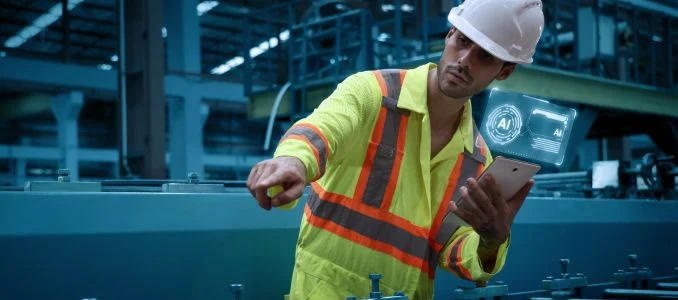
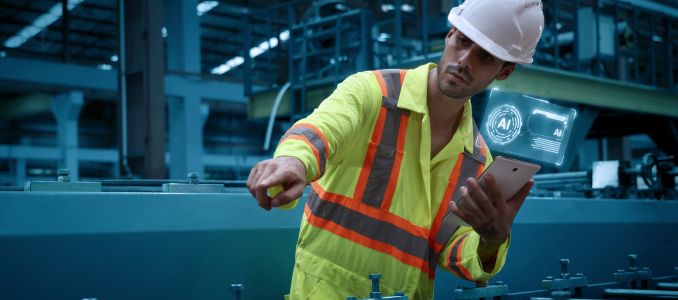
Recent data gathered from over 300 trade professionals at the National Fire Protection Association (NFPA) Conference & Expo held this past June confirms that the pressure on the sector is at an all-time high. A staggering 88% of surveyed experts reported that the demand for their specialized skills has escalated significantly over the last three years. This surge is largely attributed to the "AI boom," with 36% of respondents citing that their recent workload is directly tied to the construction and maintenance of AI-centric infrastructure. As companies race to build the hardware foundations for generative AI and cloud computing, the demand for electricians, technicians, and specialized mechanical contractors has outpaced the available supply of labor.
The Technological Pivot: Bridging the Gap
For decades, the skilled trades were characterized by analog methodologies and physical craftsmanship. However, the modern worksite is increasingly digital. According to the NFPA survey, 87% of professionals report that technological integration has made their daily tasks significantly more manageable over the past five years. When asked to identify the most impactful technologies, 39% of respondents credited AI and automation tools, while 36% highlighted the adoption of specialized digital platforms and integrated software suites.

This shift is manifested in several ways. Augmented reality (AR) headsets are now being deployed for remote site inspection, allowing senior technicians to guide apprentices through complex repairs in real-time without needing to be physically present. Similarly, predictive maintenance software is replacing routine, manual checks on industrial machinery. By utilizing sensors that feed data into machine learning models, workers can now preemptively address equipment failures, thereby minimizing downtime and optimizing resource allocation. These tools do not replace the worker; rather, they extend the reach and effectiveness of the existing, albeit constrained, labor force.
A Chronology of Industry Transformation
The current reliance on AI in the trades did not occur overnight. It is the result of a multi-year convergence of economic and technological factors:

- 2021–2022: Post-pandemic recovery efforts led to a massive influx of federal funding for infrastructure projects, including the Bipartisan Infrastructure Law. This created an immediate, overwhelming demand for skilled labor that exceeded existing training pipelines.
- 2023: The emergence of generative AI and the subsequent "AI gold rush" forced a massive pivot in construction priorities. Data center development skyrocketed, requiring specialized electrical and cooling infrastructure that demanded a higher level of technical precision.
- 2024: The industry reached a tipping point where labor shortages became the primary bottleneck for project timelines. Contractors began investing heavily in digital project management tools and automated diagnostic equipment to squeeze more productivity out of the current workforce.
- 2025–2026: AI-driven automation moved from a novelty to a necessity. Training programs began incorporating "digital literacy" modules, ensuring that the next generation of tradespeople are as comfortable with software interfaces as they are with traditional hand tools.
The Imperative of Continuous Education
The rapid adoption of these technologies has necessitated a total overhaul of professional development. The days of finishing an apprenticeship and relying solely on foundational knowledge are over. The NFPA findings indicate that 94% of trade professionals now participate in at least one formal training or professional development program every year. Perhaps more tellingly, 37% of the surveyed professionals are engaging in ongoing education on a monthly basis to keep pace with evolving industry codes and the integration of new technical standards.
Industry associations are responding by offering more comprehensive certification programs. These sessions cover not just the operation of new machinery, but the underlying safety protocols and digital security measures required to manage "smart" infrastructure. This culture of lifelong learning is viewed as the only viable path to maintaining safety standards in an era where the complexity of building systems is increasing exponentially.

Networking and the Human Element
Despite the heavy emphasis on digital transformation, the human element of the trades remains central. When asked what they value most about their professional memberships, 65% of surveyed workers identified collaboration with peers as the top benefit. This suggests that while AI can assist with the technical execution of a job, it cannot replicate the mentorship, problem-solving discourse, and collective knowledge-sharing that occur within trade communities.
Continuing education (57%) and access to technical support regarding industry codes (38%) followed in importance. This hierarchy of needs highlights a clear message: tradespeople are looking for a hybrid ecosystem. They want high-tech tools to perform the "how" of their jobs, but they rely on high-touch professional networks to navigate the "what" and the "why" of industry regulations and safety compliance.

Analysis of Implications
The trend toward AI-augmented trades carries significant implications for the broader economy. First, it addresses the productivity paradox. With an aging workforce and a shortage of new entrants into the trades, the only way to meet the country’s infrastructure goals is to significantly increase the output per worker. AI, by reducing the time spent on diagnostic troubleshooting and administrative reporting, allows professionals to spend more time on value-added installation and repair tasks.
Second, the demographic profile of the trades is set to shift. As roles become more "tech-enabled," the barrier to entry may change. The ability to navigate digital interfaces is becoming as essential as mechanical aptitude, potentially attracting a new cohort of workers who might have previously gravitated toward IT or engineering roles but are now finding similar, high-tech challenges in the skilled trades.

However, this transition is not without risk. Reliance on automated systems requires a high level of digital hygiene and cybersecurity awareness. If a critical electrical grid or data center relies on AI-driven monitoring, the professionals maintaining those systems must also be trained to identify and mitigate digital vulnerabilities. The industry is currently in a race to ensure that the speed of technological deployment does not outpace the speed of safety training.
Looking Ahead
The data from the 2026 NFPA conference serves as a barometer for a sector in flux. As the demand for AI infrastructure continues to grow—spurred by the global race for computational dominance—the skilled trades will remain at the heart of the national economy. The professionals of tomorrow will be hybrids: part master craftsman, part systems analyst.

As trade unions, private firms, and educational institutions continue to refine their training models, the goal remains clear: to build a workforce that is not only resilient to the challenges of labor shortages but also capable of mastering the tools that will define the next century of industrial development. The move toward AI is not a sign that the trade worker is disappearing; rather, it is a sign that the trade worker is evolving to meet the complex demands of a modern, digital-first world. Through continued investment in human capital and a commitment to rigorous, ongoing education, the skilled trades are poised to remain the backbone of the global infrastructure build-out.