
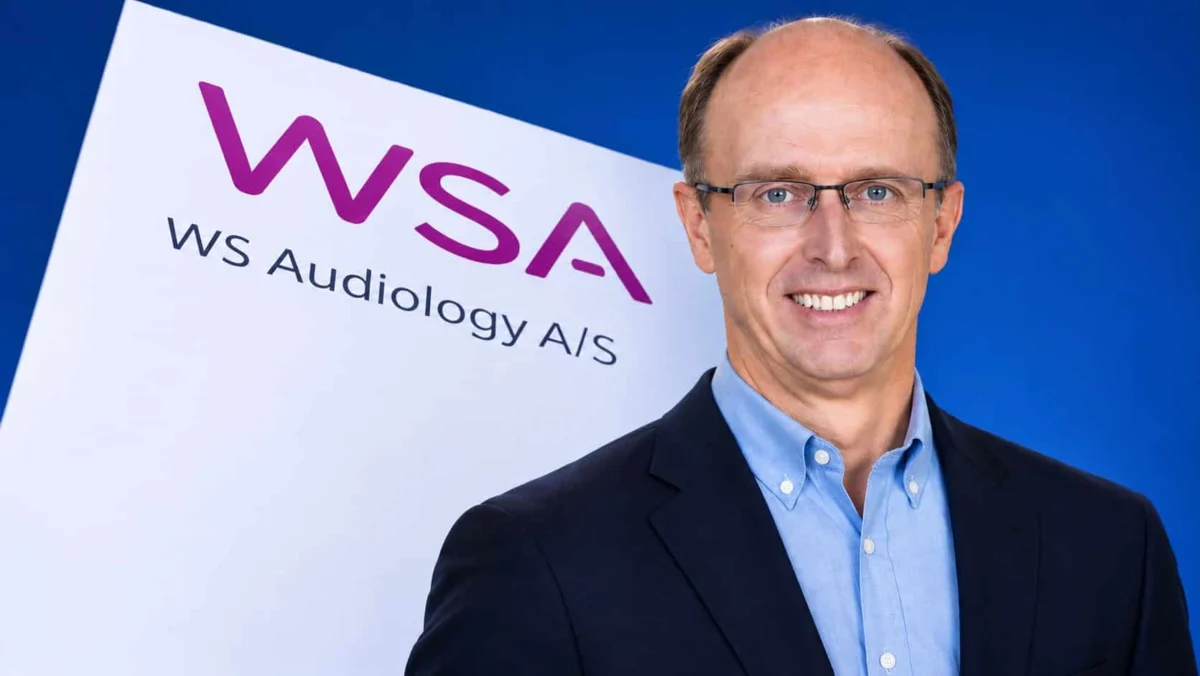
For the 12-month period concluding September 30, 2026, WSA generated a total revenue of €2.54 billion, equivalent to approximately $2.79 billion. While the underlying sales, adjusted for currency fluctuations and other non-recurring factors, increased by 2%, the total reported revenue saw a slight decline compared to the previous financial year. This divergence highlights the impact of external economic variables alongside the company’s internal operational performance. The company’s diverse portfolio of consumer-facing businesses, including its extensive network of hearing care retail clinics, managed care services, and burgeoning online platforms, emerged as significant drivers of growth. Conversely, its traditional wholesale division, responsible for supplying hearing aids through professional distribution channels, experienced a slowdown, primarily attributed to the strategic timing of new product introductions.
A cornerstone of WSA’s innovation strategy, and a key focus for future growth, was the recent introduction of two groundbreaking hearing aid platforms: Signia MaX and Widex Allure AI. These platforms leverage advanced artificial intelligence to address some of the most challenging listening situations faced by individuals with hearing loss, promising enhanced clarity, comfort, and personalization.
Navigating a Complex Market: Consumer-Facing Businesses Lead the Charge
WSA’s financial results reveal a clear trend: its consumer-facing businesses are increasingly becoming the engine of growth. These segments, encompassing its global network of hearing care clinics, its managed care operations, and its direct-to-consumer online sales channels, collectively posted an impressive 7% growth during the financial year. This robust performance reflects a broader industry shift towards more integrated and patient-centric care models, where direct engagement with consumers allows for tailored services and solutions. For WSA, this strategy not only fosters deeper customer relationships but also provides valuable insights into user preferences and needs, directly informing product development and service delivery.
In stark contrast, the company’s wholesale business, which relies on a traditional model of supplying hearing aids to independent audiologists and hearing care professionals, saw a 3% decline in underlying sales. This segment’s performance was, according to WSA, partly influenced by the strategic rollout schedule of its latest product lines. The company noted that sales momentum within its wholesale division began to improve notably towards the close of the financial year, suggesting that the initial lag was indeed temporary and linked to the market’s absorption of new technologies. This pattern is not uncommon in the highly innovative hearing aid sector, where significant product launches often precede a period of inventory adjustments and training within distribution networks before sales accelerate.
Geographically, WSA reported a 3% growth in the Americas, a region that represents a significant portion of the global hearing aid market, driven by factors such as an aging population and increasing awareness of hearing health. Meanwhile, sales across Europe, the Middle East, Africa (EMEA), and the Asia-Pacific (APAC) region remained relatively stable. This regional disparity highlights varying market dynamics, regulatory environments, and penetration rates of hearing care services across different continents.
Despite the uneven sales performance across its business segments, WSA achieved a notable improvement in profitability. Its earnings before interest, taxes, depreciation, and amortization (EBITDA), excluding special items, climbed to €473 million (approximately $520 million), a healthy increase from €456 million (approximately $502 million) reported in the previous year. This metric, often viewed as a key indicator of a company’s operational cash flow and underlying business health, underscores WSA’s commitment to financial discipline and efficiency. The operating profit margin, calculated on this basis, also improved significantly, rising to 18.7% from 17.7% a year earlier. This margin expansion, even amidst revenue fluctuations, points to effective cost management, optimized operational processes, and a favorable product mix.
Jan Mäkälä, CEO of WSA, encapsulated the company’s strategic approach, stating, "In the financial year 2025/26, we remained disciplined in executing our strategy and advancing innovation in personalized hearing care, and on driving profitability. We delivered 2% organic revenue growth and improved the profit margin in line with our guidance. Our consumer-facing businesses performed strongly, while the timing of product launches impacted our wholesale business." His remarks emphasize a dual focus on innovation for the end-user and stringent financial management.
A Deep Dive into Innovation: AI at the Forefront of Hearing Technology
WSA’s strategy for sustained growth is heavily predicated on technological leadership, with artificial intelligence emerging as a central pillar. The recent launches of the Signia MaX and Widex Allure AI platforms are prime examples of this commitment, showcasing distinct yet complementary approaches to leveraging AI for enhanced hearing experiences.
The Signia MaX platform, a flagship offering from the Signia brand, integrates an advanced architecture featuring four deep neural networks (DNNs). These DNNs are not merely passive processors but actively learn and adapt to diverse sound environments. According to WSA, these networks work in concert to achieve superior speech understanding and listening comfort, particularly in complex acoustic scenarios. The core challenge in hearing aid technology has always been distinguishing human speech from background noise, especially in dynamic environments like bustling restaurants or crowded social gatherings. Signia MaX’s multi-DNN approach aims to precisely segment and enhance speech signals while simultaneously suppressing unwanted noise, providing wearers with a more natural and less fatiguing listening experience. This level of sophisticated processing represents a significant leap from previous generations of hearing aid technology, which often relied on more static noise reduction algorithms.
Concurrently, the Widex Allure AI platform introduces a different, yet equally innovative, AI paradigm with its "Clarity Boost" feature. Widex has historically been recognized for its commitment to delivering a natural sound quality, a philosophy that prioritizes the authenticity of the soundscape. The Allure AI platform builds on this heritage by incorporating an on-demand AI-powered feature designed to provide additional speech clarity precisely when listening conditions become arduous. Unlike systems that might continuously apply heavy AI processing, Clarity Boost allows users to activate this enhanced assistance only when needed, such as during a difficult conversation in a noisy environment. This user-centric approach ensures that the renowned Widex natural sound quality is maintained during everyday listening, with the AI augmentation available as an intelligent overlay for challenging moments. This distinction highlights WSA’s understanding that different users have different preferences and needs, catering to a broader spectrum of hearing aid wearers across its brand portfolio.
These two platforms collectively demonstrate WSA’s strategic vision for personalized hearing technology. As Mäkälä articulated, "At WSA, we believe that better hearing starts with recognizing that no two people hear the world in the same way. Understanding individual sound preferences opens up a new dimension in personalized hearing care." This philosophy guides the development of diverse technological pathways, ensuring that whether a user prioritizes continuous, adaptive AI or on-demand clarity with natural sound, WSA has a solution. The company anticipates that these new products, along with planned expansions in hearing aid styles and configurations, will be crucial catalysts for sales growth in the upcoming financial year.
Positive Momentum in the Closing Quarter
Evidence of the positive impact of these strategic initiatives and product introductions became particularly apparent during the final quarter of WSA’s financial year. The period from July to September 2026 saw a notable acceleration in sales momentum, signaling that newer products were beginning to gain significant traction in the market. Revenue for this quarter reached €654 million (approximately $719 million), representing a robust 4% underlying growth. This marks a significant turnaround compared to the same period in the previous year, which had seen a 1% decline.
The consumer-facing businesses continued their strong trajectory, growing by an impressive 8% during the quarter, further solidifying their role as key growth drivers. While wholesale hearing aid sales remained essentially unchanged during this quarter, the stabilization suggests that the initial impacts of product launch timing were subsiding, and the segment was beginning to find its footing. Geographically, the Americas led the growth charge with a 5% increase, followed by Europe, the Middle East, and Africa at 3%, and Asia-Pacific at 1%. This widespread improvement across regions underscores a global positive reception to WSA’s offerings and strategies. Quarterly EBITDA, excluding special items, also saw a healthy increase, reaching €126 million (approximately $139 million), accompanied by a modest improvement in profitability compared to the previous year. This strong finish to the financial year provides a foundation of optimism, albeit tempered by anticipated future challenges.
Anticipating Headwinds: The Impact of a Major U.S. Managed Care Contract Loss
Despite the positive momentum observed towards the end of FY 2025/26, WSA is bracing for a more challenging financial year ahead, primarily due to the non-renewal of a significant U.S. managed care contract. This agreement, a crucial component of WSA’s managed care business in the United States, is set to expire on January 1, 2027, and will not be renewed.
Managed care organizations play a pivotal role in the U.S. healthcare landscape, particularly in the distribution and reimbursement of hearing aids. These contracts often involve large volumes of hearing aid unit sales and can significantly impact a manufacturer’s revenue and market share within the U.S. market. For WSA, the loss of this particular contract is projected to have a substantial impact, reducing its overall revenue growth by approximately five percentage points during the 2026/27 financial year. To illustrate the magnitude, if WSA’s other business segments were to collectively generate a healthy 5% growth, the impact of this contract loss could effectively neutralize that increase, resulting in zero net growth for the company.
Beyond revenue, WSA also anticipates that the contract loss will exert downward pressure on its profitability. However, the company is not passive in the face of this challenge. Proactive measures, including targeted cost-saving initiatives and other operational improvements, are expected to partially mitigate the financial impact. As a result of these anticipated headwinds, WSA has issued a revised forecast for the coming year, projecting revenue growth ranging from a 2% decline to a 2% increase. This wide range reflects the inherent uncertainties associated with absorbing such a significant contract loss while simultaneously driving growth in other areas.
Crucially, WSA has also provided an outlook that isolates the impact of the expiring contract. Without this specific factor, the company anticipates its underlying business would grow at least as quickly as the overall hearing aid market, which it forecasts to see approximately 3% to 4% growth in hearing aid unit sales. This distinction is vital for investors and analysts, as it separates the operational performance and market engagement from the one-off impact of a contractual change. Mäkälä reiterated this point: "Our outlook for 2026/27 is impacted by the non-renewal of a large US managed care contract, as previously announced. Excluding this impact, we expect revenue to grow in line with or above the market, with continued improvement in profitability."
Broader Implications and Future Strategy
The dynamics observed in WSA’s latest financial report offer a microcosm of the broader trends shaping the global hearing aid industry. The sector is characterized by intense competition, rapid technological evolution (especially with AI and connectivity), and increasingly complex distribution channels, particularly in the U.S. with its managed care emphasis. For hearing care professionals, these results highlight the multifaceted influences on manufacturers – not only technological advancements and consumer demand but also intricate distribution relationships, the critical role of managed care agreements, and the strategic timing of product introductions. The reliance on large managed care contracts, while offering volume, also presents a vulnerability when such agreements are not renewed, underscoring the need for diversified strategies among manufacturers.
WSA’s response to the managed care contract loss will involve a continued focus on several strategic pillars: accelerating the development and introduction of new hearing technology, enhancing operational efficiency across its global footprint, and expanding its product portfolio to cater to a wider array of consumer needs and preferences. The company’s emphasis on personalized hearing care, driven by AI and diverse product offerings, positions it to adapt to evolving market demands.
With the Signia MaX and Widex Allure AI platforms now actively entering the market and gaining traction, their performance over the coming year will offer crucial insights into how these newer, AI-powered technologies contribute to WSA’s overall business resilience and growth trajectory. The industry will be closely watching how WSA navigates the challenges of the upcoming financial year, particularly how effectively it offsets the managed care contract loss through organic growth in other segments and sustained innovation. The company’s full annual results and further insights are available through WSA’s investor reports, providing detailed data for stakeholders to assess its strategic direction and financial health.
Source: WSA