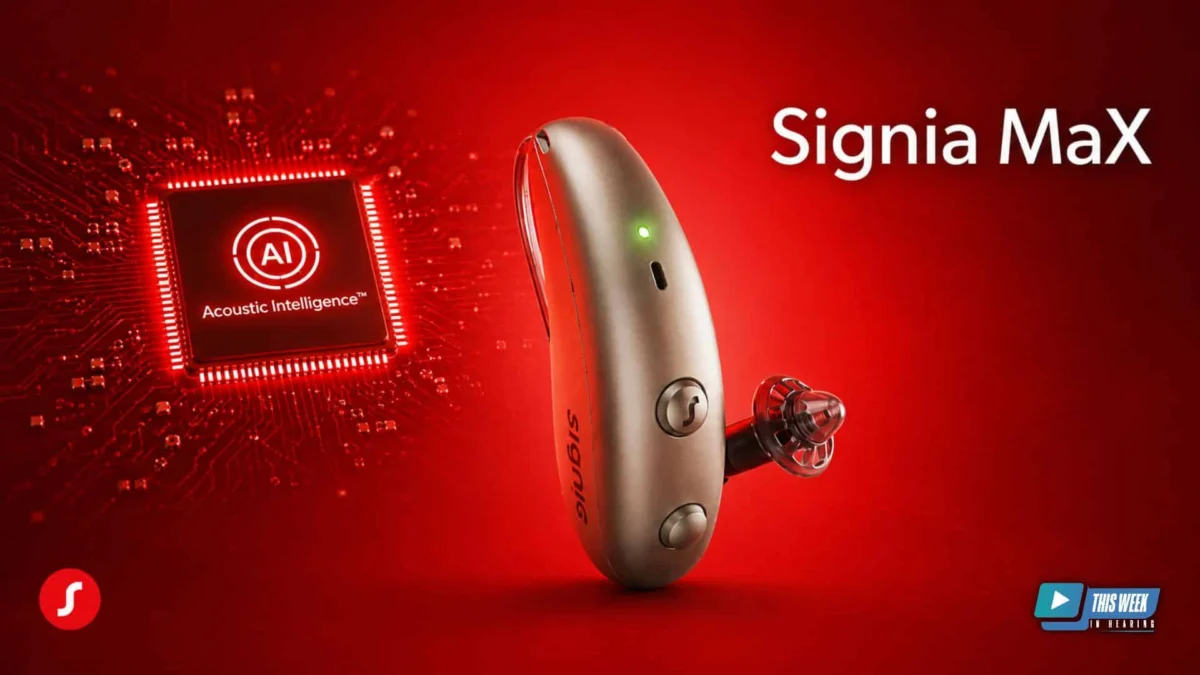
The MaX platform’s introduction marks an evolutionary leap from previous generations, including Signia’s own IX series. At its core, the MaX system employs a single, powerful chip embedded with four distinct DNNs. These networks are dedicated to analyzing and processing speech, the wearer’s own voice, environmental scene characteristics, and ambient noise. This integrated approach allows the hearing aids to respond with unprecedented fluidity and precision, adapting to dynamic soundscapes in a manner designed to be imperceptible to the user.
The Genesis of Acoustic Intelligence: A New Frontier in Sound Processing
The development of Signia MaX stems from a strategic goal to achieve "full system intelligence," as articulated by Barinder Samra, MSc, Global Senior Commercial Audiology Manager at Signia. Samra, who engaged in a detailed discussion with industry expert Andrew Bellavia during the Munich event, emphasized that the objective was to analyze multiple dimensions of a user’s surroundings and continually optimize sound processing for each unique moment throughout the day. This contrasts with earlier models that might apply AI to individual features, but without the coordinated intelligence now central to MaX.
Deep Neural Networks represent a sophisticated form of artificial intelligence, capable of learning complex patterns from vast datasets. In the context of hearing aids, this translates to an ability to perform highly nuanced analyses of sound in real-time. Unlike rule-based algorithms, which rely on pre-programmed instructions, DNNs can adapt and refine their processing based on extensive training. The MaX platform’s DNNs have been trained on an immense and diverse dataset comprising over 40 million samples, encompassing various speech signals, own voice signals, environmental scenes, and noise profiles across 11 languages. This comprehensive training underpins the system’s ability to interpret and respond to the auditory world with enhanced accuracy and naturalness.
Four Pillars of Auditory Clarity: The Quad-DNN Architecture
The MaX platform’s Acoustic Intelligence is built upon the collaborative operation of its four specialized DNNs:
-
Speech DNN: This network is exclusively dedicated to analyzing, detecting, and isolating speech signals. It represents an evolution from the machine-learning algorithms used in previous models like Signia IX’s RealTime Conversation Enhancement. By leveraging a DNN, MaX can more accurately identify and enhance speech, even in complex multi-speaker environments, ensuring conversations remain clear and effortless. This improved speech detection is critical for users navigating challenging social situations, from bustling cafes to family gatherings.
-
Own Voice Processing AI (OVP AI) DNN: A particularly notable advancement, this DNN eliminates the need for the in-clinic training procedure previously required for Signia’s Own Voice Processing. Trained on thousands of diverse voices and languages, the OVP AI can instantly recognize and optimize the wearer’s own voice out-of-the-box. This innovation significantly enhances user comfort and acceptance, as a wearer’s own voice often sounds unnatural through amplification, a common reason for early hearing aid returns. Data from OVP 2.0 in the IX series showed up to a 30% decrease in return rates when this feature was activated, underscoring the profound impact of natural own-voice perception on user satisfaction and adherence. The "baked-in" nature of OVP AI in MaX ensures every user benefits from day one.
-
Environmental Scene Analysis DNN: While scene classifiers have existed in hearing aids for decades, the MaX platform takes this to a new level by employing a DNN trained on thousands of distinct scenes. This allows for a deeper, more adaptive analysis of the listening environment compared to older finite rule-based algorithms. The result is a seamless and fluid transition between different acoustic settings, rather than abrupt mode changes that can be jarring to the wearer. The goal is for users to perceive a continuously optimized sound experience without noticing the underlying technological shifts.
-
Noise Reduction DNN: This specialized network goes beyond simple noise attenuation by identifying and differentiating between various types of noise, such as babble noise versus traffic noise. This nuanced understanding allows the MaX platform to apply the appropriate level and type of noise reduction, ensuring comfort without over-isolating the wearer. For instance, in a noisy bar before friends arrive, the system might reduce background babble to a comfortable level, allowing the wearer to feel present without being overwhelmed. Once conversation begins, the system intelligently shifts its focus, enhancing speech while further suppressing background noise, dynamically prioritizing the user’s current auditory needs.
Real-World Impressions: A Glimpse into the MaX Experience
Initial field impressions from Andrew Bellavia, who wore pre-release MaX devices during a city tour of Munich and compared them directly with his Signia IX devices, provided valuable anecdotal insights into the platform’s performance. Bellavia noted an immediate and striking difference, particularly in automatic mode where the DNNs were fully engaged.
During a casual conversation at Munich’s Marienplatz, despite significant plaza noise, Bellavia reported clear understanding. Switching to an "Omni" mode, which reduces DNN processing, he observed a noticeable increase in noise and the distinct sound of a nearby bubbling fountain that had been entirely absent in automatic mode. This experience highlighted the MaX’s ability to "curate" the soundscape, intelligently prioritizing conversation focus while seamlessly suppressing extraneous environmental sounds. Bellavia expressed a clear preference for the automatic mode, finding the sound "more natural and easygoing" compared to his IX devices, which he described as sounding "more processed." This suggests that the integrated DNN approach delivers not just clearer sound but a more authentic and less fatiguing listening experience.
The challenge of dynamic sound environments was further tested in a moderately loud beer hall, where Bellavia found the MaX provided a more comfortable listening experience and effortless comprehension among a dozen companions. His observations suggest that the unified Acoustic Intelligence system mitigates the "processed" sound often associated with digital hearing aids, moving closer to an ideal of natural hearing restoration.
Technical Specifications and Comprehensive Connectivity
At launch, the Signia MaX platform is available in a rechargeable Receiver-in-Canal (RIC) form factor, a popular choice among users. This initial offering, the Pure, is expected to expand into additional innovative form factors in the future, aligning with Signia’s philosophy of meeting diverse user needs and reducing barriers to hearing healthcare.
Despite integrating four powerful DNNs operating continuously, the MaX devices boast an impressive battery life of up to 30 hours. This is achieved through a highly efficient chip design that, while 52 times more powerful in processing generation-on-generation, is also 50% more energy efficient. This balance of power and efficiency ensures that the advanced Acoustic Intelligence is available throughout the day without interruption, a critical factor for user confidence and consistent performance.
Connectivity is a cornerstone of modern hearing aids, and the MaX platform, featuring "One Connect technology," offers a comprehensive suite of options within a single device. It supports:
- Bluetooth Classic: Ensuring broad compatibility with virtually any Bluetooth-enabled device, including older smartphones and PCs.
- LE Audio (Bluetooth Low Energy Audio): The emerging global standard for low-power, high-quality audio streaming, offering enhanced battery life and new capabilities like Auracast broadcast audio.
- Telecoil: The "old faithful" for assistive listening systems in public venues like theaters and lecture halls, providing reliable connectivity where induction loops are present.
- Auracast Ready: Positioning the MaX for future public broadcast audio environments, enabling users to connect to compatible audio sources in public spaces.
This comprehensive approach strategically covers all connectivity bases, effectively eliminating the need for users or clinicians to consider device compatibility with specific smartphone brands (e.g., Apple’s MFi or Android’s ASHA proprietary schemes). By embracing universal Bluetooth standards, Signia aims to make connectivity a seamless, non-issue, allowing focus to remain on hearing performance. The inclusion of telecoil further reinforces the commitment to accessibility across varied listening environments.
Durability is also a key feature, with the MaX devices boasting an IP68 rating for dust and water resistance. This is further enhanced by a new plasma-enhanced vapor coating applied to the internal components, ensuring protection even in challenging environments.
Beyond Core Features: Enhancing the User and Clinician Journey
The MaX platform integrates several other advanced features designed to enhance the overall user experience and streamline the clinical workflow:
- Sound Smoothing 2.0: This high-resolution transient sound reduction system aims to make sudden, sharp noises (like pen clicks, keyboard clacking, or rustling paper) more comfortable without affecting speech clarity. This can significantly improve acclimatization for new users and overall comfort for experienced wearers.
- eWindscreen 2.0: Further improving performance in windy conditions, reducing bothersome wind noise for clearer listening outdoors.
- Next-Generation Signia Assistant: The companion smartphone app now features an advanced conversational AI assistant. Users can simply chat with the assistant, asking questions about their hearing aids, troubleshooting minor issues, or even requesting real-time fine-tuning adjustments based on their current listening environment. This "in-the-moment" optimization, guided by the assistant’s analysis of the surroundings, empowers users and reduces the need for immediate follow-up appointments for minor adjustments.
The Signia Assistant also serves as a crucial tool for clinicians, freeing them to focus on complex audiological needs during appointments. By offloading basic questions and minor adjustments to the assistant, clinicians can engage in deeper discussions about the wearer’s acclimatization journey and overall hearing health, optimizing the efficiency and impact of in-person care. While market statistics like Eurotrack and Market Track in the US still show a significant portion of users not utilizing smartphone apps, the increasing sophistication and utility of assistants like Signia’s are expected to drive higher adoption rates, transforming how users interact with and manage their hearing aids.
Broader Implications and the Future of Hearing Healthcare
The introduction of the Signia MaX platform represents more than just a new product; it signals a significant shift in the approach to hearing aid technology. By integrating multiple DNNs into a unified "Acoustic Intelligence" system, Signia is pushing the boundaries of what is possible in real-time sound processing. This move is indicative of a broader trend in healthcare technology, where AI is increasingly leveraged to create more personalized, adaptive, and intuitive solutions.
For users, the promise of MaX is a more natural, effortless, and engaging auditory experience, reducing listening fatigue and improving participation in daily life. The "seamless" adaptation and "curated" sound environment aim to make hearing aids less noticeable as devices and more like an extension of natural hearing. The out-of-the-box OVP AI and comprehensive connectivity options remove common friction points, potentially increasing initial acceptance and long-term adherence to hearing aid use.
For clinicians, the streamlined workflow offered by OVP AI and the advanced Signia Assistant allows for a more efficient and patient-centric practice. By empowering users with self-service options for common queries and minor adjustments, clinicians can dedicate their expertise to more complex cases and deeper patient counseling.
The MaX platform’s embrace of universal connectivity standards like LE Audio and Auracast also positions it at the forefront of future audio ecosystems. As these standards become more prevalent, MaX users will be well-equipped to integrate their hearing aids seamlessly into a growing array of public and personal audio experiences.
Signia’s commitment to continuous innovation, as evidenced by the MaX platform, underscores the dynamic evolution of the hearing aid industry. As AI and DNN technologies mature, the goal of restoring truly natural hearing, even in the most challenging environments, moves ever closer to reality. The MaX platform is a testament to this ongoing journey, offering a powerful glimpse into the future of acoustic intelligence in hearing health.
**Disclosure: Travel expenses related to this on-site visit were covered by WSA. The views and opinions expressed by the hosts are their own.
Andrew Bellavia is the Founder of AuraFuturity. He has experience in international sales, marketing, product management, and general management. Audio has been both of abiding interest and a market he served professionally in these roles. Andrew has been deeply embedded in the hearables space since the beginning and is recognized as a thought leader in the convergence of hearables and hearing health. He has been a strong advocate for hearing care innovation and accessibility, work made more personal when he faced his own hearing loss and sought treatment All these skills and experiences are brought to bear at AuraFuturity, providing go-to-market, branding, and content services to the dynamic and growing hearables and hearing health spaces.