The current federal regulatory review seeks to modernize standards that have been in place for over 25 years. While the initiative aims to harmonize disparate regulations and streamline compliance for employers, it has drawn both praise from industry advocates and scrutiny from safety professionals who fear that reducing screening requirements could lead to gaps in surveillance and an increase in undetected respiratory health issues.

The Evolution of the Respiratory Protection Standard
To understand the weight of these proposed changes, one must look at the historical framework of the standard. Since the promulgation of 29 CFR 1910.134 in 1998, the regulation has functioned as the bedrock of workplace safety. It mandates that employers implement a comprehensive program that includes hazard assessment, medical evaluation, fit testing, training, and regular maintenance.
The standard was designed to address the physiological stress that respirators place on the human body. Wearing a respirator increases the work of breathing; for an individual with an underlying cardiovascular or pulmonary condition, this can be hazardous, even fatal, under strenuous work conditions. For decades, the medical evaluation—typically a questionnaire reviewed by a physician or other licensed health care professional (PLHCP)—has served as a vital gatekeeper, identifying workers who might be at risk before they are cleared to don respiratory equipment.
The Proposed Regulatory Pivot
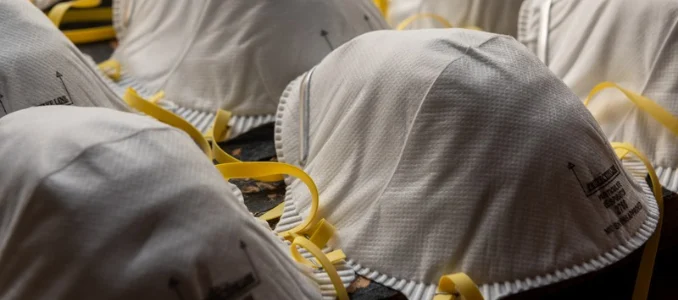
OSHA’s current proposal focuses on "de-risking" the compliance process for low-profile respiratory protection. The agency argues that for N95s and loose-fitting PAPRs, the physiological burden is significantly lower than that of tight-fitting, negative-pressure respirators. By removing the mandate for medical evaluations for these specific devices, OSHA estimates that employers could save millions of dollars in administrative costs and reduce the time burden on occupational health departments.

However, the proposal is not a total abandonment of safety protocols. It implies a shift toward a more risk-based approach, where employers might be encouraged—or required—to conduct internal assessments rather than formal medical clearance. The proposal also looks to align various substance-specific standards—such as those for lead, asbestos, and silica—with this broader respiratory rule, creating a more uniform regulatory environment.
Chronology of Implementation and Review
The journey to this proposal has been marked by decades of technological advancement and shifting workplace dynamics:
- 1998: OSHA finalizes 29 CFR 1910.134, establishing the current requirement for medical evaluations for all respirator users.
- 2006: OSHA issues the "Assigned Protection Factors" (APF) final rule, refining the technical requirements for different classes of respirators.
- 2020–2022: The COVID-19 pandemic forces a massive, unprecedented surge in N95 usage across non-traditional sectors, highlighting the administrative strain that annual medical evaluations place on health care and retail systems.
- 2024–2025: OSHA conducts a formal review of the respiratory standard as part of its periodic retrospective regulatory evaluation, identifying medical evaluations for N95s as a primary area for potential deregulation.
- 2026 (Projected): Finalization of the proposed amendments, with a potential phase-in period for industry compliance.
Data and The "Hierarchy of Controls"
The necessity of respirators is dictated by the "Hierarchy of Controls." This established safety framework dictates that employers must first attempt to eliminate the hazard, substitute it, or use engineering and administrative controls. Respiratory protection is explicitly designated as the "last line of defense."

Data from the Bureau of Labor Statistics (BLS) consistently shows that respiratory illnesses, while often underreported, account for a significant portion of long-term occupational disability. Critics of the proposed changes point to the fact that even N95s can contribute to heat stress and respiratory fatigue. Studies conducted during the pandemic indicated that for workers with pre-existing conditions, the physical resistance provided by the filter media, combined with long-duration use, can exacerbate heart rate variability and blood oxygenation levels. Proponents of the change, however, cite internal industry data suggesting that the incidence of adverse health events directly attributed to the use of N95s is statistically negligible, thus justifying the shift to a less restrictive policy.
Stakeholder Perspectives: The Safety Dilemma
The debate surrounding this proposal highlights a fundamental tension within the OEHS community. On one side, safety managers in large-scale industries—such as construction and manufacturing—often view the current medical evaluation requirements as a "check-the-box" exercise that adds little value but significant overhead. They argue that the resources spent on administrative medical clearance could be better utilized on more frequent fit testing or improved ventilation systems.
Conversely, public health advocates and labor unions express concern about the loss of a standardized health screen. The medical evaluation often serves as a "touchpoint" where a worker’s health status is assessed annually. If that requirement is removed, an employee might continue wearing a mask for years without a professional ever checking if their underlying health profile has changed. This "surveillance gap" could potentially mask the early signs of occupational diseases, such as silicosis or occupational asthma, which are sometimes flagged during routine respiratory clearance exams.

Technical Implications for OEHS Professionals
For the OEHS professional, the potential change necessitates a shift in strategy. If the regulation is relaxed, the onus will likely fall more heavily on the employer to conduct internal health risk assessments. This means that even if a formal medical evaluation is not mandated by federal law, it may remain a best practice to protect against liability and ensure the well-being of the workforce.
Practically, this could involve:
- Enhanced Health Screening: Implementing internal health surveys that, while not "medical evaluations" in the regulatory sense, provide data to safety officers regarding the physical fitness of workers.
- Expanded Training: With less oversight on the medical side, training on recognizing the symptoms of respirator-induced fatigue becomes paramount.
- Refined Hazard Assessments: Employers may need to document more rigorously why they believe a specific respirator type is appropriate, ensuring that the removal of medical evaluations is not coupled with a failure to account for actual workplace exposure levels.
Broader Impact on Occupational Health Standards
The implications of this proposal extend beyond the respirator itself. If OSHA succeeds in de-regulating medical evaluations for N95s, it could set a precedent for other health and safety standards. There is a growing movement within the federal government to move toward "performance-based" regulations rather than "prescriptive" ones. A performance-based approach focuses on the outcome (e.g., "no worker shall be harmed by respiratory stress") rather than the specific, mandatory steps (e.g., "everyone must get a medical exam").

While this offers flexibility, it also shifts the burden of interpretation to the employer. For small businesses with limited safety resources, this could be confusing. Without the clear, prescriptive language of the current standard, small employers might mistakenly assume that no action is required at all, potentially exposing workers to environments where respirators were actually necessary but ignored.
Moving Forward: The Path to Finalization
As OSHA continues to solicit feedback from the public and industrial hygiene experts, the discourse remains focused on how to maintain the integrity of the respiratory protection program while embracing the efficiency that the modern era demands. The agency’s challenge is to draft language that is precise enough to prevent exploitation while broad enough to accommodate the diversity of the American workforce.
The final rule, when issued, will likely include caveats. For instance, it may retain the requirement for medical evaluations in industries with high-risk dusts or chemicals, while exempting those in low-risk, occasional-use environments. The professional community remains in a state of watchful waiting, ready to adjust their programs to whatever the final regulatory landscape dictates.

Ultimately, the goal of the Respiratory Protection Standard remains the same as it was 25 years ago: to ensure that the worker who leaves home in the morning returns in the same state of health, protected by the equipment they wear. Whether that protection is facilitated by mandatory annual medical screens or a more flexible, risk-based approach will be the defining question of the next decade of occupational health policy. The proposed changes, while controversial, underscore a vital evolution in how we view the relationship between the worker, the mask, and the employer, reminding us that in the world of safety, the only constant is the need for vigilance.